Відгуки і рецензії читачів
Поки немає відгуків


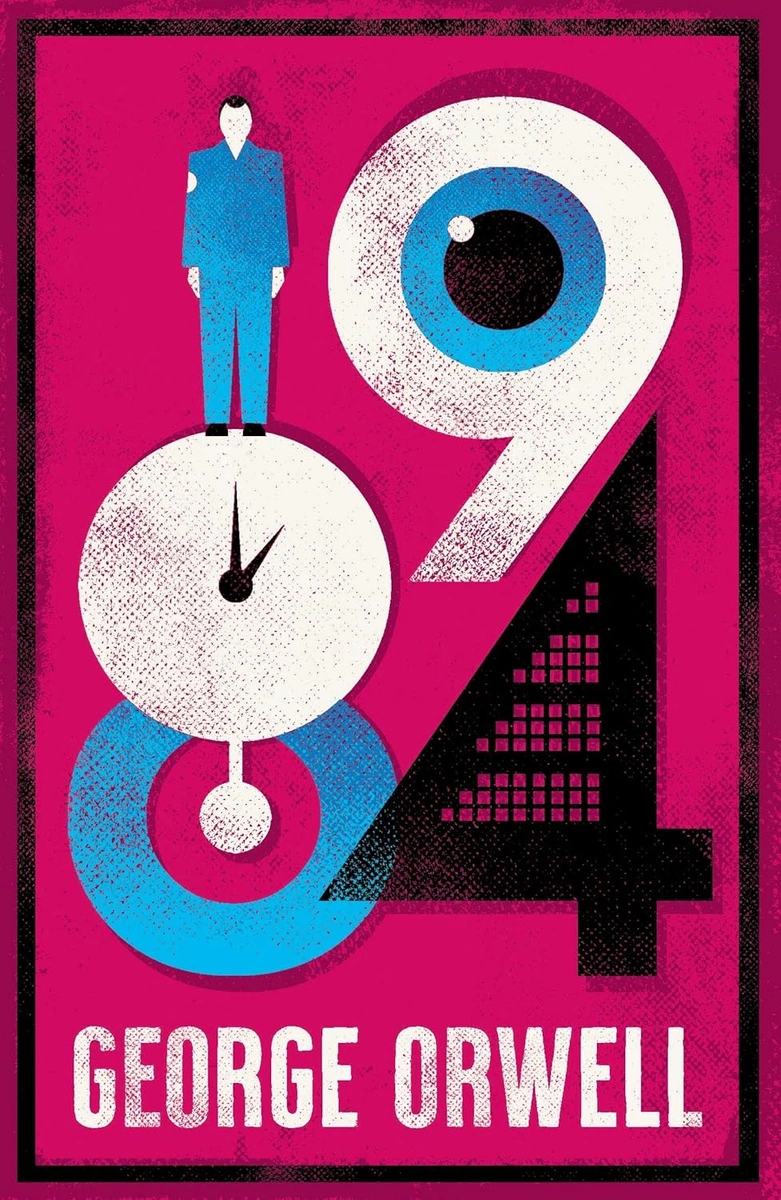
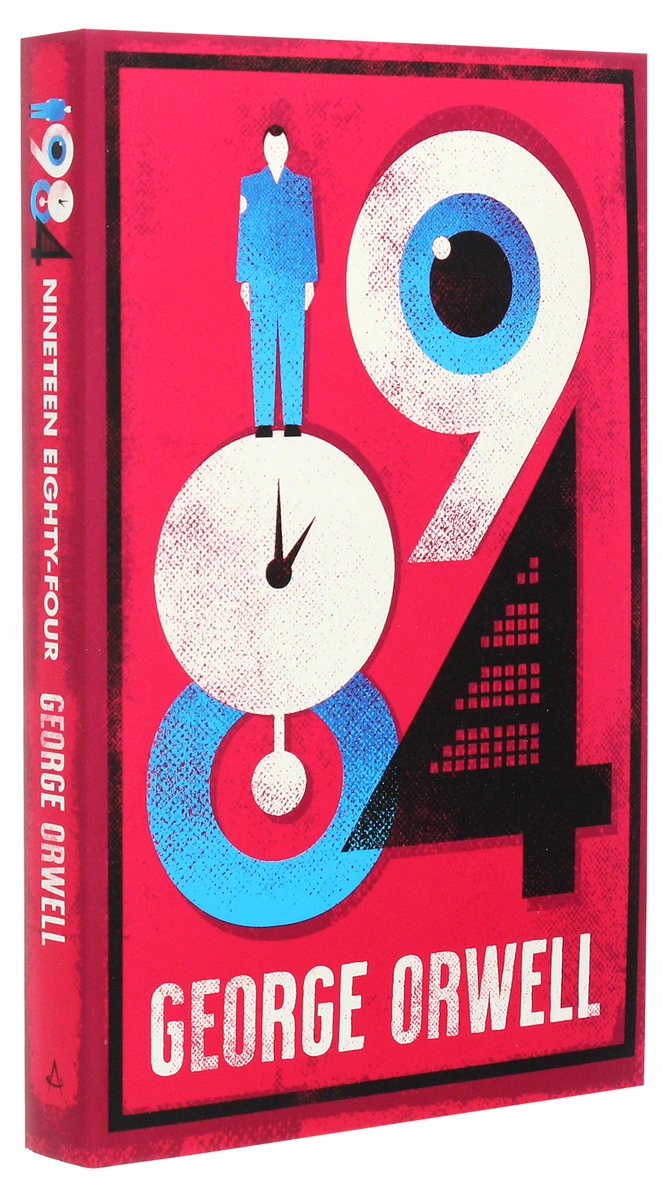
1984 Nineteen Eighty-Four is a landmark dystopian novel about surveillance, fear, manipulated truth, and the destruction of private thought under totalitarian rule. George Orwell creates a world where power does not merely punish rebellion; it tries to control memory, language, love, and even the hidden movements of the mind.
1984 Nineteen Eighty-Four George Orwell offers a chilling reading experience built around Winston Smith, a man trapped inside the political machine of Oceania. The novel speaks to readers who want a gripping plot, unforgettable characters, and a severe warning about what happens when truth becomes a tool of the state.
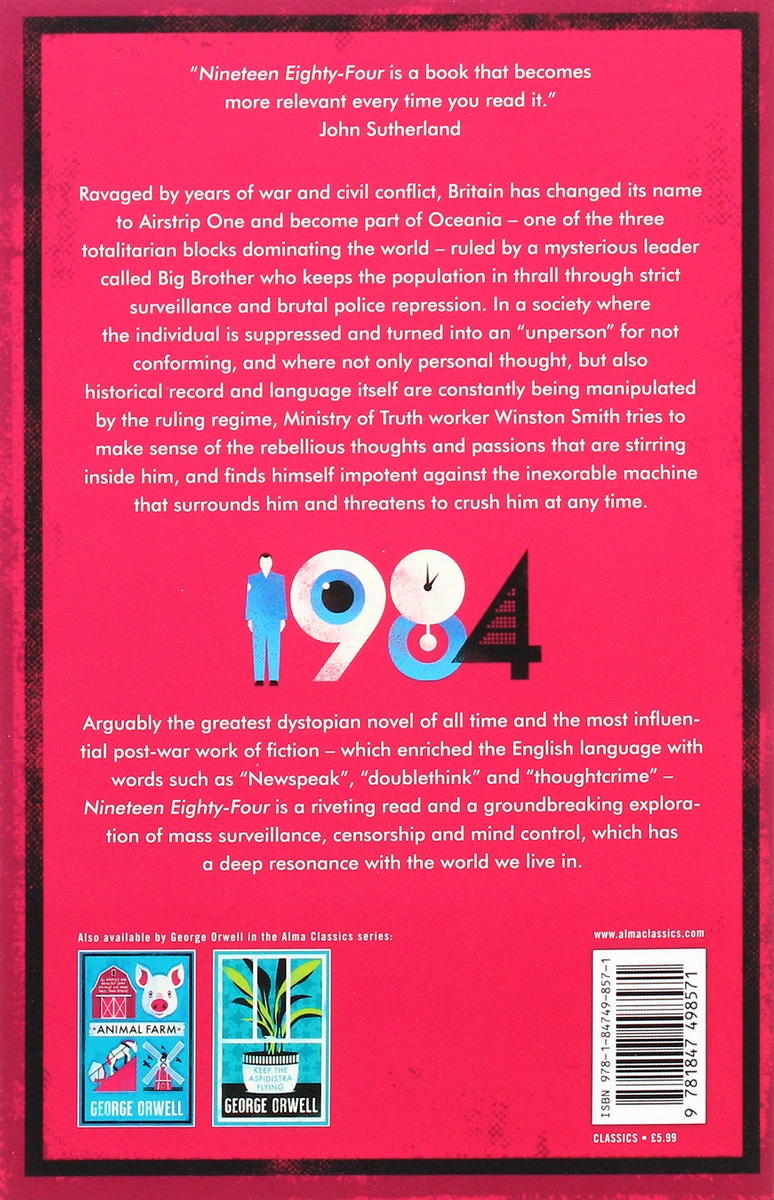
The story is set in a future Britain renamed Airstrip One, a province of the superstate Oceania. Society is ruled by the Party and watched over by the image of Big Brother, whose presence fills posters, screens, slogans, and the fears of ordinary people. War, scarcity, propaganda, and suspicion shape daily life, while independent thought is treated as a crime before it can become action.
Winston Smith works at the Ministry of Truth, where his task is to alter records so that the past always matches the Party’s current version of events. This job places him at the center of the regime’s deepest lie: if history can be rewritten, then reality itself can be made obedient. Winston understands the machinery from within, yet that understanding only makes his own loneliness and dread sharper.
The plot begins with a private rebellion. Winston starts to question the world around him, keeping thoughts that cannot be spoken aloud and feeling desires that the Party wants to erase. His conflict is not heroic in a simple way; it is fragile, frightened, and deeply human. He wants truth, memory, intimacy, and proof that the individual self can still exist beneath pressure.
In the middle of the narrative, 1984 Nineteen Eighty-Four book becomes a powerful study of language and control. Newspeak is designed to narrow thought, doublethink trains people to accept contradictions, and the idea of thoughtcrime makes the mind itself a battlefield. The novel shows that oppression does not depend only on prisons and police; it also depends on teaching people to mistrust their own memories.
Winston’s relationship with Julia adds emotional urgency to the story. Their bond is dangerous because it creates a private space the Party cannot fully enter at first. Love, desire, and shared secrecy become forms of resistance, but the world around them is built to crush exactly that kind of personal loyalty. The romance is therefore not an escape from the political plot; it is one of the clearest expressions of it.
The novel’s wider conflict reaches beyond Winston as an individual. Oceania is part of a world divided into rival powers, locked in endless war and ideological manipulation. Yet the most terrifying struggle takes place inside rooms, offices, apartments, and minds, where people are trained to accept that reality belongs to whoever has the power to define it.
The atmosphere is bleak, claustrophobic, and psychologically intense. Streets feel watched, homes are unsafe, words are dangerous, and silence can be as suspicious as speech. The novel creates dread not by relying on sudden shocks, but by making ordinary life feel permanently exposed to authority.
The major themes include surveillance, censorship, historical falsification, conformity, isolation, language, memory, and the vulnerability of truth. Orwell examines how a regime can weaken resistance by attacking relationships, reducing vocabulary, controlling information, and turning fear into habit. The result is a dystopia that feels systematic rather than chaotic.
The style is clear, controlled, and severe. Orwell’s prose avoids excess decoration, which makes the horror more direct. The language of the Party is cold and mechanical, while Winston’s private observations carry the ache of someone trying to remain fully human in a world that denies the value of humanity itself.
The characters are memorable because they embody different ways of living under pressure. Winston is thoughtful, afraid, stubborn, and painfully aware of his weakness. Julia resists through instinct, secrecy, and appetite for life. O’Brien represents intellectual cruelty, showing how intelligence without conscience can become one of power’s most dangerous instruments.
For the audience, the novel’s force lies in the way it turns political ideas into intimate experience. The reader does not only learn about a totalitarian system; the reader feels its weight through hunger, mistrust, exhaustion, desire, and the terror of being unable to protect even one’s inner life.
Who this book is for
This novel is ideal for readers interested in dystopian fiction, political literature, psychological conflict, and stories where ideas shape every part of the plot. It will appeal to those who want a classic that is intellectually sharp, emotionally unsettling, and still capable of provoking debate.
It is also a strong choice for readers who care about the themes of media control, personal freedom, state power, and the relationship between language and thought. The book’s audience includes students, classic literature readers, fans of speculative fiction, and anyone drawn to stories that ask what truth means when power decides what can be said.
Why read it
The novel is worth reading because it gives form to fears that remain recognizable: public surveillance, political manipulation, the erasure of inconvenient facts, and the pressure to repeat what one does not believe. Its invented terms have entered common language because they name dangers that extend beyond the fictional world of Oceania.
1984 Nineteen Eighty-Four is a compelling choice for readers who want a classic that is not only famous, but still disturbing, urgent, and sharply readable. It invites you into Winston Smith’s world and leaves you with questions about truth, power, and the private spaces that must be defended if freedom is to survive.