Відгуки і рецензії читачів
Поки немає відгуків


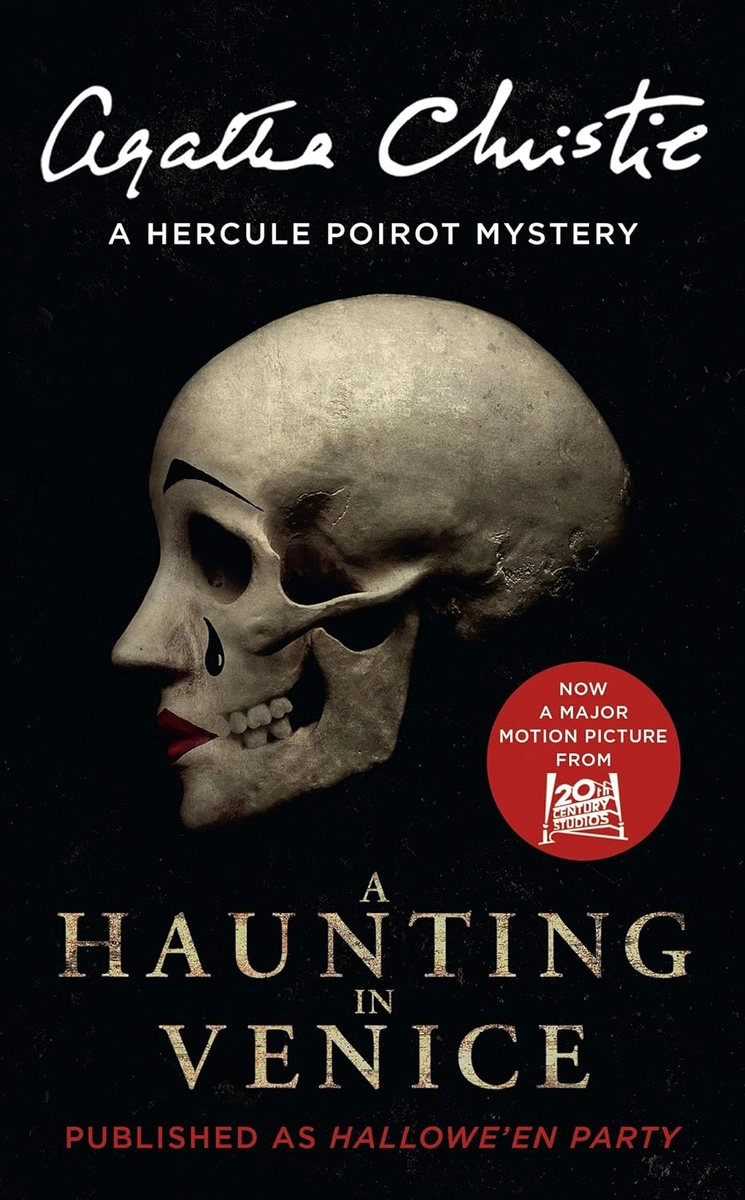
A Haunting in Venice (Hallowe’en Party) by Agatha Christie presents the original Hercule Poirot novel that inspired the film. This English paperback includes an introduction by screenwriter Michael Green. The book’s investigation begins at an English Halloween party with Joyce Reynolds and Ariadne Oliver; readers encounter Christie’s own story rather than a prose version of the film’s Venetian setting.
During preparations and games at a party, thirteen-year-old Joyce announces that she once witnessed a murder. Her listeners do not take the statement seriously. Joyce has a reputation that makes it easy to regard the claim as an attempt to attract attention. That dismissal becomes much more troubling when she is found drowned in the apple-bobbing tub.
Ariadne Oliver, the crime novelist who attended the gathering, asks Poirot for help. His first difficulty is deciding what Joyce could have meant. Did she really see a killing, did she misunderstand something she observed, or did someone else believe her statement was dangerous enough to require her silence? The distinction matters because the latest murder may depend on an earlier one.
The search extends into local history and the relationships of people who initially seem peripheral to the party. Gossip may preserve useful knowledge while also distorting it. Poirot must compare remembered events, unexplained deaths and apparently harmless remarks, working out which details belong together. A community’s shared account of itself can conceal omissions that only become visible when someone asks a new question.
The title A Haunting in Venice identifies the connection to the adaptation, while Hallowe’en Party identifies the novel being published. That distinction helps readers choose the book for the right reason. Its Halloween customs, English surroundings and investigation of Joyce’s death provide their own atmosphere, independent of the different events and setting used on screen.
Christie turns a celebration associated with playful fright into a setting for actual violence. The contrast between children’s games and adult concealment makes the crime especially unsettling. Poirot’s method restores attention to words that were ignored, asking why certain people were believed, others dismissed and some events allowed to pass without a satisfactory explanation.
This paperback suits readers who want the source novel after seeing the film, as well as those continuing Poirot’s cases. Green’s introduction adds an adaptation connection without replacing Christie’s narrative. The mystery’s attraction lies in the gap between a child’s public boast and the older truth it may accidentally expose, with every apparently settled memory becoming another possibility to investigate.