Відгуки і рецензії читачів
Поки немає відгуків


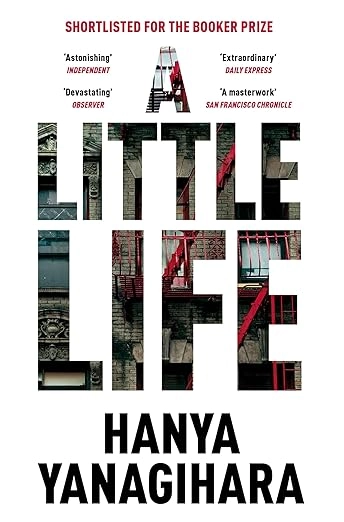
A Little Life is a devastating contemporary novel about friendship, trauma, ambition, and the limits of love when the past refuses to release its hold. Four graduates from a small Massachusetts college move to New York with little money and uncertain futures: Willem, an aspiring actor; JB, a sharp and ambitious painter; Malcolm, an architect still searching for his own shape; and Jude, a brilliant, withdrawn figure whose silence becomes the emotional center of their group. What begins as a story of young men trying to make their way gradually becomes an unforgettable portrait of pain, devotion, and survival.
A Little Life Hanya Yanagihara offers readers an intense, expansive, and deeply emotional work of literary fiction, first published in 2015 and recognized through major literary prize attention, including the Kirkus Prize for Fiction and finalist placement for the Booker Prize and the National Book Award. The novel follows its characters over decades, tracing success, addiction, pride, loyalty, love, and the terrible difficulty of caring for someone whose wounds reach further than anyone can easily understand.
The story begins with four friends arriving in New York after college, broke but full of ambition. Their lives seem open, uncertain, and full of possibility. Willem dreams of acting, JB tries to enter the art world with wit and provocation, Malcolm works in architecture while wrestling with frustration and family expectation, and Jude moves quietly among them, brilliant and mysterious, giving little away about where he came from or what he has endured.
As the years pass, the friends change. Careers rise, relationships shift, loyalties deepen, and disappointments accumulate. The plot stretches across adulthood, allowing the reader to see how youthful closeness becomes something more complicated under the pressure of success, envy, distance, illness, and need. Yet the emotional gravity of the novel increasingly centers on Jude, whose intelligence and professional achievement cannot protect him from the damage carried in his body and mind.
Jude becomes a terrifyingly talented litigator, admired for his discipline and brilliance, but his private life is shaped by pain he can barely speak about. His childhood remains the hidden wound behind the story, revealed gradually through memory, fear, and the reactions of those who love him. The conflict is not simply whether Jude can be saved, but whether love, friendship, and care can reach someone who believes suffering is the truest thing about himself.
In the middle of the novel, A Little Life book becomes more than a chronicle of friendship in New York. It becomes a study of trauma and its long afterlife: how the body remembers, how shame isolates, how silence can become a survival strategy, and how even tenderness may feel unbearable to someone who has learned to expect harm. The story asks difficult questions without offering easy consolation.
The characters around Jude are central to the novel’s emotional force. Willem’s kindness and loyalty give the story warmth; JB’s brilliance and cruelty reveal the danger of ego and envy; Malcolm’s quieter arc shows the ache of uncertainty; Harold, who enters Jude’s life as a fatherly figure, expands the novel’s exploration of chosen family. Each relationship becomes another way of asking what it means to stay beside another person through pain that cannot be neatly repaired.
The atmosphere is intimate, heavy, and immersive. New York becomes a place of ambition, art, money, apartments, restaurants, hospitals, courtrooms, and private rooms where suffering remains hidden from public success. The novel’s emotional world is both grand and claustrophobic: decades pass, careers grow, lives expand, yet Jude’s inner life keeps pulling the story back toward the same terrible center.
The major themes include friendship, trauma, shame, chosen family, self-harm, love, disability, ambition, addiction, and the limits of recovery. The book explores how people try to care for someone who cannot believe he deserves care, and how devotion may be both beautiful and powerless. It also examines the tension between external achievement and inner devastation, showing that success does not automatically heal what was broken long before.
The style is expansive, emotionally direct, and intensely character-driven. The narrative moves across time, using detailed observation and gradual revelation to build a sense of lives fully lived and deeply scarred. Its pace is deliberate, allowing relationships to accumulate weight until small acts of kindness, failure, or misunderstanding feel enormous. The prose often dwells in pain, but also in loyalty, beauty, domestic tenderness, and the ache of wanting someone to survive.
What lingers after reading is the unresolved question at the heart of the novel: can love be enough when trauma has taught a person to reject love’s evidence? A Little Life is powerful because it refuses to treat friendship as a simple cure. Instead, it shows friendship as witness, shelter, frustration, sacrifice, and sometimes the only light available, even when it cannot defeat the darkness completely.
This novel is for readers who want emotionally demanding literary fiction with deep character development and a long, immersive structure. It will appeal to an audience drawn to stories about lifelong friendship, difficult pasts, chosen families, artistic ambition, and the psychological cost of surviving what should never have happened.
One reason to read this novel is the depth of its friendships. The bond among Jude, Willem, JB, and Malcolm changes over time, sometimes strengthening, sometimes breaking under pressure, but always revealing how difficult it is to love another person honestly. The novel understands that friendship in adulthood can be as intense, flawed, and consequential as romance or family.
Another reason is Jude’s unforgettable presence. He is gifted, guarded, loving, frightened, and profoundly damaged. The story does not reduce him to his suffering, yet it also does not pretend that suffering can be easily separated from the life he builds. His character gives the novel its painful gravity and its most enduring emotional questions.
The book also stands out because it examines care without sentimentality. People try to help, fail, return, misunderstand, forgive, and keep trying. The novel shows how love can be patient and inadequate at the same time, and how the desire to save someone may coexist with the devastating truth that no one can fully enter another person’s pain.
A Little Life is a profound and harrowing choice for readers prepared for a novel that is tender, brutal, and deeply absorbing. It invites you into decades of friendship and heartbreak, where ambition glitters, love persists, and one man’s hidden past reshapes every life that comes close enough to care.