Відгуки і рецензії читачів
Поки немає відгуків


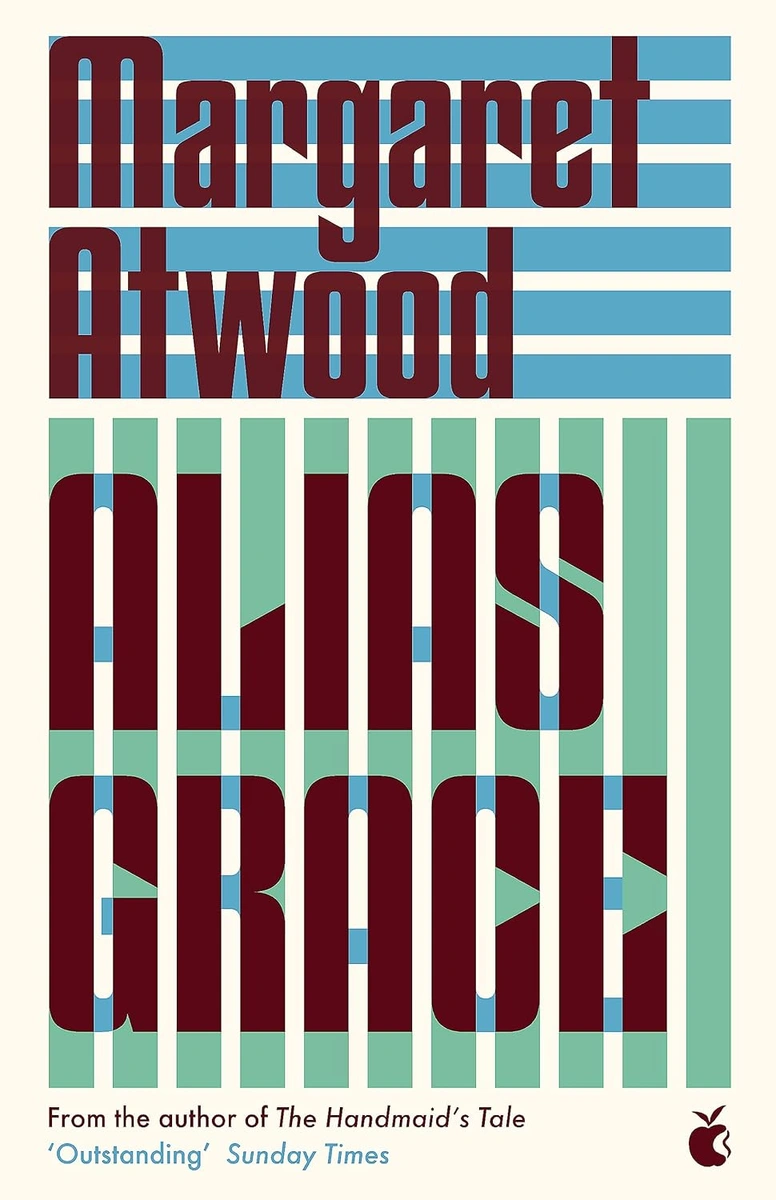
Alias Grace is a haunting historical novel about murder, memory, class, gender, and the uncertain border between guilt and innocence. Margaret Atwood takes the real nineteenth-century case of Grace Marks, convicted in connection with the 1843 murders of Thomas Kinnear and Nancy Montgomery in Canada West, and transforms it into a psychologically rich story where every answer seems to produce another question.
Alias Grace Margaret Atwood offers readers a powerful blend of historical fiction, crime narrative, and intimate character study. First published in 1996, the novel imagines Grace years after her conviction, as doctors, reformers, officials, and curious observers try to decide whether she is a dangerous murderess, a damaged victim, a liar, a survivor, or someone whose true story may never be fully recovered.
The plot centers on Grace Marks, an Irish-born servant girl whose name became linked to one of the most notorious Canadian murder cases of the 1840s. Alongside fellow servant James McDermott, Grace was convicted after the deaths of her employer, Thomas Kinnear, and his housekeeper Nancy Montgomery. McDermott was executed, while Grace received a life sentence, leaving the public fascinated by what she knew, what she did, and what she might have concealed.
Atwood builds the novel around uncertainty. Grace tells parts of her life story while being questioned by Dr Simon Jordan, a fictional physician interested in memory, trauma, and the mind. Their conversations open a layered narrative of childhood poverty, migration, domestic service, female vulnerability, social hierarchy, friendship, fear, and the everyday violence hidden beneath respectable households.
The central conflict is not simply whether Grace committed the crime. It is whether any version of her story can be trusted when everyone around her wants to use her for a different purpose. Some see her as a monster, some as a passive victim, some as a medical puzzle, and some as a symbol. Grace herself remains watchful, intelligent, evasive, wounded, and difficult to possess through anyone else’s explanation.
In the middle of the reading experience, Alias Grace book becomes more than a historical mystery. It becomes a study of storytelling itself: who is allowed to speak, who is believed, and how class and gender shape the stories preserved as truth. Grace’s memories arrive in fragments, patterns, repetitions, and silences, making the reader aware that memory may protect as much as it reveals.
The characters around Grace sharpen the atmosphere of suspicion. Dr Jordan believes he is pursuing knowledge, yet his own desires and assumptions complicate his judgment. Nancy Montgomery, Mary Whitney, Thomas Kinnear, James McDermott, and the women and men of prisons, households, and reform circles all form a social world where power is unevenly distributed and reputation can determine fate.
The atmosphere is sinister, intimate, and beautifully controlled. Atwood creates a world of prison rooms, sewing work, servant quarters, parlors, farms, letters, newspaper accounts, dreams, and half-remembered conversations. The novel feels both panoramic and close to the skin, moving between public scandal and private dread.
The main themes include memory, identity, justice, sexuality, class, gender, trauma, religion, madness, performance, and the instability of truth. The book asks whether a woman like Grace can ever be seen clearly when society has already decided what roles are available to her: temptress, servant, madwoman, criminal, innocent girl, or spectacle.
Atwood’s style is precise, layered, and quietly unsettling. She combines historical detail with psychological ambiguity, allowing documents, testimony, gossip, dreams, and Grace’s own narration to sit beside one another without forcing a single tidy conclusion. The result is a novel that feels researched, imaginative, and morally complex.
The conflict beneath the style is the struggle over interpretation. Grace’s life is constantly interpreted by men with authority, women with expectations, newspapers with appetites, and institutions with rules. Yet her own voice remains slippery and compelling, refusing to become fully obedient to any category imposed on her.
Who this book is for. This novel is ideal for readers who enjoy historical fiction with psychological depth, literary crime stories, unreliable narration, and morally ambiguous characters. It will appeal to an audience interested in true-crime-inspired fiction, Victorian-era social structures, women’s lives, memory, and the darker side of domestic service.
It is also a strong choice for readers who appreciate novels that do not hand over simple answers. Those who like atmospheric mysteries, complex female protagonists, and fiction that examines how history is shaped by power will find Grace Marks unforgettable because she remains both vividly present and ultimately elusive.
Why you should read it. Alias Grace stands out because it turns a famous murder case into a profound investigation of voice and power. Atwood does not simply ask what happened in 1843; she asks how events become stories, how stories become judgments, and how judgment can trap a person long after the courtroom has closed.
Another reason to read it is Grace herself. She is neither a transparent victim nor an easily condemned villain. Her intelligence, restraint, pain, and possible deception make her one of Atwood’s most fascinating creations. The novel’s power lies in the way it keeps the reader listening closely, even while making certainty impossible.
For readers seeking a dark, intelligent, and beautifully crafted novel, this book offers a compelling journey into crime, memory, and the stories history cannot settle. Enter Grace Marks’s world carefully, and discover how silence, testimony, and imagination can make the past more mysterious than any simple verdict.