Відгуки і рецензії читачів
Поки немає відгуків


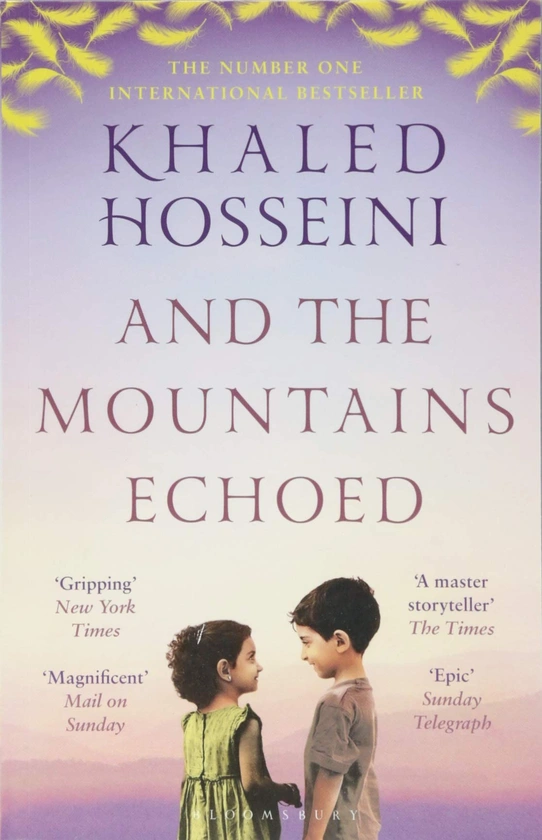
And the Mountains Echoed is a moving literary novel about love, separation, memory, exile, and the choices that echo through families across decades, beginning with a brother and sister whose bond is broken by one fateful journey to Kabul.
And the Mountains Echoed Khaled Hosseini offers readers an emotionally layered story that begins in Afghanistan and expands across generations and continents, showing how one act of loss can reshape many lives in ways the characters themselves cannot fully understand.
The plot opens in 1952 with Abdullah and his little sister Pari, two children growing up in poverty in the fictional village of Shadbagh. Their mother is gone, and Abdullah loves Pari with a devotion that feels almost parental. He protects her, comforts her, and even sacrifices his own small possessions to bring her joy, making their relationship the emotional center from which the rest of the novel grows.
When their father takes Pari across the desert to Kabul, Abdullah insists on coming along, unaware of the true purpose of the journey. What follows is a separation that changes both children forever. Abdullah is old enough to remember what has been taken from him, while Pari is young enough for memory to become uncertain, distant, and incomplete.
The conflict in the novel is not built around a single villain or a single dramatic event. Instead, it grows from poverty, family obligation, guilt, silence, migration, illness, and the compromises people make when love alone cannot protect those they care for. Hosseini shows how a decision made under pressure can ripple outward, touching lives far beyond the first wound.
In the middle of the narrative, And the Mountains Echoed book becomes a wide, interconnected portrait rather than a narrow family story. The novel moves through different perspectives and places, following relatives, caretakers, friends, exiles, and people linked by chance or consequence. Each section adds another layer to the original separation and deepens the question of what families owe one another.
The story spans Afghanistan, Europe, and the United States over many years, using its broad structure to explore how memory survives distance and how identity can be shaped by absence. Some characters carry the past as a visible burden, while others live with gaps they cannot name. This gives the book its bittersweet emotional force: what is forgotten may still leave a mark.
Khaled Hosseini, also known for The Kite Runner and A Thousand Splendid Suns, writes here in a more mosaic-like form, connecting lives through fragments of history, confession, regret, and tenderness. The result is a novel that begins with one brother and sister but grows into a meditation on the many forms of love and loss.
The atmosphere is intimate, sorrowful, compassionate, and expansive. The early chapters carry the feel of a fable, with a father’s story casting a shadow over real choices, while later sections become more varied, moving through homes, cities, memories, letters, and lives changed by migration and time.
The main themes include sibling love, sacrifice, exile, guilt, compassion, memory, aging, class, and the moral complexity of care. The novel asks whether love is measured by holding on, letting go, remembering, providing, protecting, or accepting that every choice may harm someone.
The style is emotionally direct but structurally intricate. Rather than telling the story in one straight line, Hosseini builds a chain of connected narratives. This approach allows minor characters to become central for a time, revealing that every life contains its own private plot, sorrow, and longing.
The characters are memorable because they are morally complicated. Parents, siblings, servants, doctors, artists, and migrants all face decisions shaped by need, pride, fear, kindness, and self-interest. Few are simply innocent or guilty; most are trying to live with what they have done, failed to do, or never had the courage to say.
The title’s sense of echo is essential to the book’s atmosphere. A childhood loss reverberates through adult lives, through countries, through memory, and through the next generation. What remains after reading is not only sadness, but also the recognition that human bonds can endure in partial, altered, and unexpected forms.
This novel is ideal for readers who enjoy emotionally rich literary fiction, family sagas, and stories where private lives are shaped by history without becoming simple historical lessons. It suits an audience interested in Afghanistan, migration, memory, and the long consequences of love and sacrifice.
It will also appeal to readers who appreciate multi-perspective storytelling, morally complex characters, and novels that unfold gradually rather than relying on a single linear plot. Those who were moved by Hosseini’s earlier books will find familiar compassion here, but in a broader and more fragmented narrative form.
And the Mountains Echoed is a thoughtful choice for readers asking why read Khaled Hosseini beyond his best-known works. It offers a powerful exploration of how families are made, broken, remembered, and reimagined, inviting the reader to follow the quiet echoes of one loss through many lives and many years.