Відгуки і рецензії читачів
Поки немає відгуків


Animal Farm is a sharp political fable about revolution, betrayal, propaganda, and the slow corruption of power after the promise of freedom has been won. George Orwell turns a farmyard rebellion into one of literature’s clearest warnings about tyranny, showing how the language of equality can be twisted until it serves the very oppression it once opposed.
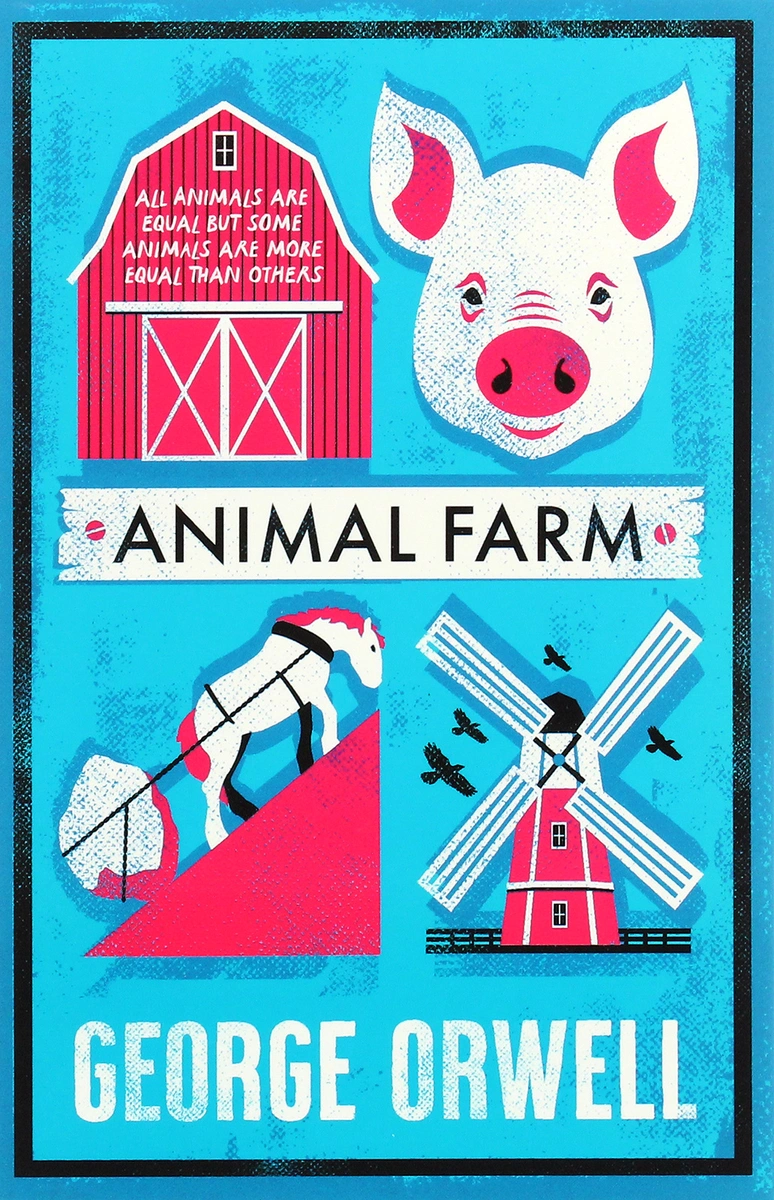
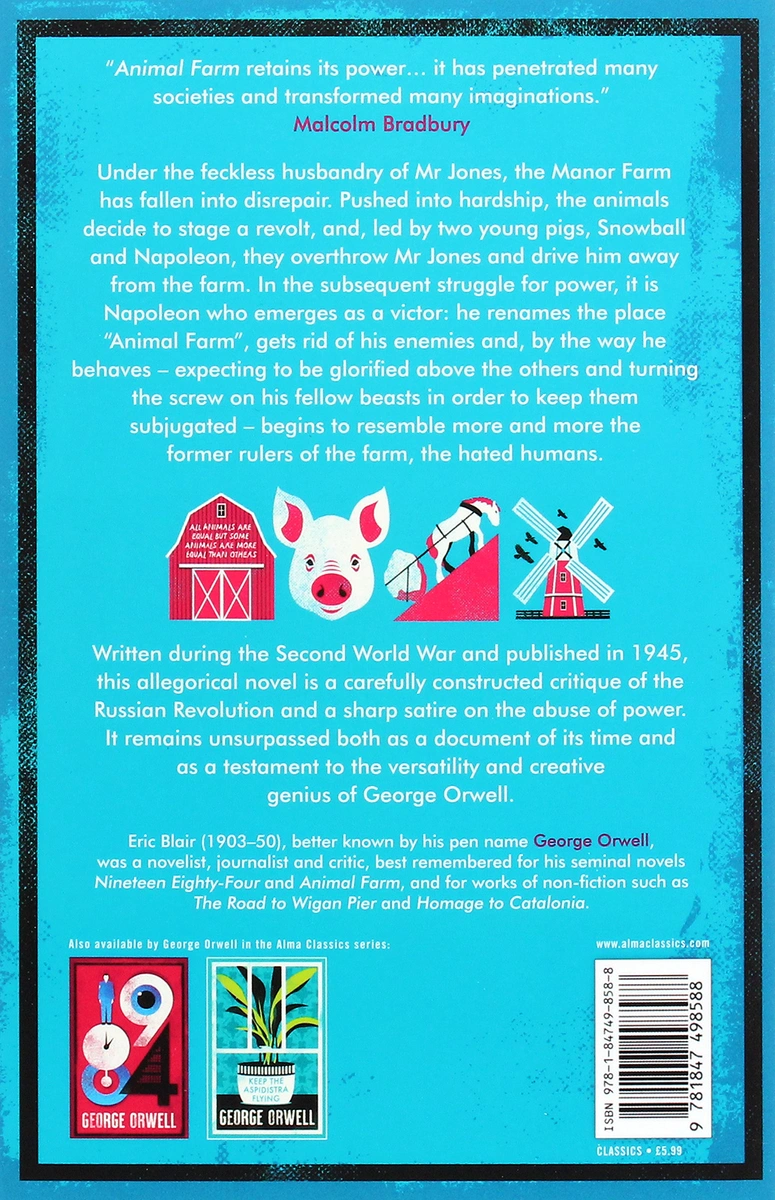
Animal Farm George Orwell presents a short, brilliant, and deeply unsettling allegorical novel in which the animals of Manor Farm overthrow their careless human master and try to build a fairer society. The book offers a deceptively simple plot, memorable characters, and an atmosphere where hope, slogans, fear, and manipulation gradually transform liberation into dictatorship.
The story begins on Manor Farm, where Mr. Jones has allowed neglect, hunger, and disorder to define the lives of the animals under his control. Tired of exploitation and inspired by the dream of a life without human masters, the animals rise in revolt. For a brief moment, the farm seems to belong to all of them equally, and the future appears open, just, and full of possibility.
After the rebellion, the farm is renamed and governed by principles meant to protect animal freedom. The animals work hard, sing their new songs, repeat their commandments, and believe they are building something better than the world they escaped. Yet from the beginning, intelligence and organization give the pigs special influence, and that influence soon becomes privilege.
Snowball and Napoleon emerge as leading figures among the pigs, but their visions for the farm cannot coexist. Their struggle for authority becomes the central political conflict of the novel. Once Napoleon gains control, debate disappears, enemies are invented, and the original dream is rewritten piece by piece. The revolution survives in name, while its meaning is hollowed out.
In the middle of the narrative, Animal Farm book becomes a devastating study of how power protects itself. Rules are changed, memories are corrected, work grows harder, and language becomes a tool of domination. The animals are told that sacrifice is necessary, that obedience proves loyalty, and that questioning leadership is dangerous. What began as common freedom becomes organized submission.
The characters embody different responses to political pressure. Boxer, the loyal and tireless horse, represents faith in labor and authority, repeating his belief that he must work harder. Clover senses that something has gone wrong but struggles to name it clearly. Squealer turns lies into official truth, while the sheep reduce thought to repeated slogans. Each figure helps reveal how a society can be controlled through fear, exhaustion, ignorance, and habit.
The final tragedy lies in the farm’s transformation. The animals once rebelled against humans because they were exploited, deceived, and treated as tools. Under Napoleon, the same patterns return under new names. Orwell’s plot shows that a revolution can fail not only when it is defeated from outside, but when its leaders reproduce the cruelty they claimed to destroy.
The atmosphere is plain, ironic, and increasingly grim. At first, the farm has the energy of a folk tale: animals speak, organize, dream, and act together. As the story progresses, the simplicity becomes more disturbing, because every small change in routine, wording, and behavior reveals a larger political collapse.
The major themes include power, propaganda, class, betrayal, revolution, memory, fear, obedience, and the abuse of language. Orwell asks how people can be persuaded to accept injustice when it is wrapped in familiar slogans, and how quickly ideals can become instruments of control when no one is free to challenge those in charge.
George Orwell’s style is clear, economical, and satirical. The prose avoids unnecessary ornament, making the moral and political movement of the story easy to follow but difficult to forget. Its fable form gives the novel unusual force: by using animals, Orwell makes complex historical and ideological patterns feel immediate, visible, and painfully human.
The book’s characters remain powerful because they are simple without being shallow. Napoleon’s ambition, Squealer’s rhetoric, Boxer’s loyalty, and the other animals’ confusion create a complete portrait of political manipulation. The farm becomes a miniature state where control depends on rewriting the past and narrowing the future.
For the audience, the lasting impact of the novel comes from its precision. It can be read as a satire of the Russian Revolution and the rise of Stalinist rule, but its warning reaches beyond one historical moment. The story remains relevant wherever leaders use fear, false equality, and controlled language to keep others obedient.
Who this book is for. This novel is ideal for readers who enjoy classic literature, political satire, allegory, dystopian fiction, and short books with lasting intellectual force. It will appeal to anyone interested in how revolutions change, how propaganda works, and why ordinary people may continue to believe in a system even as it betrays them.
It is also a strong choice for students, teachers, and general readers who want a clear but profound introduction to Orwell’s political imagination. The book’s audience includes those drawn to themes of justice, social control, ideology, and the moral danger of surrendering thought to slogans.
Why read it. The novel is worth reading because it makes the mechanics of tyranny visible in a story that is brief, memorable, and sharply constructed. Orwell shows that oppression does not always arrive with a new flag and open violence; sometimes it grows slowly through revised rules, convenient lies, and the exhaustion of those who have no power to object.
Animal Farm is a compelling choice for readers who want a short novel with extraordinary depth and enduring power. It invites you onto a farm where freedom is promised, equality is proclaimed, and the most dangerous changes happen slowly enough that the animals almost forget what they were fighting for.