Відгуки і рецензії читачів
Поки немає відгуків


Big Little Lies is a gripping contemporary mystery about perfect homes, polished school gates, and the dangerous secrets hidden behind ordinary family life. Jane, Madeline, and Celeste meet through their children’s school community, where friendships form quickly and judgments spread even faster. At first, their world seems full of beautiful houses, school events, playground conversations, and carefully managed appearances. But one small incident involving the children grows into gossip, accusation, and division, leading toward a night that ends in murder.
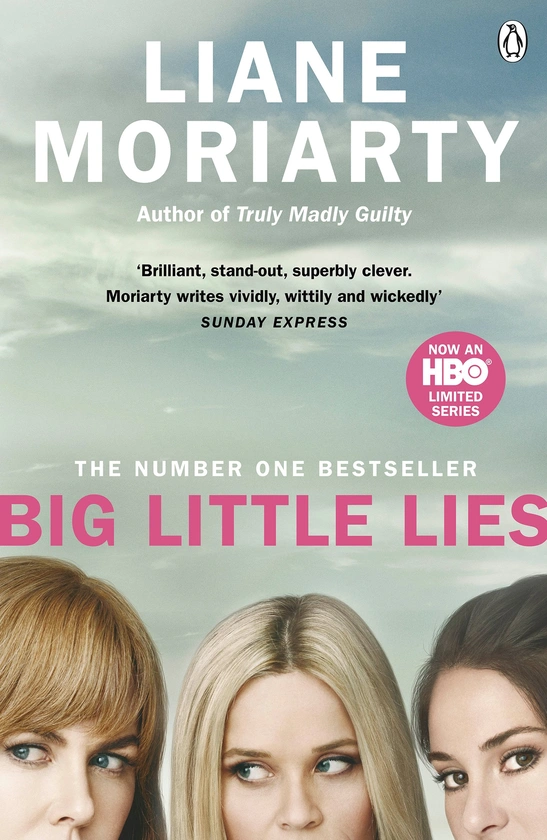
Big Little Lies Liane Moriarty offers readers a sharp, suspenseful, and emotionally intelligent novel about motherhood, friendship, domestic pressure, and the stories people tell to protect themselves. First published in 2014, the book became a major bestseller and inspired the acclaimed television adaptation starring Reese Witherspoon, Nicole Kidman, and Shailene Woodley. Its promise is irresistible: everyone in this community has something to hide, and every little lie may be part of a much bigger truth.
Jane is a young single mother who arrives in town with her son, Ziggy, hoping for a fresh start. She has not stayed anywhere for long since he was born, and she carries a secret from five years earlier that still shapes the way she sees herself and the world. The school community offers the possibility of belonging, but it also brings scrutiny, suspicion, and the fear that her past may not remain private.
Madeline is vivid, loyal, outspoken, and impossible to ignore. She remembers every slight and forgives very little, but beneath her wit and confidence are frustrations of her own. She becomes one of Jane’s first allies, pulling her into a circle of friendship that feels protective and chaotic at the same time. Madeline’s strength gives the plot energy, but her own family tensions reveal that even the loudest people can be hiding pain.
Celeste appears to have the kind of life others envy: beauty, wealth, twin sons, and a marriage that looks glamorous from the outside. Yet she is uneasy in ways that are difficult for others to name. Her story brings the novel’s darker emotional conflict into focus, showing how appearance can conceal fear and how difficult it can be to admit the truth when everyone else believes they are looking at perfection.
The central incident begins among children, but the adults quickly make it their own. Playground whispers turn into factions, school politics become personal, and the community divides over blame before the facts are clear. In the middle of the story, Big Little Lies book becomes more than a domestic mystery. It becomes a study of how quickly people choose sides when reputation, fear, class, marriage, and motherhood are involved.
The murder at the heart of the novel is revealed through tension, fragments, and social observation. The question is not only who dies or who is responsible, but how a community that prides itself on order reaches that point. The characters’ private lives, hidden wounds, and public performances all lead toward the same explosive night, making the mystery feel rooted in emotion rather than mere plot mechanics.
The atmosphere is sleek, tense, and deceptively bright. School drop-offs, coffee mornings, fundraisers, birthday parties, and beachside living create a surface of comfort and privilege, but underneath are jealousy, fear, loneliness, resentment, and violence. The contrast between polished social life and hidden damage gives the novel its sharp edge.
The major themes include motherhood, friendship, domestic abuse, shame, class pressure, gossip, blame, and the difference between public image and private reality. The book explores how lies can begin as protection, politeness, denial, or survival, then grow until they distort an entire community. It also shows the power of female friendship when women begin to see past each other’s performances.
The style is witty, suspenseful, and emotionally layered. Liane Moriarty blends mystery with social comedy, using sharp dialogue, shifting perspectives, and fragments of community commentary to build tension. The pacing keeps the reader moving toward the fatal event, while the character work gives the story depth beyond the question of who committed the crime.
What lingers after reading is the sense that ordinary cruelty can become dangerous when everyone treats it as normal. Big Little Lies is compelling because it understands how rumors, marriages, parenting pressures, and small humiliations can gather force. The title captures the novel’s central truth: the lies may look small, but the damage they hide can be enormous.
This novel is for readers who enjoy psychological suspense, domestic drama, and character-driven mysteries with emotional depth. It will appeal to an audience that likes stories about complicated women, school communities, hidden violence, and secrets that unfold through social tension as much as investigation.
One reason to read this novel is the bond between Jane, Madeline, and Celeste. Their friendship is funny, imperfect, and increasingly important as the pressure around them grows. The book shows how women can misunderstand one another at first, then become essential witnesses to truths no one else is willing to see.
Another reason is the way the mystery is built from everyday life. The school gate, the parent meeting, the party invitation, the whispered accusation: ordinary social rituals become tools of suspense. This makes the story feel close and unsettling, because the danger grows from familiar behavior rather than from a distant criminal world.
The novel also stands out because it balances entertainment with serious emotional weight. It is witty and addictive, but it does not treat pain lightly. The humor sharpens the darkness, and the darkness gives the comedy consequence. That balance makes the book both readable and memorable.
Big Little Lies is a smart and absorbing choice for readers who want a mystery filled with secrets, friendship, tension, and emotional truth. It invites you into a beautiful community where everyone seems to know everyone else, until one night proves that the most dangerous stories are the ones people have agreed not to tell.