Відгуки і рецензії читачів
Поки немає відгуків


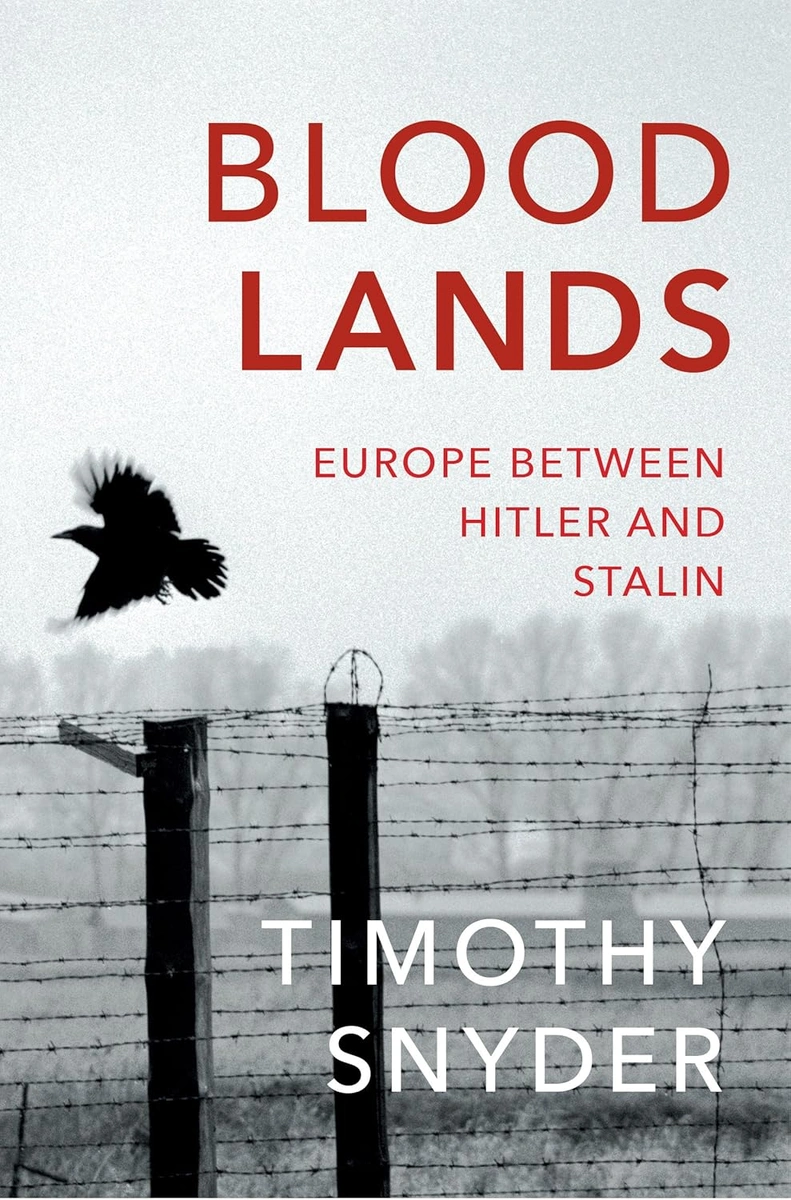
Bloodlands: Europe Between Hitler and Stalin is a powerful work of twentieth-century history about the region where Nazi Germany and the Soviet Union turned ideology, state power, hunger, deportation, shooting, and extermination into mass death. Timothy Snyder examines the lands between Berlin and Moscow, especially today’s Ukraine, Belarus, Poland, western Russia, and the Baltic region, where millions of civilians were deliberately killed between 1933 and 1945.
Bloodlands: Europe Between Hitler and Stalin Timothy Snyder offers a deeply researched and morally serious account of violence under Hitler and Stalin. The book does not treat the Nazi and Soviet killing campaigns as isolated events, but places them in a shared geography of occupation, famine, terror, war, and genocide, giving readers a clearer understanding of how policy became catastrophe for ordinary people.
The book focuses on the territory Snyder calls the bloodlands: the borderlands of empire where the ambitions of Stalin’s Soviet Union and Hitler’s Germany overlapped with devastating consequences. These were not remote killing fields outside European history. They were villages, cities, farms, forests, ghettos, camps, and execution sites at the center of the continent’s most destructive decades.
The plot of this historical account begins before the Second World War, with Stalinist policies that brought famine, repression, and mass death, including the terror-famine in Soviet Ukraine and other campaigns against real and imagined enemies. Snyder shows how deliberate decisions by states, rather than anonymous chaos alone, shaped the deaths of millions who were not soldiers in battle.
The narrative then moves through Nazi occupation, the Holocaust, mass shootings, starvation policies, destruction of communities, and the repeated occupation of the same regions by different regimes. In these lands, civilians could be targeted as peasants, Jews, Poles, Ukrainians, Belarusians, prisoners, political enemies, or members of groups that totalitarian systems defined as disposable.
In the middle of the reading experience, Bloodlands: Europe Between Hitler and Stalin book becomes a study of comparison without simplification. Snyder examines both regimes while preserving the specific nature of their crimes. The Holocaust remains central, but it is placed within a wider landscape of state murder, forced starvation, deportation, terror, and racial and political fantasies made real through institutions.
The conflict at the heart of the book is not a single battle between two dictators, but the collision of ideological systems with human lives. Hitler imagined racial conquest and annihilation; Stalin pursued class war, forced transformation, and political control. Their methods and goals differed, yet the same populations often found themselves trapped between them, punished first by one power and then by another.
Snyder gives particular weight to victims’ voices: letters, diaries, notes, testimony, and fragments of memory left by people who knew they were facing hunger, deportation, or death. This focus prevents the narrative from becoming only a history of rulers and policies. The characters of the book are also children, parents, villagers, prisoners, deportees, and families whose names and experiences resist disappearance.
The atmosphere is grave, precise, and devastating. The book does not sensationalize horror, but its accumulation of facts creates a profound emotional force. Maps, numbers, dates, policies, and locations matter because they restore shape to events that can otherwise feel too vast to comprehend. The style is controlled, but the human weight is constant.
The major themes include totalitarian power, genocide, famine, ideology, occupation, memory, responsibility, antisemitism, imperial ambition, and the vulnerability of civilians when states decide that some lives no longer count. The book asks how modern bureaucracies, armies, police structures, and political myths can make murder systematic.
Timothy Snyder’s style is scholarly, clear, and morally alert. He combines archival research, primary testimony, demographic analysis, and narrative history to connect policies with consequences. The result is demanding but readable, designed not only to inform the audience but to change the way readers understand the geography of Europe’s catastrophe.
The book’s characters are often historical actors with power, but Snyder repeatedly returns attention to those who suffered under that power. Stalin, Hitler, party officials, police forces, and occupying armies appear as decision-makers and perpetrators, while the victims’ fragments of speech remind the reader that history is made not only of regimes, but of individual lives destroyed by them.
For the audience, the lasting force of the work lies in its insistence on place. By studying the same lands across different waves of violence, Snyder shows how overlapping occupations and policies created a zone of extraordinary suffering. The atmosphere is therefore not only tragic, but clarifying: it reveals patterns that are easy to miss when each crime is studied in isolation.
Who this book is for
This book is ideal for readers interested in European history, the Second World War, the Holocaust, Stalinism, Soviet terror, Nazi occupation, and the history of Ukraine, Poland, Belarus, Russia, and the Baltic region. It will appeal to those who want a serious, carefully argued account rather than a simplified narrative of good and evil.
It is also a strong choice for students, historians, teachers, and general readers who want to understand how ideology becomes policy and how policy becomes mass death. The book’s audience includes anyone interested in memory, dictatorship, genocide studies, Eastern Europe, and the moral responsibilities of historical interpretation.
Why read it
The book is worth reading because it reframes one of the central tragedies of modern history around the people and places most directly affected. It helps readers see the connections between famine, terror, occupation, and genocide without flattening their differences or reducing victims to statistics.
Bloodlands: Europe Between Hitler and Stalin is a compelling choice for readers ready to confront a history that remains essential to understanding Europe and the modern world. It invites careful reading, not for comfort, but for clarity: a way to see how millions of lives were destroyed between two regimes, and why remembering them accurately still matters.