Відгуки і рецензії читачів
Поки немає відгуків


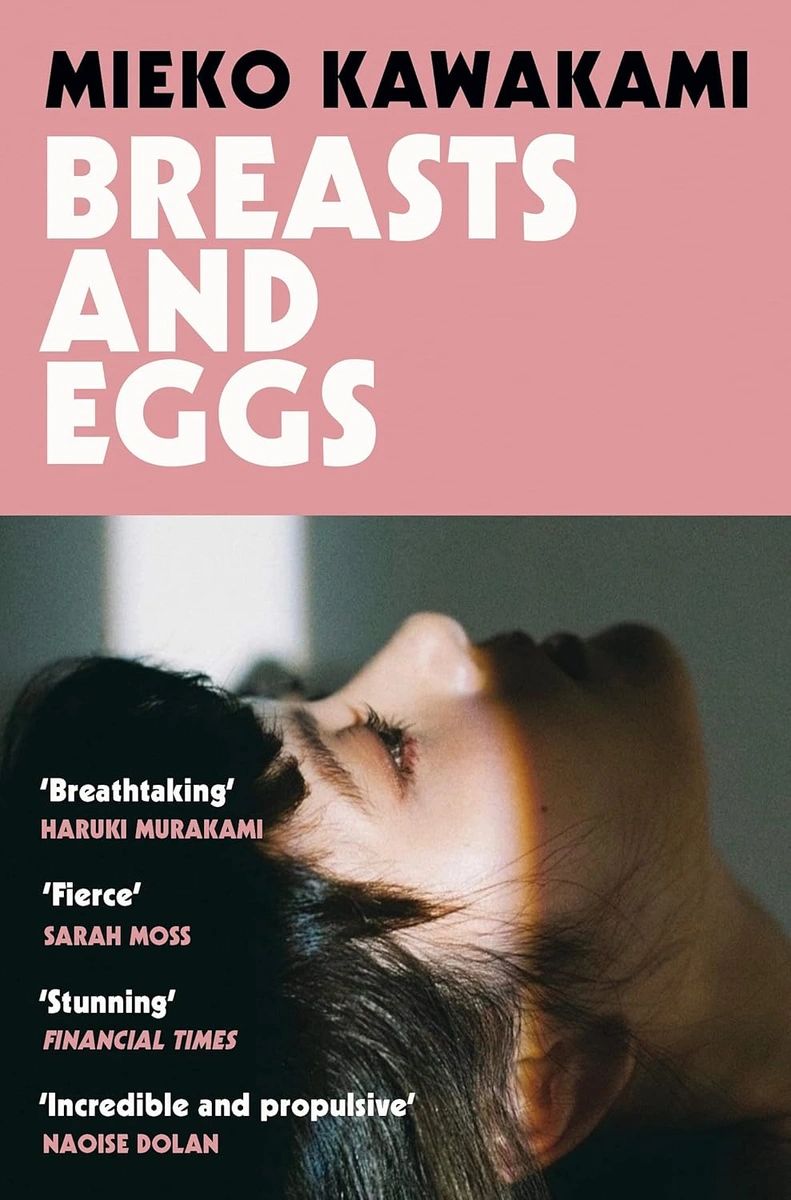
Breasts and Eggs is a bold, intimate novel about women trying to understand their bodies, desires, family histories, and choices in contemporary Japan. Set between a cramped Tokyo apartment, memories of Osaka, and the private spaces where people confront what they cannot easily say aloud, it turns an ordinary summer visit into a sharp, deeply human story about change, shame, longing, and self-definition.
Breasts and Eggs Mieko Kawakami invites readers into a world where the central conflict is not a single dramatic event, but the pressure of living inside expectations that often feel inherited before they are chosen. Translated into English by Sam Bett and David Boyd, the novel expands from Kawakami’s earlier work into a broader portrait of womanhood, class, motherhood, silence, and the uncertain search for freedom.
The plot begins on a hot summer day in Tokyo, where Natsuko, a thirty-year-old woman living in modest circumstances, prepares for the arrival of her older sister Makiko and Makiko’s teenage daughter, Midoriko. Their visit should feel like a family reunion, but tension enters the room almost immediately. Makiko has come from Osaka because she is considering breast enhancement surgery, hoping that changing her body might protect something she fears is slipping away.
Midoriko, meanwhile, has stopped speaking to her mother. Her silence is not empty; it fills Natsuko’s apartment with unease, resentment, and questions that the adults cannot avoid. As Midoriko struggles with puberty and the frightening fact of her own changing body, Makiko becomes absorbed in her appearance, age, and work as a hostess. Between them stands Natsuko, watching, listening, and trying to make sense of the complicated bonds that hold families together even when conversation breaks down.
The first part of the novel is powerful because it turns domestic closeness into emotional pressure. The characters share meals, rooms, memories, and irritations, yet each woman remains isolated inside her own fear. Their conflict is quiet but intense: a mother wants control over her body, a daughter resists the future that seems to be arriving without permission, and a sister observes how poverty, gender, and family history shape what each woman believes is possible.
Years later, the narrative returns to Natsuko at a different stage of life. She has become a writer, but her questions have not disappeared; they have deepened. As she looks back on that summer and on the past she shares with Makiko and Midoriko, she also faces her own uncertain future. The issue of whether to become a mother becomes part of a larger meditation on loneliness, creation, bodily autonomy, and the moral weight of bringing a child into the world.
In the middle of the story, Breasts and Eggs book shifts from family tension toward a wider exploration of reproductive choice, social judgment, and the private cost of wanting a life that does not follow a familiar path. Kawakami does not reduce her characters to symbols. They are contradictory, wounded, funny, stubborn, and searching, which makes the novel feel less like an argument and more like a lived experience.
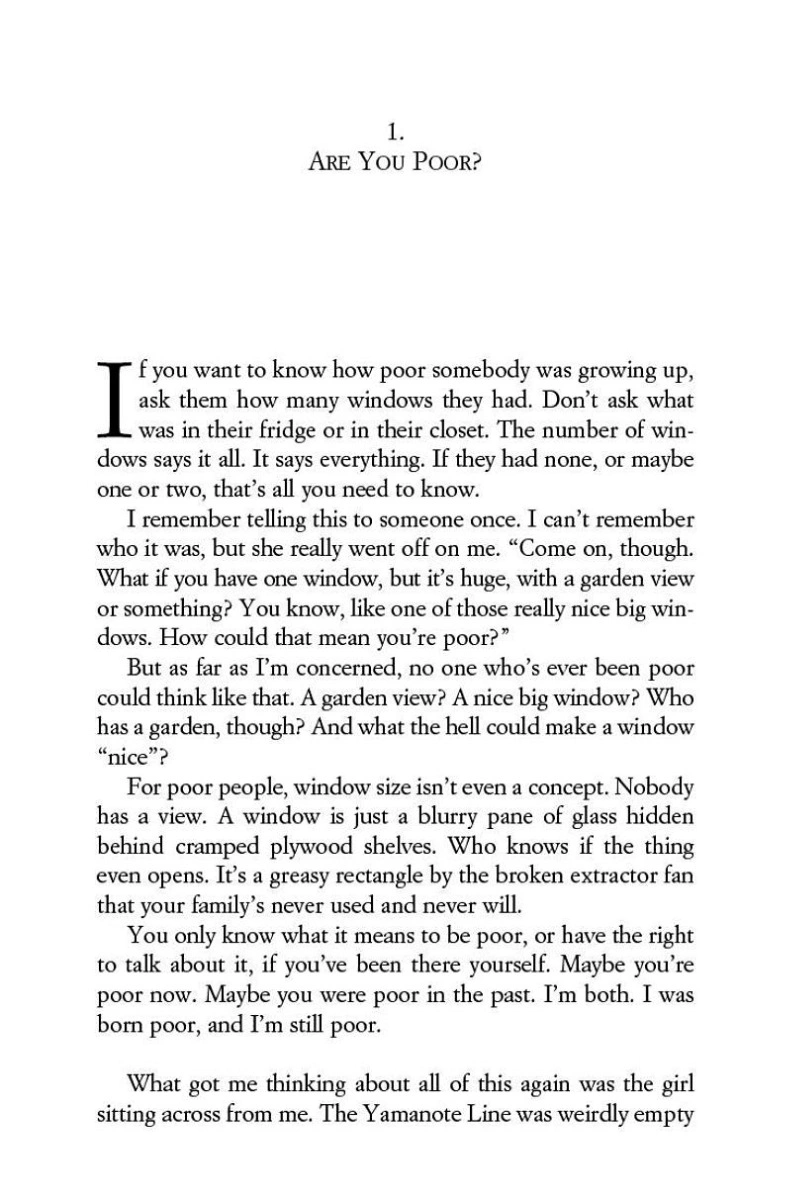
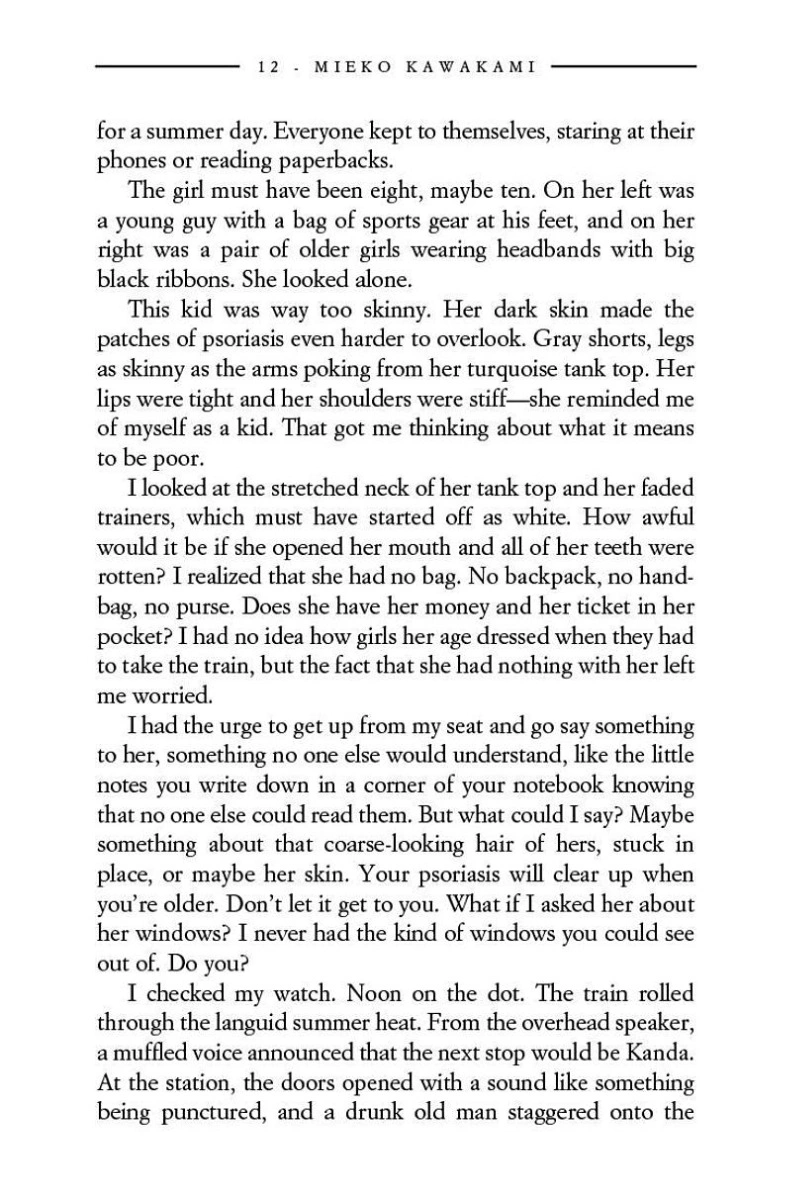
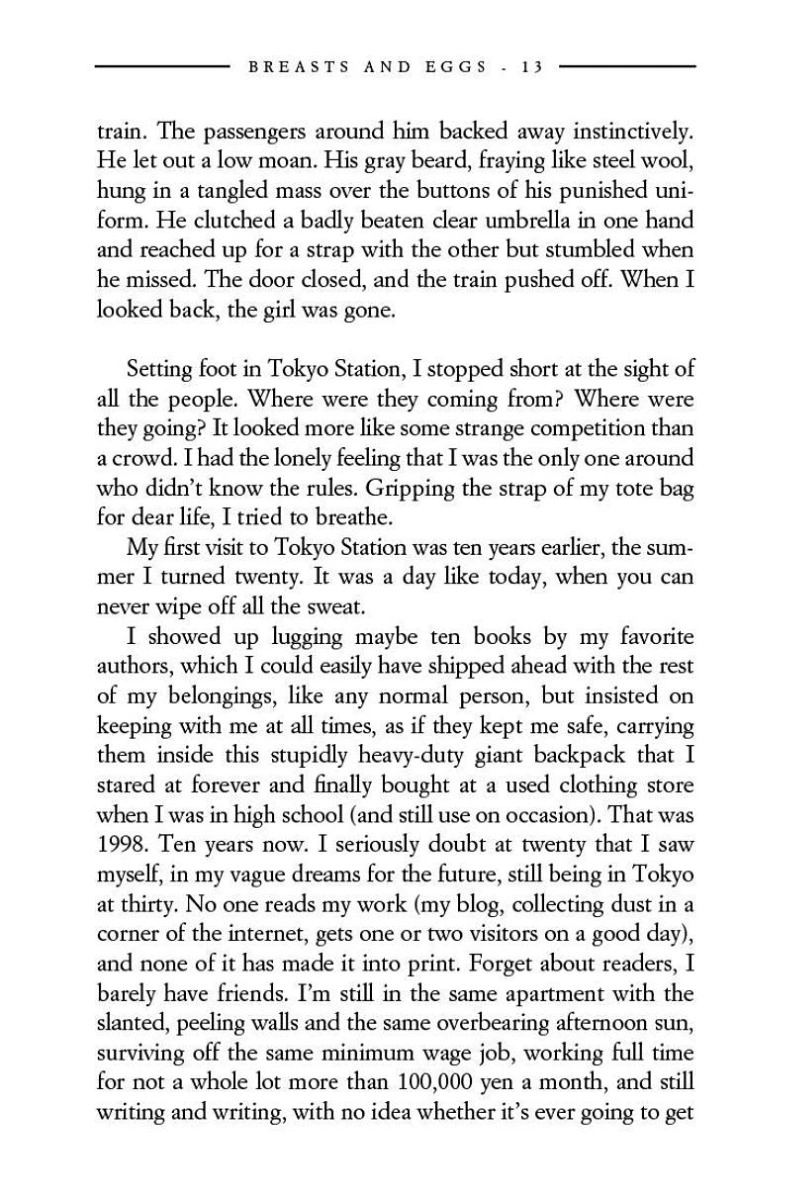
The atmosphere of the novel is raw, observant, and emotionally charged. Kawakami writes with an eye for ordinary details: the heat of summer, the discomfort of a small apartment, the awkward pauses in conversation, the fatigue of work, the way money limits choices before anyone has spoken of dreams. This grounded realism gives the story its force, because the largest themes emerge from daily life rather than from abstract debate.
The main themes include the female body, aging, puberty, motherhood, poverty, desire, autonomy, and the pressure to be legible to others. The novel asks what it means to live in a body that society constantly judges, prices, sexualizes, or defines through usefulness. It also questions whether motherhood is destiny, choice, burden, miracle, or some unstable mixture of all these things.
Kawakami’s style is direct, restless, and attentive to inner contradiction. The narration moves through conversations, memories, reflections, and uncomfortable silences, allowing the reader to feel the characters’ confusion before any conclusion appears. The language can be plain and intimate, yet the emotional structure is layered: a casual exchange may reveal years of resentment, while a small bodily detail can open into a larger question about identity.
The characters carry the novel’s emotional weight. Natsuko is not simply an observer; her own uncertainty becomes the lens through which the reader examines the world. Makiko’s wish to alter her body is tied to work, age, money, and self-worth. Midoriko’s silence becomes a form of protest against a reality she has not chosen. Together, they form a portrait of three generations confronting the same question from different angles: how can a woman claim her life as her own?
Who this book is for
This novel is for readers who appreciate literary fiction that is intimate, socially aware, and psychologically honest. It will resonate with those who want a plot driven by character, mood, and moral complexity rather than by fast external action. The audience includes readers interested in contemporary Japanese literature, feminist themes, family relationships, and stories about the body as both private experience and public battleground.
It is also a strong choice for anyone drawn to books that examine uncomfortable questions without offering easy comfort. Readers who value layered conversations, flawed characters, and a style that moves between tenderness and confrontation will find much to think about here. The novel does not ask to be consumed quickly; it rewards attention to tone, silence, and the emotional meaning behind ordinary gestures.
Why you should read it
Breasts and Eggs stands out because it treats the most personal questions as worthy of serious literary attention. It looks at bodies not as simple symbols, but as places where fear, desire, memory, labor, and social pressure meet. The result is a novel that feels both specific in its setting and widely recognizable in its emotional truth.
One reason to read it is the honesty of its conflicts. The book does not pretend that family love erases resentment, that independence is easy, or that choice exists outside money and social judgment. Instead, it shows how people try to speak from inside limitation, how silence can be both protection and pain, and how difficult it can be to name what one truly wants.
For readers seeking a thoughtful, fearless, and emotionally layered novel, this is a compelling choice. Enter Natsuko’s world slowly, listen to what is spoken and what is withheld, and let the story open a deeper conversation about the body, freedom, family, and the difficult work of becoming oneself.