Відгуки і рецензії читачів
Поки немає відгуків


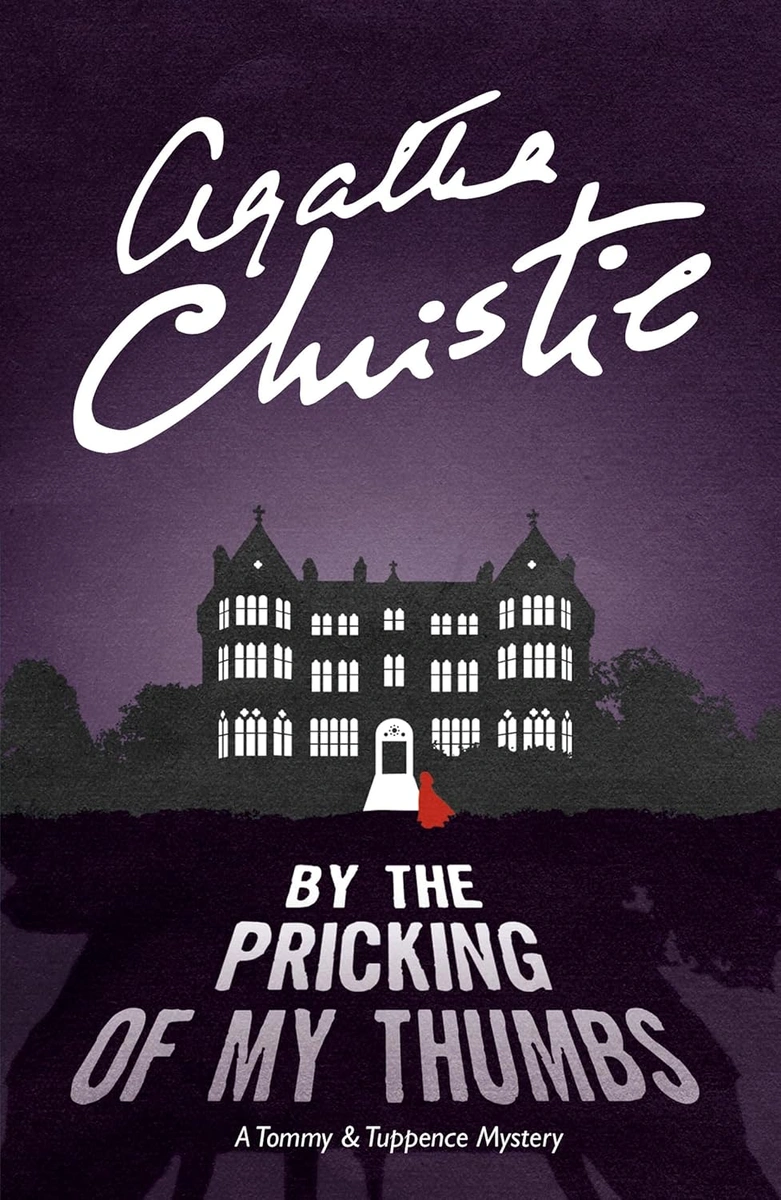
By the Pricking of My Thumbs by Agatha Christie follows Tommy and Tuppence Beresford into a mystery that begins with a visit to an elderly relative. A disturbing remark in a nursing home refuses to leave Tuppence’s mind. The novel combines the couple’s familiar partnership with an atmosphere of vanished people, uncertain memories and danger concealed in ordinary surroundings.
Tommy’s Aunt Ada lives at Sunny Ridge, where the Beresfords encounter other residents during their visit. Mrs. Lancaster speaks about something behind a fireplace, making an apparently casual conversation suddenly unsettling. Other remarks about the home’s inhabitants can be dismissed as confusion or eccentricity, but Tuppence is not comfortable ignoring every detail simply because of the speakers’ age.
When events make it difficult to return to the conversation and ask straightforward questions, curiosity becomes an investigation. A painting offers another line of inquiry, pointing towards a house and a landscape Tuppence thinks she recognises. Following that connection takes the story away from the nursing home and into a community where the past has not disappeared as completely as it first seems.
Tommy and Tuppence bring different temperaments to the search. Their long relationship allows humour and affectionate friction, but it does not make them immune to misjudgment. Tuppence’s willingness to act on an intuition keeps the inquiry moving, while also placing her in situations whose danger is not immediately visible. The apparent modesty of the initial clue conceals a much more serious history.
The novel’s suspense depends on uncertainty about which statements should be trusted. A witness can sound unreliable and still have noticed something important. Respectable appearances can be equally misleading. Christie uses those imbalances to make age and social authority part of the puzzle: deciding who is entitled to be believed can determine whether a crime remains hidden.
The title’s Shakespearean warning suits the story’s growing unease. Suggestions of witchcraft and local fear create an ominous atmosphere, while the investigation remains concerned with human motives and concealment. Houses, objects and remembered conversations become links between incidents separated by time, asking readers to reconsider what first looked merely curious or accidental.
This book suits readers who enjoy Christie’s recurring detectives and mysteries with a strong sense of place. Tommy and Tuppence’s established partnership supplies continuity without requiring this case to function as an origin story. Its particular attraction is the movement from a seemingly insignificant conversation to a wider pattern of wrongdoing, carried by an investigator who refuses to assume that an old person’s alarming words can safely be forgotten.