Відгуки і рецензії читачів
Поки немає відгуків


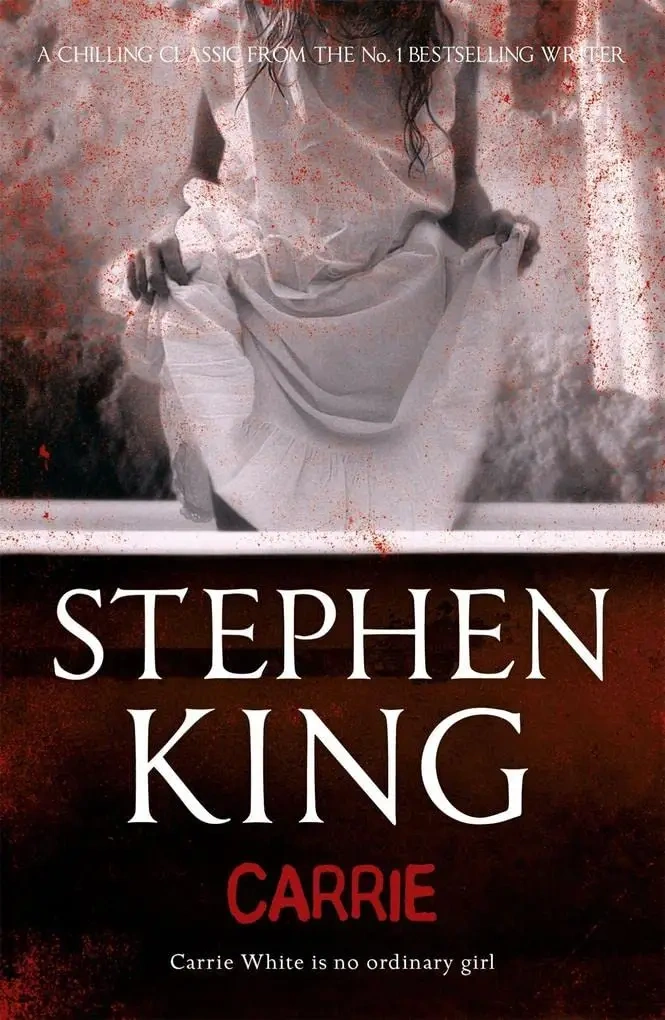
Carrie is a chilling horror novel about a bullied teenage girl whose hidden power turns humiliation into catastrophe. Stephen King introduces Carrie White as an outcast trapped between cruelty at school and religious oppression at home, then follows her toward a prom night that offers the fragile promise of acceptance before becoming one of horror fiction’s most devastating moments.
Carrie Stephen King gives readers the author’s debut novel, first published in 1974, and a story that helped define his gift for mixing supernatural terror with painfully human fear. The novel is not only about telekinesis; it is about shame, isolation, rage, social cruelty, and the terrifying consequences of a community that refuses to see a vulnerable person until it is too late.
The plot centers on Carrie White, a lonely high school student in the town of Chamberlain, Maine. She is awkward, sheltered, and relentlessly mocked by her classmates. At home, she lives under the control of her fanatically religious mother, Margaret White, whose love is twisted by fear, punishment, and obsession. Between school and home, Carrie has almost no safe place to exist.
Her difference is not only social. Carrie possesses telekinetic power, the ability to move objects with her mind. At first, this gift appears in moments of stress and confusion, but as her emotional pressure grows, so does the force inside her. King uses this power as both horror device and metaphor: Carrie’s rage is not random evil, but the result of years of humiliation, repression, and fear.
The central conflict intensifies when Tommy Ross invites Carrie to the prom. For Carrie, the invitation feels like a doorway into ordinary life, a chance to be seen as something other than a joke or a target. Yet the kindness of one person cannot erase the cruelty of others. Around her, classmates make choices that will turn a night of hope into a nightmare.
In the middle of the narrative, Carrie book becomes especially powerful because the story is presented through a mix of scenes, reports, interviews, and after-the-fact documents. This structure gives the novel the feeling of a disaster being reconstructed after the damage is done. The reader knows that something terrible is coming, but the suspense lies in watching how ordinary cruelty, fear, and silence build toward the inevitable.
The characters around Carrie sharpen the tragedy. Sue Snell is burdened by guilt and tries to repair a wrong. Chris Hargensen embodies vicious entitlement and revenge. Tommy Ross offers Carrie a glimpse of kindness, while Margaret White represents a different kind of violence: the violence of control disguised as salvation. Together, they create a world where the supernatural horror grows directly from social and emotional conflict.
The atmosphere is tense, claustrophobic, and increasingly explosive. King begins with the recognizable cruelty of adolescence and gradually reveals the larger horror beneath it. The locker room, the school corridors, the White household, and the prom all become stages where shame is intensified until it can no longer be contained.
The main themes include bullying, religious fanaticism, female adolescence, isolation, revenge, guilt, and the danger of treating another person as less than human. The novel asks whether Carrie is a monster, a victim, or something more unsettling: a person pushed so far that her pain becomes impossible for the world to ignore.
King’s style is direct, sharp, and experimental in structure. The fragments of documents and testimony create distance, while the scenes of Carrie’s life create deep discomfort and pity. This combination makes the story feel both intimate and public, as if the reader is witnessing a private breakdown that society later tries to explain without fully accepting responsibility.
The horror works because it is emotional before it is supernatural. Telekinesis gives the story its terrifying spectacle, but the true dread comes from the everyday failures of empathy that surround Carrie. The reader sees how mockery, neglect, fear, and self-righteousness can become as destructive as any paranormal force.
Who this book is for
This novel is ideal for readers who enjoy horror grounded in psychology, social tension, and tragic character development. It will appeal to an audience interested in supernatural stories where the fear comes not only from strange powers, but from recognizable human cruelty.
It is also a strong choice for readers who want to begin exploring King’s fiction from its starting point. The novel is compact compared with many of his later works, yet it already contains key elements of his style: small-town pressure, flawed characters, escalating dread, and the sense that ordinary life can crack open to reveal something terrifying underneath.
Why you should read it
Carrie remains powerful because it turns a familiar nightmare of humiliation into a story of overwhelming consequence. King does not let the reader treat cruelty as harmless. Every joke, insult, silence, and act of control matters, because the novel shows how damage accumulates long before disaster becomes visible.
Another reason to read it is Carrie White herself. She is frightening, but she is also heartbreaking. Her desire to be accepted is simple, and that simplicity makes the tragedy sharper. The novel asks the reader to feel dread and compassion at the same time, which is one reason it continues to stand apart in modern horror.
For readers seeking a dark, tragic, and sharply written horror classic, this novel offers an intense reading experience from the first page to the final shock. Enter Carrie White’s world carefully, and discover how one girl’s longing for acceptance becomes a force no town can survive unchanged.