Відгуки і рецензії читачів
Поки немає відгуків


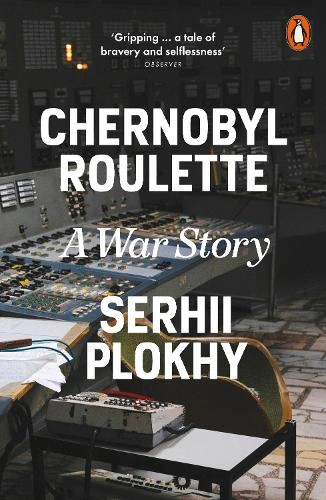
Chernobyl Roulette: A War Story by Serhii Plokhy recounts the Russian occupation of the Chernobyl nuclear site during the opening weeks of the full-scale invasion of Ukraine. On 24 February 2022, armoured vehicles approached the plant on the route toward Kyiv. The occupation lasted thirty-five days, placing a site already associated with nuclear catastrophe inside a new and immediate wartime danger.
The book centres on Ukrainians who were held hostage and required to keep working under extraordinary conditions. Shifts stretched for weeks, while the workers’ knowledge remained essential to preventing another accident. Their responsibilities did not disappear when control of the site changed. Plokhy follows that collision between military occupation and technical duty, asking what happens when the people who understand a hazardous place must negotiate with armed men who do not.
Expertise becomes a form of resistance when danger cannot be ignored. The workers’ understanding of the site gives them a responsibility that the occupiers’ weapons cannot replace. This creates a particular kind of tension: safety depends on people who have been deprived of freedom, yet who must continue to make judgments with consequences beyond themselves. The book gives that predicament a concrete human scale rather than leaving it as an abstract nuclear risk.
Among the people encountered is foreman Valentyn Heiko, who had also been involved in the aftermath of the 1986 disaster and turned sixty during the occupation. Other details reveal how daily life continued within the crisis. Workers found a way to mark International Women’s Day, while four unofficial visitors caught at the site helped an overworked cook. Such episodes make survival visible through ordinary tasks as well as exceptional decisions.
This English Penguin paperback was published in 2025 and contains 240 pages. It is a focused account of the 2022 occupation, distinct from Plokhy’s Chernobyl: History of a Tragedy about the original 1986 disaster. The relationship between the two events gives the setting historical weight, but this book’s subject is the new danger created when a nuclear site becomes part of an invading army’s route.
Buy this book if you want to understand the occupation through the people who had to keep the site safe from inside it. Chernobyl Roulette combines wartime history with questions about knowledge, coercion and professional responsibility. The account’s force comes from the mismatch between the workers’ continuing obligations and the conditions imposed on them. Readers can follow how a global concern became a sequence of local judgments, improvised arrangements and human encounters during thirty-five days whose consequences could have reached far beyond the people trapped there.