Відгуки і рецензії читачів
Поки немає відгуків


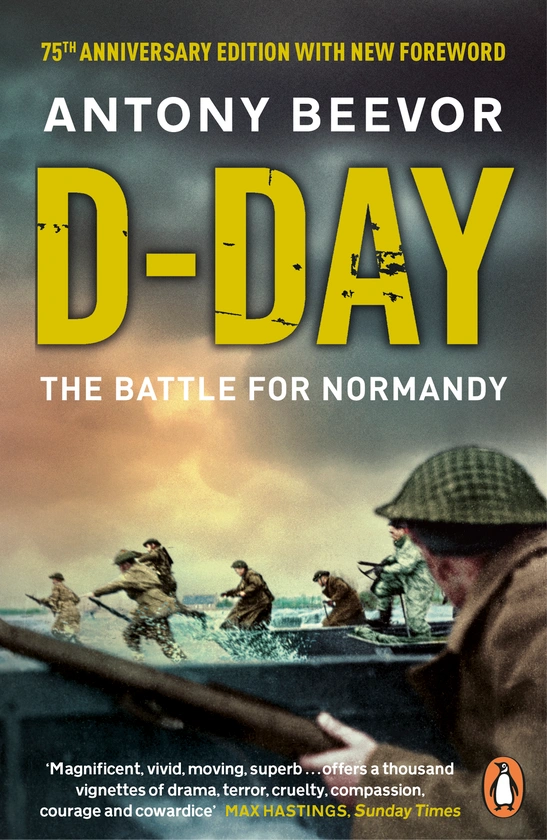
D-Day: The Battle for Normandy is a vivid and unflinching military history of the Allied landings in Normandy and the ferocious campaign that followed. Antony Beevor takes readers from the largest invasion fleet ever assembled to the beaches, hedgerows, villages, command rooms, and bombed towns where the fate of Western Europe was fought over in blood, fear, confusion, and endurance. The hook is immediate: this is not only the story of D-Day itself, but of the long, costly battle for Normandy that tested soldiers, commanders, and civilians alike.
D-Day: The Battle for Normandy Antony Beevor offers readers a gripping account by a historian known for combining battlefield detail with human experience. Reissued with a new foreword for the 75th anniversary of the Normandy landings, the book follows Allied forces, German defenders, French civilians, and the commanders whose decisions shaped the campaign. Its value lies in showing war at every level: strategy, chaos, courage, rivalry, suffering, and the brutal reality behind liberation.
The narrative begins with the immense preparation for Operation Overlord, a military undertaking of extraordinary scale and complexity. The landings required ships, aircraft, troops, deception plans, logistics, timing, and a level of coordination rarely seen in history. Yet even the most careful planning could not remove fear from the men approaching the coast under fire. Beevor brings the reader close to that moment when strategy became survival.
The beaches of Normandy form the dramatic opening, but the book quickly shows that D-Day was only the beginning. After the landings came weeks of brutal combat through villages, fields, and the difficult bocage terrain. The Allied advance was slower and bloodier than many had hoped, while German resistance remained fierce. The plot of the history is driven by pressure: the need to break out, the need to hold, the need to keep men supplied, and the need to keep commanders united when losses mounted.
Beevor pays close attention to the tensions between Allied leaders and the rivalries that developed as the campaign unfolded. Decisions made far from the front shaped the lives of soldiers on the ground, but the battlefield often refused to obey neat plans. The book shows how command ambition, national pride, miscommunication, and strategic disagreement affected the pace and character of the fighting.
In the middle of the narrative, D-Day: The Battle for Normandy book becomes more than a military account of invasion and advance. It becomes a study of the true cost of liberation. French civilians were caught between German occupation, Allied bombardment, and the devastation of towns and villages turned into battlefields. The joy of being freed existed alongside grief, displacement, and destruction, giving the story a more honest emotional range.
The characters in this history include generals, paratroopers, infantrymen, tank crews, resistance fighters, nurses, prisoners, and civilians. Beevor’s strength lies in shifting between the vast and the intimate. A campaign map may show movement across Normandy, but individual experience reveals the taste of dust, the shock of shellfire, the terror of close combat, and the exhaustion of men ordered forward again and again.
The atmosphere is tense, noisy, and physically immediate. Beaches under fire, landing craft, burning vehicles, crowded field hospitals, ruined villages, and claustrophobic hedgerows create a sense of war as lived experience rather than distant legend. The book captures not only what happened, but how it felt: the noise, smell, fear, confusion, and sudden acts of bravery that defined the campaign.
The major themes include courage, command, sacrifice, civilian suffering, liberation, military rivalry, and the unpredictability of battle. The book explores how victory is made from planning and improvisation, heroism and error, discipline and chaos. It also shows that liberation, however necessary, can arrive through destruction that scars the people it is meant to free.
The style is narrative, detailed, and highly readable, combining operational history with the human texture of eyewitness experience. Beevor explains the movement of armies without losing sight of individuals, and he keeps the pace of the campaign clear while preserving its moral complexity. The result is a history that reads with the urgency of a war story but remains grounded in research and context.
What lingers after reading is the scale of the undertaking and the price paid for each mile gained. D-Day: The Battle for Normandy does not reduce the landings to a single heroic image. It shows the invasion as the opening of a punishing struggle, where courage was real, suffering was immense, and the liberation of Europe passed through some of the hardest fighting of the war.
This book is for readers interested in the Second World War, Normandy, D-Day, military strategy, and the lived experience of battle. It will appeal to an audience that wants a serious but accessible history, one that includes commanders and ordinary soldiers, battlefield tactics and civilian tragedy, the drama of invasion and the difficult aftermath of success.
One reason to read this book is its scope. Beevor does not stop at the famous beaches. He follows the fighting inland, through the difficult weeks when the success of the invasion still had to be secured. This makes the book especially valuable for understanding D-Day as the beginning of a larger and more costly campaign.
Another reason is the attention given to civilians. The people of Normandy were not passive background figures in a military drama. They endured bombing, occupation, displacement, fear, and loss, even as liberation approached. Their experience gives the story emotional depth and prevents the history from becoming only a celebration of military success.
The book also stands out because it captures the confusion of war. Plans are made, orders are issued, and commanders argue, but soldiers experience battle as noise, danger, fragments of information, and immediate decisions. This tension between strategy and reality gives the narrative its force.
D-Day: The Battle for Normandy is a powerful choice for readers who want to understand the invasion of Normandy in all its scale, terror, and human consequence. It invites you onto the beaches and into the hedgerows, where liberation was won not in a single day, but through weeks of sacrifice, endurance, and relentless battle.