Відгуки і рецензії читачів
Поки немає відгуків


Dune Chronicles Book3: Children of Dune is a sweeping science-fiction novel about inheritance, prophecy, ecological collapse and the dangerous legacy left behind by Paul Atreides on the planet Arrakis.
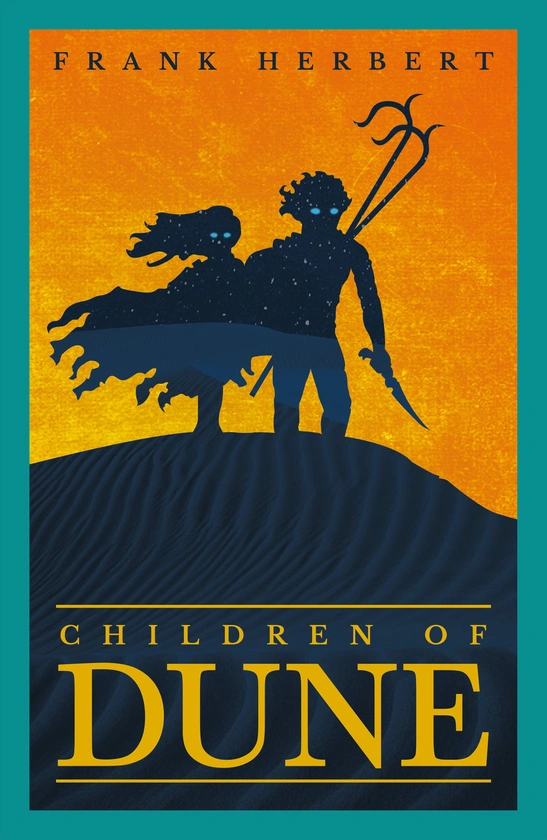
Dune Chronicles Book3: Children of Dune Frank Herbert continues the monumental Dune saga through Leto II and Ghanima, the twin children of Paul Muad’Dib, whose extraordinary abilities make them heirs not only to an empire, but also to a future that may destroy everything their family created.
The plot unfolds after Paul Atreides has disappeared into the desert, leaving the Atreides empire in the hands of regents, priests and political forces struggling to control his legacy. Arrakis, once defined by endless desert, is changing. Water and greenery spread across the planet, turning the dream of ecological transformation into a threat no one can safely ignore.
The altered climate endangers the giant sandworms, the creatures tied to the production of the spice melange. Because spice is the foundation of interstellar travel, political power and religious influence, the ecological change on Arrakis becomes a crisis for the entire empire. What looks like renewal on the surface may contain the seeds of economic and spiritual catastrophe.
At the centre of the conflict are Leto II and Ghanima, Paul’s twin heirs. They possess heightened awareness and a terrifying inheritance of memory, vision and political expectation. Their aunt Alia rules in the name of House Atreides, but the twins understand that the empire around them is unstable. Fanatics, rival houses and hidden manipulators all seek advantage from the uncertainty surrounding their future.
In the middle of the narrative, Dune Chronicles Book3: Children of Dune book becomes a philosophical struggle over destiny. Leto and Ghanima can see possible paths forward, but every solution demands sacrifice. The question is not merely who will rule Arrakis, but what kind of future humanity can survive, and whether any ruler has the right to force that future into being.
The novel expands the family drama of the Atreides into a larger meditation on power, religion and ecology. Paul’s victory in the first book has become a burden for the next generation. His myth has hardened into institutions, his choices have created consequences and his children must face the reality that a heroic legend can become a prison for those who inherit it.
First published in 1976, Children of Dune is the third novel in Frank Herbert’s original six-book Dune sequence, following Dune and Dune Messiah and preceding God Emperor of Dune. It was nominated for the Hugo Award for Best Novel in 1977 and later formed part of a television miniseries adaptation of the Dune universe.
The atmosphere is grand, austere and intellectually charged. Arrakis remains harsh and sacred, but its transformation gives the setting an uneasy beauty. The greening of the desert should feel hopeful, yet Herbert turns it into a source of dread, showing how even a dream fulfilled can produce disaster when ecology and power are misunderstood.
The main themes include inheritance, prescience, ecological balance, religious fanaticism, political manipulation, identity and the cost of survival. The central conflict is both external and internal: conspiracies threaten the Atreides rule, while the twins struggle with ancestral memory, possible futures and the danger of becoming something no longer fully human.
Frank Herbert’s style is dense, philosophical and layered with political and religious language. The story is not only an adventure of desert chases, palace intrigue and imperial danger; it is also a debate about systems, myths and the long consequences of charismatic leadership.
Leto and Ghanima are compelling because they are children carrying burdens that would overwhelm adults. Their intelligence, caution and strange maturity give the novel an eerie emotional tone. Alia, the Fremen, the priesthood and the remaining enemies of House Atreides create a web of pressure around them, making childhood itself impossible.
For the audience, the book offers a deeper and darker continuation of the Dune saga. It asks readers to look beyond victory and examine what happens after revolution, prophecy and empire become daily governance. The result is a science-fiction story with the scale of myth and the anxiety of political tragedy.
This novel is best suited to readers who have already read Dune and Dune Messiah, because its emotional and political force depends on understanding Paul Atreides’s rise, transformation and disappearance. It will appeal to fans of complex science fiction, ecological speculation, dynastic conflict and philosophical worldbuilding.
It is also a strong choice for readers who enjoy stories about heirs, prophecy, religious power and the danger of systems built around a single legendary figure. The audience for this book is anyone ready for a slower, more reflective and more politically intricate continuation of the Dune universe.
Dune Chronicles Book3: Children of Dune is a compelling choice for readers asking why read the next stage of Frank Herbert’s epic. It offers political tension, ecological warning, unforgettable characters and a profound look at what happens when the children of a prophet must decide whether to preserve a world, change it or become something terrifying enough to save it.