Відгуки і рецензії читачів
Поки немає відгуків


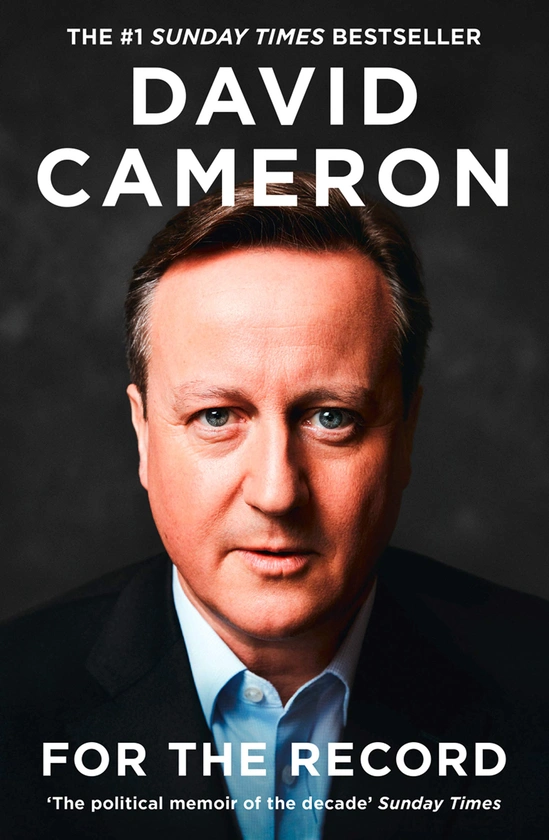
For the Record by David Cameron is a political memoir covering his upbringing, rise within the Conservative Party and years as British prime minister. The account moves from personal history to government, international crises and the referendum on European Union membership. It presents Cameron’s own explanation of decisions whose consequences extend well beyond his time in office.
The early chapters cover family background, education, entry into politics and marriage to Samantha. Cameron also writes about their son Ivan and the impact of his life and death on the family. These sections establish the personal experiences through which the author frames later public choices, rather than beginning with government as if it existed separately from private life.
His political story includes becoming an MP, seeking the Conservative leadership and attempting to redefine the party’s public identity. The 2010 election leads into the negotiations that create a coalition with the Liberal Democrats. Forming a government requires compromises about personnel, policy and the relationship between parties that remain electoral competitors even while sharing office.
The premiership chapters address public finances, relations within the cabinet, social policy and the difficulties of maintaining a governing coalition. The account also includes the London Olympics, same-sex marriage, the Scottish independence referendum and the move towards the 2015 election. These events let readers follow the relationship between an announced political programme and the demands that emerge during a term of office.
International sections discuss Afghanistan, Libya, the Arab Spring and the challenges surrounding the Islamic State, among other subjects. Decisions about force and diplomacy sit alongside domestic disputes about budgets, leadership and party management. The range shows the competing responsibilities that a prime minister claims to balance, while leaving readers room to assess whether the account justifies the choices described.
The European Union referendum supplies a decisive later strand. Cameron recounts renegotiation, the campaign and the end of his premiership. Because this is a participant’s memoir, its explanations should be read as an argument from someone involved, with particular motives, information and responsibilities. That perspective is the book’s central source of interest as well as a reason to examine it critically.
This book suits readers of recent British history, political autobiography and accounts of how government decisions are made. It offers detail for those interested in the coalition period and in Cameron’s own understanding of the referendum. The value lies in having the author’s extended account available for comparison with other evidence, rather than expecting a single participant to supply the final interpretation of a contested political era.