Відгуки і рецензії читачів
Поки немає відгуків


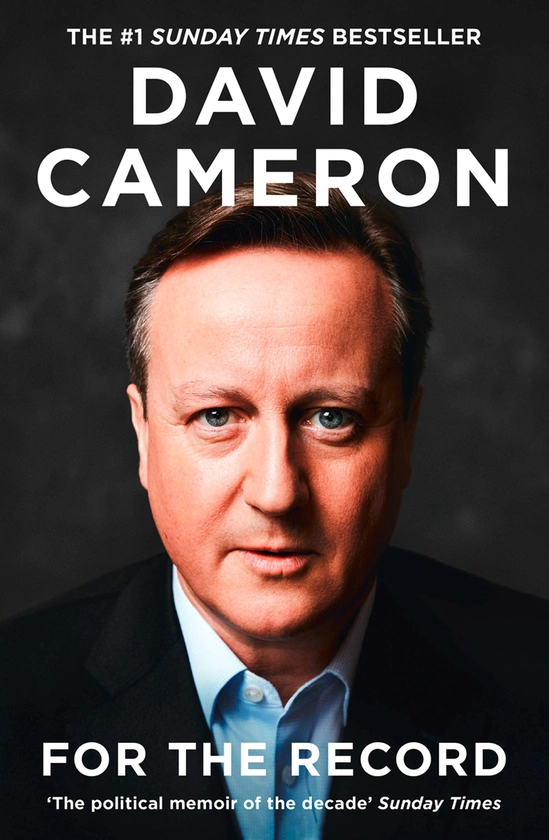
For the Record [Hardcover] is a substantial political memoir by former British Prime Minister David Cameron, offering a first-person account of leadership, crisis, reform and consequence during one of the most turbulent periods in modern British politics.
For the Record [Hardcover] David Cameron takes readers behind the door of 10 Downing Street, tracing Cameron’s journey from modernising the Conservative Party to forming a coalition government, winning a majority and confronting the defining political question of Brexit.
The plot of this memoir is the story of political ascent, government under pressure and a premiership shaped by decisions that continue to define Britain’s public life. Cameron writes about becoming Conservative Party leader in 2005 after three successive electoral defeats for the party, and about the project of presenting a more modern Conservative agenda to voters.
The narrative moves into the 2010 general election and the formation of the first coalition government in Britain for decades. This period placed Cameron at the centre of difficult negotiations, public spending decisions and the challenge of governing during the aftermath of the global financial crisis. The book examines how he understood economic recovery, public sector reform and the political compromises required by coalition leadership.
Cameron also reflects on domestic policy, including education reform, welfare reform, environmental commitments and the legalisation of same-sex marriage in England and Wales during his premiership. The memoir presents these issues as part of a broader attempt to combine economic restraint with what he describes as a modern and socially conscious agenda.
In the middle of the narrative, For the Record [Hardcover] book becomes a study of crisis leadership. The Arab Spring, the Eurozone crisis, the rise of ISIS, migration pressure, military decisions in Libya, Iraq and Syria, and Britain’s relationship with the European Union all appear as tests of judgment under uncertainty. Cameron’s account shows how domestic politics and international affairs constantly collided.
The memoir also deals with the Scottish independence referendum and the later EU referendum. Cameron explains the path to renegotiation, the campaign to remain in the European Union and the result that ended his premiership. Whatever view readers bring to Brexit, this section gives the book its central conflict: a leader trying to defend his record while confronting the consequences of a choice that changed the country’s direction.
First published in 2019 by William Collins, the memoir is a large hardcover work of more than seven hundred pages. Alongside politics, Cameron writes about family life, including the death of his eldest son, Ivan. These passages add personal weight to a book otherwise defined by elections, offices, policy battles and the burden of public decision-making.
The atmosphere is reflective, defensive, personal and political. This is not a detached history written from outside government, but a record from someone explaining how choices looked from the centre of power. The tone moves between confidence, regret, justification and candour.
The main themes include leadership, responsibility, party renewal, public service, coalition government, reform, national identity, Europe, crisis management and the cost of political judgment. The central conflict is the tension between intention and outcome: what a leader believes he is trying to achieve, and what history later makes of those decisions.
Cameron’s style is direct and explanatory, shaped by the need to place events in sequence and give his own reasoning for controversial choices. The book combines political narrative with personal recollection, offering portraits of colleagues, opponents and international figures who shaped his time in office.
The characters in this memoir are real political actors: ministers, advisers, coalition partners, foreign leaders, campaigners and family members. Cameron’s own role is the most scrutinised one, because the book repeatedly returns to what he got right, what he believes was misunderstood and what he now sees differently.
For the audience, the memoir offers a close look at how modern government feels from inside. Its value lies not only in the events it covers, but in the mindset it reveals: how a prime minister weighs risk, loyalty, public pressure, party management and personal conviction when no decision is free of consequence.
This book is ideal for readers interested in British politics, political memoirs, Conservative Party history, Brexit, coalition government and the challenges of leading during economic and international crisis. It suits an audience looking for a detailed first-person account rather than a short overview.
It will also appeal to students, journalists, historians and general readers who want to understand the Cameron years from the perspective of the person who led the government. Readers interested in leadership, public policy and the relationship between private life and public office will find the hardcover edition especially substantial.
For the Record [Hardcover] is a compelling choice for readers asking why read a prime ministerial memoir about modern Britain. It offers political detail, personal reflection and a close view of decisions made under pressure, inviting readers to judge not only the record Cameron presents, but the era his leadership helped define.