Відгуки і рецензії читачів
Поки немає відгуків


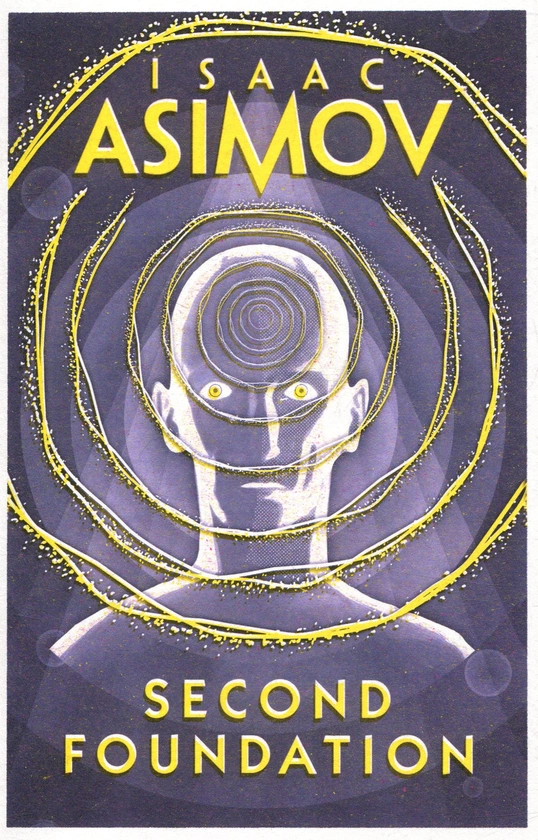
Second Foundation by Isaac Asimov is the third novel in the original Foundation trilogy. This English paperback follows the search for the hidden institution Hari Seldon established alongside the public Foundation on Terminus. After the Mule disrupts the expected course of history, the question of where the Second Foundation exists becomes a struggle over who can direct the future.
Seldon’s psychohistory was designed to shorten the chaos following the Galactic Empire’s decline. The First Foundation develops openly, but the Second works behind secrecy. Its very concealment shapes the conflict, because discovering its location could reveal who has been influencing events and how far the original plan can still be trusted.
The Mule has shown that an exceptional individual can threaten predictions built around large populations. His unusual power makes the hidden Foundation both a potential obstacle and a possible source of answers. The search is therefore not a neutral scientific investigation. Those pursuing it want to understand an institution whose knowledge could limit their own freedom to act.
The novel later follows people associated with the First Foundation as concern about the unseen group continues. The possibility of mental influence makes ordinary evidence difficult to interpret. A statement might be sincere without being independent, and an apparently successful deduction may be part of a larger manipulation. Asimov turns the investigation into a contest over the assumptions through which people judge information.
The book continues the ideas developed in Foundation and Foundation and Empire. Its central questions concern the stability of a historical plan and the legitimacy of protecting it through concealed intervention. Knowing that an institution intends a beneficial outcome does not settle whether others should accept its authority or how its intentions can be assessed.
Asimov’s style places substantial weight on conversation, competing theories and reversals in interpretation. The tension often comes from understanding why a convincing explanation is incomplete. Readers are invited to think alongside the characters while recognising that the conditions for reliable reasoning may themselves be part of the struggle.
This paperback suits readers continuing the original trilogy in order, especially those drawn to science fiction about institutions and long historical processes. It completes that initial three-book sequence while the larger Foundation universe extends beyond it. Its appeal is the meeting of a detective-like search with a political dilemma: the attempt to protect civilisation becomes inseparable from the question of whether anyone should possess the power to shape it without being seen.