Відгуки і рецензії читачів
Поки немає відгуків


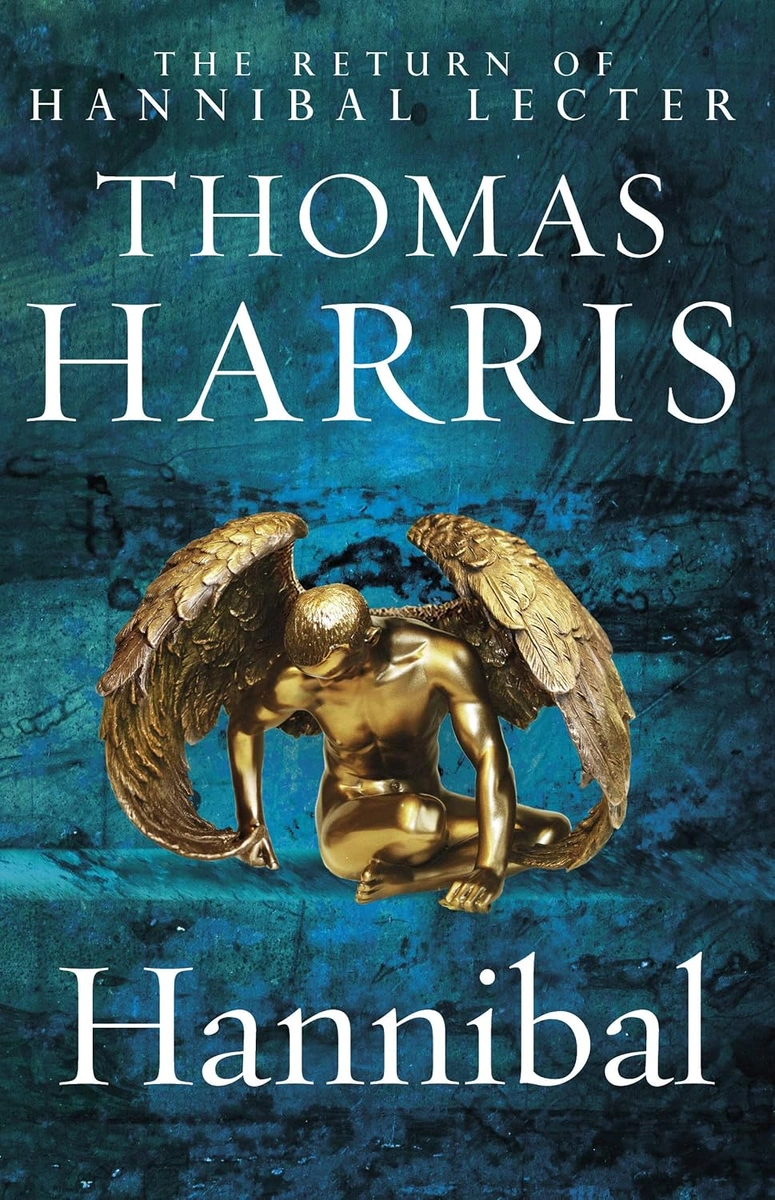
Hannibal Lecter Book3: Hannibal is a dark psychological thriller about obsession, revenge, corruption, and the terrifying intimacy between a fugitive genius and the FBI agent who once understood him too well. Thomas Harris returns to Hannibal Lecter and Clarice Starling seven years after the events of The Silence of the Lambs, creating a story where pursuit, memory, and desire become as dangerous as murder itself.
Hannibal Lecter Book3: Hannibal Thomas Harris continues the Lecter saga with a disturbing, elegant, and morally unsettling plot that moves between law enforcement, private vengeance, and the shadowed world of a killer who has made escape into an art. The novel offers unforgettable characters, a charged atmosphere, and a conflict built around two people whose last encounter changed them both.
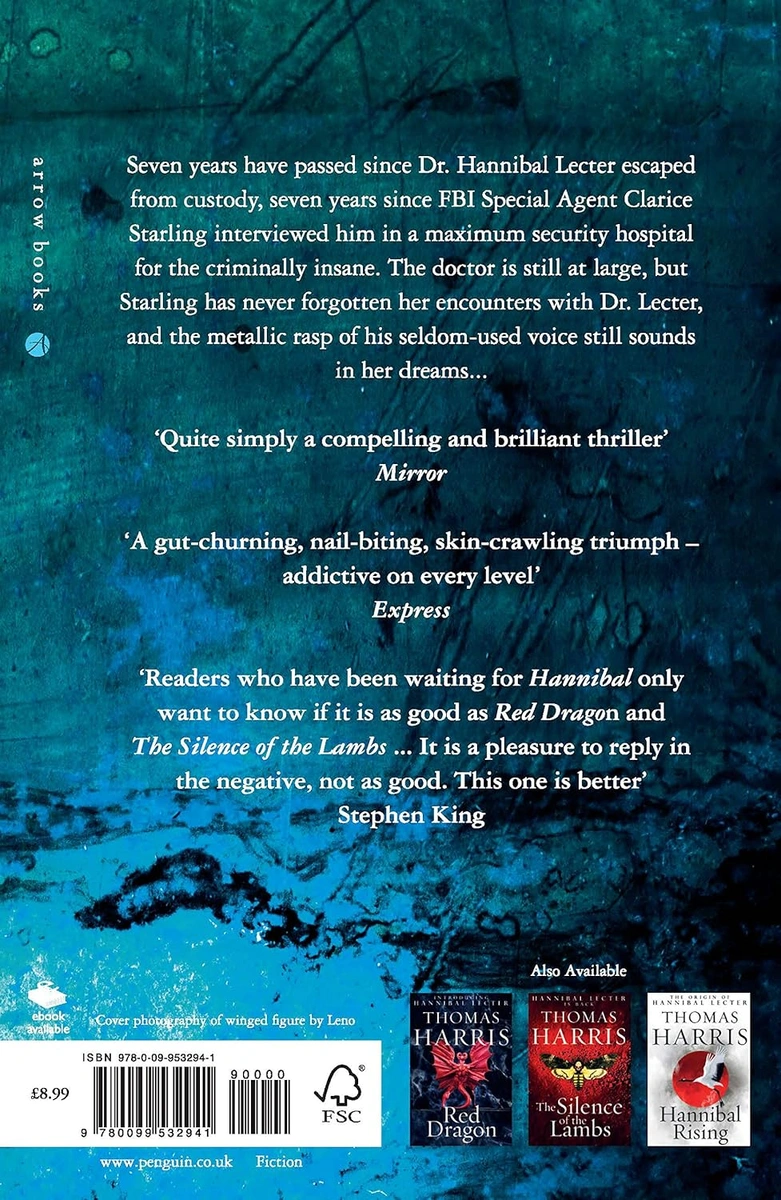
Seven years have passed since Hannibal Lecter escaped custody, and he has used that time to disappear into a life of refinement, culture, and concealment. He is no longer a prisoner behind glass, but a man at large, moving through the world with terrifying patience. His freedom turns every rumor of him into a threat, because Lecter is not simply hiding; he is waiting, choosing, and planning.
Clarice Starling, meanwhile, is no longer the young trainee who faced Buffalo Bill. She is an experienced FBI Special Agent, but her career is damaged after a disastrous drug raid that leaves her exposed to politics, criticism, and institutional suspicion. The courage that once made her exceptional now becomes something others can twist against her, and her professional life begins to collapse under pressure.
The plot also introduces Mason Verger, one of Lecter’s surviving victims, whose wealth and hatred have been devoted to revenge. Verger does not want justice in any ordinary sense. He wants Lecter captured, humiliated, and destroyed in a manner as grotesque as his obsession. His pursuit adds another layer of danger, because his resources allow him to turn private vengeance into a vast and carefully baited trap.
In the middle of the narrative, Hannibal Lecter Book3: Hannibal book becomes a psychological contest over control. Clarice is pulled toward Lecter through memory, dreams, and the unresolved power of their past conversations, while Verger and other figures attempt to use her as a means to reach him. The question is not only who can catch Lecter, but who understands him well enough to survive the attempt.
Lecter’s decision to reach out to Clarice changes the shape of the story. Their connection is not simple attraction, rivalry, or fear, but something stranger and more dangerous: a shared recognition between two minds shaped by violence, discipline, loneliness, and moral pressure. Clarice knows Lecter is monstrous, yet she also knows he sees parts of her that others ignore or exploit.
The central conflict grows from pursuit on several fronts. Verger hunts Lecter for revenge. Institutions circle Clarice when she is most vulnerable. Lecter watches, manipulates, and draws the players closer to the meeting he has imagined for years. The novel moves through cruelty, elegance, strategy, and dread, asking what remains of conscience when every powerful person has a private appetite.
The atmosphere is luxurious, macabre, and deeply unsettling. Harris contrasts civilized surfaces with brutality: fine taste, art, memory, food, scholarship, and manners appear beside physical horror and psychological manipulation. This tension gives the novel its distinctive style, where beauty and violence are never comfortably separate.
The major themes include obsession, revenge, identity, corruption, trauma, appetite, power, and the fragile boundary between fascination and danger. The story asks why certain minds become fixated on one another, and how easily institutions that claim to protect justice can become compromised by ambition, cowardice, and self-interest.
Thomas Harris’s style is precise, atmospheric, and sinister. The writing gives attention to procedure, sensory detail, inner calculation, and the strange elegance of Lecter’s worldview. The pace is not only driven by action, but by anticipation: the reader feels that every conversation, object, memory, and silence may be part of a larger design.
The characters are memorable because they carry moral and psychological complexity. Clarice is principled yet wounded, intelligent yet isolated, and increasingly aware that the system she serves may not protect her. Lecter remains cultured, brilliant, monstrous, and unreadable. Mason Verger embodies revenge stripped of dignity, a man whose suffering has become another form of cruelty.
For the audience, the force of the novel lies in its refusal to make pursuit straightforward. This is not merely a chase between FBI agent and serial killer. It is a collision of damaged loyalties, old conversations, institutional decay, and private nightmares. The atmosphere lingers because the most frightening violence often begins in the mind before it reaches the body.
Who this book is for
This novel is ideal for readers who enjoy psychological thrillers, crime fiction, horror, and morally complex stories centered on dangerous intelligence. It will appeal to fans of Hannibal Lecter, Clarice Starling, suspenseful cat-and-mouse plots, and fiction where elegance and dread exist in the same room.
It is also a strong choice for readers who want a darker continuation after The Silence of the Lambs. The book’s audience includes those drawn to forensic tension, revenge narratives, corrupt power structures, obsessive villains, and characters whose inner conflicts are as important as the external danger surrounding them.
Why read it
The novel is worth reading because it pushes the relationship between Lecter and Starling into more disturbing territory while expanding the world around them with new enemies and moral pressure. It gives readers a thriller where the threat is not only death, but transformation: the possibility that someone may be known, used, or remade by the person they most fear.
Hannibal Lecter Book3: Hannibal is a compelling choice for readers ready to enter the most unsettling corners of the Lecter mythos. It invites you into a world where revenge wears a mask of justice, beauty can hide horror, and the next meeting between Clarice Starling and Hannibal Lecter has been seven years in the making.