Відгуки і рецензії читачів
Поки немає відгуків


It Ends With Us (Film Tie-In) is an emotional contemporary novel about love, ambition, memory, and the difficult courage it takes to break a painful cycle. Colleen Hoover tells the story of Lily Bloom, a woman who has fought hard to build a new life in Boston, only to discover that the heart can lead her toward both tenderness and danger.
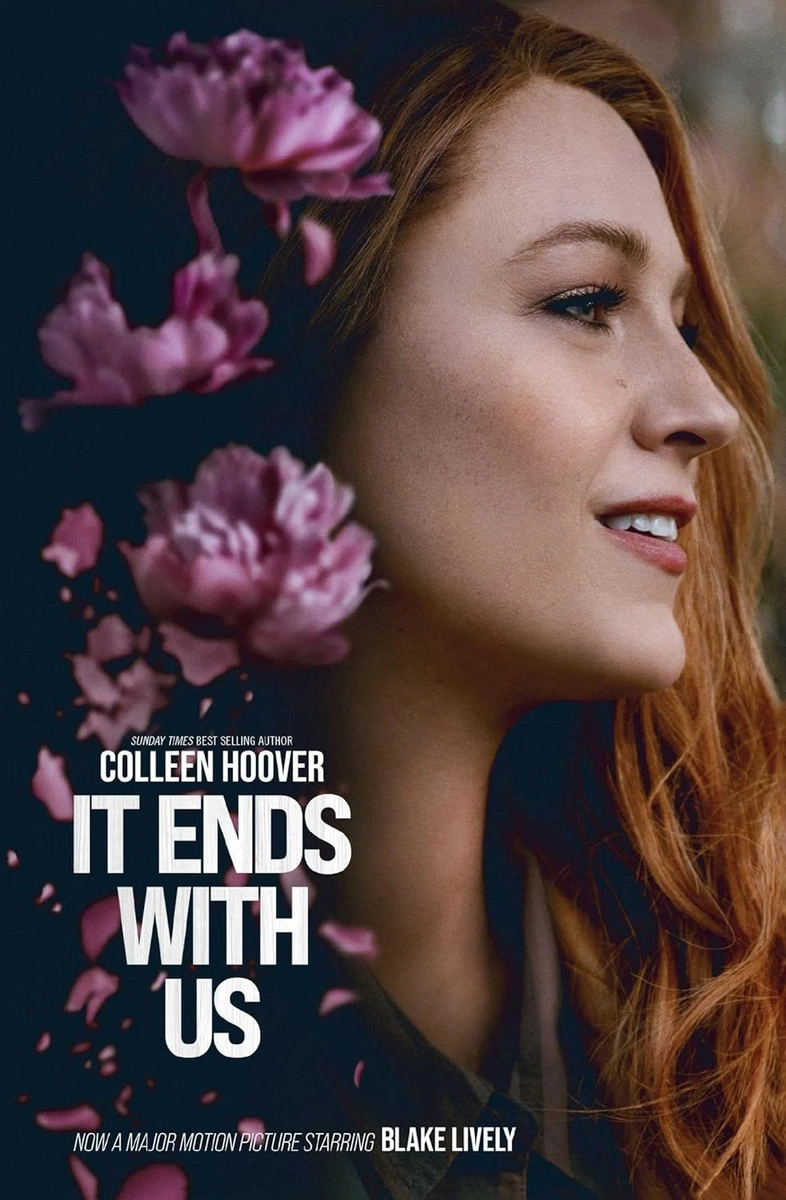
It Ends With Us (Film Tie-In) Colleen Hoover offers a deeply personal romance with serious emotional stakes, following Lily as she navigates a powerful connection with neurosurgeon Ryle Kincaid and the sudden return of Atlas Corrigan, her first love. This edition connects the bestselling novel with its screen adaptation while keeping the focus on Lily’s choices, relationships, and hard-won self-respect.
Lily has not had an easy path, but she has never allowed hardship to define the limits of her future. She leaves the small town in Maine where she grew up, graduates from college, moves to Boston, and begins creating the life she has imagined for herself. Her dream of opening a business gives the story a sense of hope, independence, and determination from the very beginning.
When Lily meets Ryle Kincaid, the attraction between them is immediate and intense. Ryle is brilliant, confident, stubborn, and difficult to ignore. He can be arrogant, but he also shows tenderness and vulnerability that make Lily want to believe in the possibility of something rare. Yet his resistance to relationships raises questions she cannot easily silence.
The plot becomes more complicated as Lily’s present begins to echo her past. Her memories of Atlas Corrigan, the boy who once understood and protected her, return with emotional force. Atlas represents not only first love, but also a time in Lily’s life when kindness mattered because safety was never guaranteed. When he reappears, everything Lily has started to build with Ryle becomes uncertain.
In the middle of the story, It Ends With Us (Film Tie-In) book becomes more than a love triangle. It is a novel about patterns, survival, and the painful difference between what love promises and what love sometimes costs. Lily must confront not only the men in her life, but the childhood memories and family history that shaped her understanding of affection, harm, forgiveness, and strength.
The central conflict is emotional and moral. Lily wants to believe in the good she sees in Ryle, but she also has to listen to the parts of herself that recognize warning signs. Atlas’s return does not offer a simple answer; instead, it forces Lily to examine what she truly needs, what she has tolerated, and what kind of future she is willing to choose.
The characters are written through intimate feeling rather than distance. Lily is hardworking, hopeful, vulnerable, and increasingly aware of her own power. Ryle is charismatic and complicated, capable of tenderness but marked by behavior Lily cannot ignore. Atlas brings a quiet steadiness connected to memory, care, and the possibility of love that does not require self-erasure.
The atmosphere is romantic, tense, and emotionally raw. Boston gives Lily a fresh start, but the city also becomes the place where old wounds meet new desire. The tone shifts from hopeful and intimate to unsettling and heartbreaking as Lily begins to understand the full weight of her choices.
The major themes include love, resilience, domestic abuse, self-worth, family history, forgiveness, choice, and the courage to end inherited pain. The novel asks why leaving can be so difficult, why compassion can complicate judgment, and how a person can love someone while still choosing safety and dignity.
Colleen Hoover’s style is direct, accessible, and strongly emotional. The prose focuses on Lily’s inner life, allowing the reader to experience the confusion, tenderness, fear, and clarity that shape her journey. The story moves quickly, but its deepest impact comes from the slow realization that love alone is not always enough.
The characters are memorable because they resist simple labels. Lily’s strength grows through uncertainty rather than certainty. Ryle’s charm makes the conflict more painful, not less. Atlas matters because he reminds Lily of a version of care that once helped her survive, but the novel ultimately centers Lily’s agency rather than making anyone else her solution.
For the audience, the emotional force of the book lies in its honesty about difficult relationships. It does not treat pain as a dramatic decoration; it shows how affection, hope, fear, and loyalty can become tangled, and how choosing oneself can be the most difficult act of love.
Who this book is for
This novel is ideal for readers who enjoy contemporary romance with emotional depth, complex relationships, and serious real-life themes. It will appeal to those who want a story about love, difficult choices, personal growth, and the strength required to build a life that does not repeat the damage of the past.
It is also a strong choice for readers interested in character-driven fiction where romance and self-discovery are inseparable. The book’s audience includes fans of heartfelt modern novels, stories about first love and second chances, and narratives that explore why courage often looks quiet from the outside.
Why read it
The novel is worth reading because it turns a romantic premise into a powerful examination of self-respect and survival. Lily’s journey is not only about whom she loves, but about what kind of life she chooses when love asks too much and the future depends on breaking a cycle.
It Ends With Us (Film Tie-In) is a moving choice for readers ready for a love story that does not avoid hard truths. It invites you into Lily’s life at the moment when desire, memory, and courage collide, and it leaves a lasting reminder that sometimes the most powerful ending is the one that protects the person you are becoming.