Відгуки і рецензії читачів
Поки немає відгуків


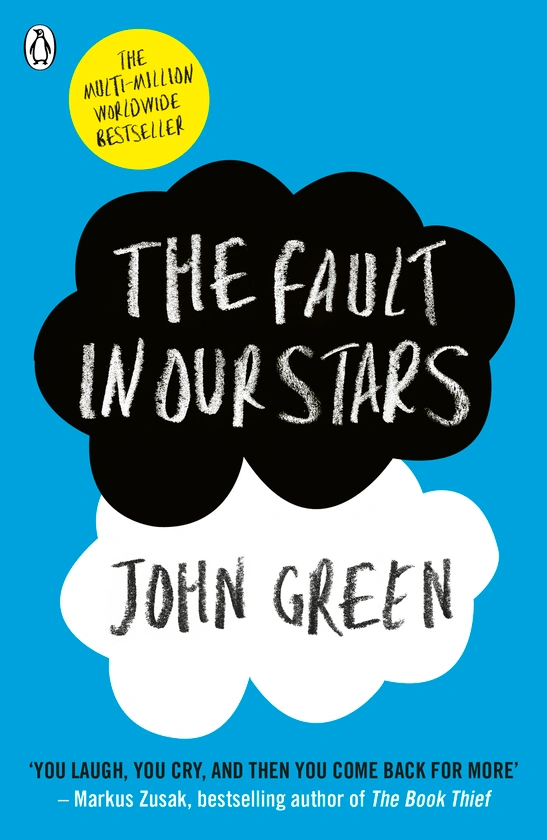
John Green: The Fault in Our Stars is a bold, funny, and heartbreaking young adult novel about love, illness, and the fierce desire to live meaningfully when time is uncertain. Hazel Grace Lancaster has learned to think of herself as terminal, even after a medical treatment gives her more years than anyone expected. Her life is shaped by oxygen tanks, doctors, worried parents, and the knowledge that her story already seems to have an ending. Then Augustus Waters appears at Cancer Kid Support Group, and Hazel’s carefully limited world begins to open in ways she never planned.
John Green: The Fault in Our Stars John Green offers readers one of the most influential contemporary YA love stories, a novel that debuted at number one on major bestseller lists and was later adapted into a film. The book follows Hazel and Augustus as they fall into a relationship full of wit, books, fear, tenderness, and impossible questions. Its promise is unforgettable: even a short life can contain enormous love, sharp humor, and moments that feel larger than fate.
Hazel is sixteen, intelligent, dryly funny, and deeply aware that the people around her often see her illness before they see her. She attends support group because her mother wants her to have a life beyond their home, but Hazel does not expect much from the circle of folding chairs and forced optimism. Her diagnosis has taught her to guard her hopes carefully, partly because she fears the pain her death will cause others.
Augustus Waters changes the emotional temperature of the story from the moment he enters. He is charming, theatrical, curious, and alive with the need to make meaning. A former basketball player whose cancer has left him with a prosthetic leg, Augustus understands illness but refuses to let it flatten him into a symbol. His connection with Hazel begins through conversation, irony, attraction, and a shared impatience with sentimental clichés.
The plot grows from their relationship and from Hazel’s favorite novel, An Imperial Affliction, a fictional book that ends abruptly and leaves unanswered questions. Hazel and Augustus become drawn into a search for meaning beyond the unfinished page, and that search takes them toward Amsterdam and the reclusive author Peter Van Houten. Their journey is romantic, awkward, funny, painful, and full of the tension between wanting answers and discovering that some answers cannot repair the hurt of being alive.
In the middle of the novel, John Green: The Fault in Our Stars book becomes more than a story about two teenagers with cancer. It becomes a meditation on love under the pressure of mortality. Hazel worries about being a grenade in the lives of people who love her, while Augustus longs to leave a mark large enough to prove that his life mattered. Their conflict is not simply illness against romance; it is the struggle between fear of loss and the human need to connect anyway.
The characters around Hazel and Augustus give the novel emotional depth. Hazel’s parents love her with a tenderness that is protective and frightened. Isaac, their friend from support group, brings humor and heartbreak through his own experience of illness and love. Together, these characters create a world where teenagers joke, flirt, suffer, rage, and philosophize without being reduced to their diagnoses.
The atmosphere is intimate, irreverent, and emotionally charged. The novel moves through support groups, hospitals, bedrooms, airplanes, restaurants, and quiet conversations where jokes often appear at the edge of grief. Its power comes from contrast: the characters speak with wit and intelligence, but the reality beneath their humor is fragile, painful, and never far away.
The major themes include mortality, love, grief, meaning, illness, family, friendship, fear, and the desire to be remembered. The book asks what kind of life counts as significant and whether love is worth the suffering that loss makes inevitable. It also challenges sentimental ideas about illness by allowing Hazel and Augustus to be flawed, funny, angry, romantic, and fully human.
The style is sharp, thoughtful, and emotionally direct. John Green combines philosophical reflection with teenage banter, giving the novel a voice that is both clever and vulnerable. The pacing balances romance, humor, and tragedy, allowing readers to feel the joy of Hazel and Augustus’s connection before the harder truths of the story press in.
What lingers after reading is the novel’s refusal to treat love as a cure while still showing it as transformative. John Green: The Fault in Our Stars is devastating because it knows that affection cannot stop death, but it is also life-affirming because it shows how love can expand the time people have. The story finds beauty not by denying pain, but by allowing joy and pain to exist together.
This novel is for readers who enjoy emotional young adult fiction, contemporary romance, coming-of-age stories, and books that combine humor with serious questions. It will appeal to an audience drawn to unforgettable characters, tender dialogue, philosophical themes, and love stories that are honest about both wonder and loss.
One reason to read this novel is the relationship between Hazel and Augustus. Their romance feels memorable because it is built from conversation, shared books, jokes, fear, admiration, and vulnerability. They do not save each other from illness, but they change how each other experiences the time they have.
Another reason is Hazel’s voice. She is observant, skeptical, funny, and emotionally guarded, which makes her journey especially compelling. Her perspective prevents the story from becoming sentimental, even when it is deeply moving. She sees the absurdity of illness as clearly as its terror.
The novel also stands out because it understands the need for stories. Hazel’s fixation on an unfinished book reflects her own need to know what happens after an ending, not only for the person who dies, but for those left behind. That literary thread gives the plot an added layer of meaning and connects reading, love, and grief in a powerful way.
John Green: The Fault in Our Stars is a poignant and unforgettable choice for readers who want a love story that is funny, raw, and emotionally honest. It invites you into the lives of Hazel and Augustus, where time is limited, questions are enormous, and even a brief infinity can be enough to change everything.