Відгуки і рецензії читачів
Поки немає відгуків


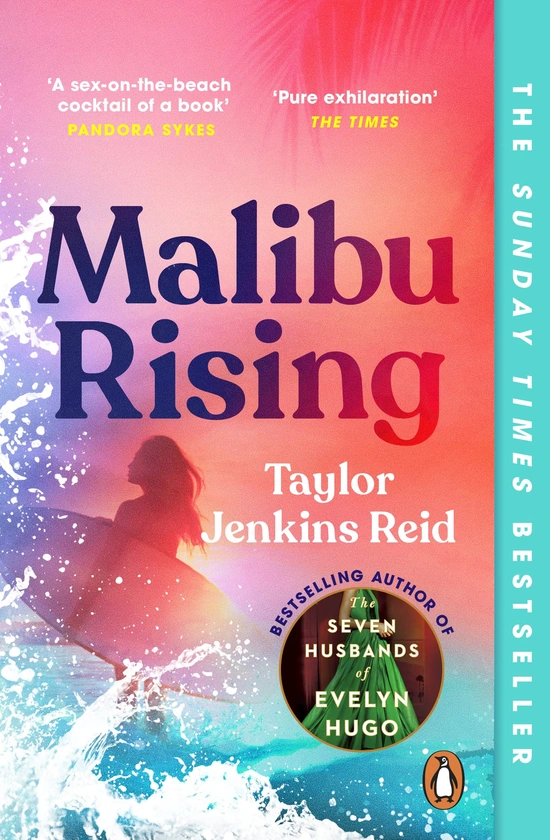
Malibu Rising is a sun-drenched, emotionally charged novel about fame, family, secrets, and one unforgettable night when everything the Riva siblings have tried to outrun finally catches fire. In August 1983, Nina Riva’s annual end-of-summer party is the most anticipated event in Malibu, drawing models, surfers, musicians, celebrities, and hangers-on into a house already heavy with history. By midnight, the celebration will spiral out of control; by morning, the mansion will be in flames.
Malibu Rising Taylor Jenkins Reid gives readers a vivid family drama set against the glamour and volatility of 1980s California. The novel follows Nina, Jay, Hud, and Kit Riva, the children of legendary singer Mick Riva, as one party becomes the stage for old wounds, hidden loves, betrayals, and the difficult question of whether family is something you inherit or something you keep choosing after disappointment.
Nina Riva is the oldest sibling, a talented surfer and successful model who has spent much of her life carrying responsibilities that should never have belonged to a child. To the outside world, she is beautiful, enviable, and effortlessly cool. Inside her own life, she is tired of holding everyone together, especially after her marriage has publicly fallen apart. Her party may look glamorous, but for Nina it is one more performance she is expected to survive.
Jay and Hud are brothers bound by the ocean, fame, and complicated loyalty. Jay is a championship surfer whose future depends on strength, confidence, and timing. Hud is a photographer who often watches from the edge, capturing other people’s moments while hiding a painful secret of his own. Their relationship carries the warmth of shared childhood, but also the tension of choices that may alter their bond forever.
Kit, the youngest Riva, is adored by her siblings but restless inside the role they have given her. She is standing at the edge of adulthood, trying to understand what she wants and who she might become beyond being the baby of the family. As the party builds around her, Kit’s personal awakening adds another layer to a night already full of emotional pressure.
In the middle of the story, Malibu Rising book becomes more than a novel about one spectacular party. It moves between the present night of 1983 and the earlier history of June and Mick Riva, showing how love, abandonment, ambition, and addiction shaped the children long before they became famous. The plot reveals that the Riva siblings are not merely icons of Malibu cool; they are survivors of a family story marked by absence and resilience.
The central conflict grows from the collision between public image and private truth. Everyone wants to be near the Rivas because they seem to represent beauty, talent, youth, and freedom. Yet the closer the novel moves to the heart of the family, the clearer it becomes that glamour can hide exhaustion, fame can deepen loneliness, and inherited damage can repeat itself unless someone finally decides to stop carrying it.
The atmosphere is hot, bright, cinematic, and increasingly combustible. Malibu feels alive with salt air, surf culture, expensive houses, dry hills, music, alcohol, and the unstable energy of people chasing pleasure at the edge of disaster. The setting is not only beautiful; it is dangerous, because the same landscape that offers escape can burn when the smallest spark finds the right conditions.
The major themes include sibling loyalty, abandonment, celebrity, reinvention, romantic disappointment, parental failure, and the difference between surviving and truly choosing a life. The novel asks how children recover from being left too often, and how adults decide whether to remain defined by the people who hurt them. It also explores why the families we build after damage may become stronger than the ones that failed us.
The style is immersive, emotional, and sharply structured. Taylor Jenkins Reid moves between a single party night and decades of family history, allowing suspense and character depth to build together. The party gives the novel momentum, but the backstory gives it weight. Each revelation makes the fire feel less like a random disaster and more like the physical expression of everything that has been smoldering for years.
What lingers after reading is the contrast between spectacle and intimacy. The novel is full of famous names, lavish excess, and a party people will talk about for years, yet its strongest moments are quieter: a sibling protecting another, a daughter understanding her father’s failures, a woman deciding she does not have to keep living as the person everyone needs her to be.
This novel is for readers who enjoy emotional family sagas, glamorous historical settings, complicated siblings, and stories where one dramatic event exposes years of hidden tension. It will appeal to an audience that likes character-driven fiction with atmosphere, romance, secrets, and the feeling of watching a beautiful world come apart under pressure.
One reason to read this novel is the Riva siblings. Their bond is messy, protective, painful, and believable. They argue, hide things, misunderstand one another, and still remain connected by a childhood that required them to become each other’s safety net. That emotional core gives the novel more power than its glittering surface suggests.
Another reason is Nina’s journey. She begins as the person everyone depends on, the woman who absorbs shock and keeps moving. Watching her confront what she has sacrificed, what she owes her family, and what she owes herself gives the story its most satisfying arc. Her strength is not only endurance; it is learning when to stop enduring.
The novel also stands out because it uses Malibu as both dream and warning. Surf, fame, money, beauty, and pleasure create a seductive world, but fire is always present as image and threat. That symbolism gives the story shape: some things must burn before anyone can see what remains.
Malibu Rising is a compelling choice for readers who want a novel filled with glamour, heartbreak, secrets, and the fierce pull of family. It invites you into one unforgettable night on the California coast, where the music is loud, the house is crowded, the past is rising fast, and by dawn nothing will look the same.