Відгуки і рецензії читачів
Поки немає відгуків


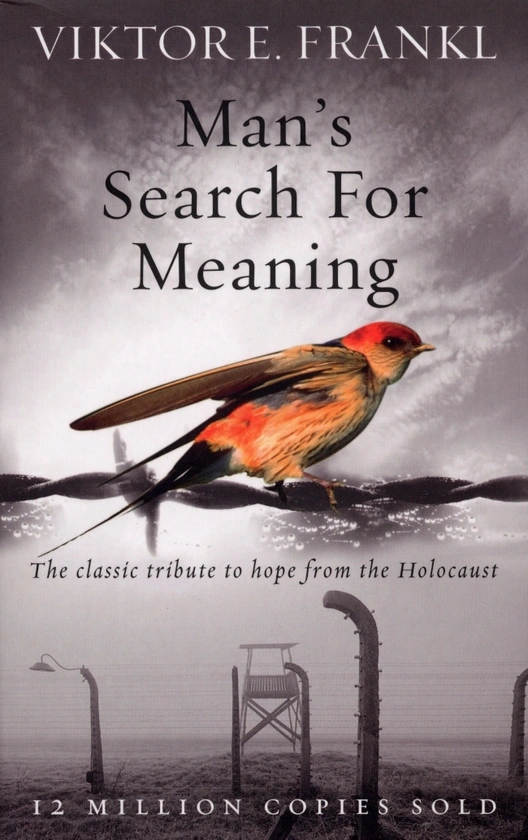
Man's Search For Meaning is a profound memoir and psychological work about suffering, inner freedom, and the human need to find purpose even in the most extreme conditions. Viktor Frankl, an Austrian psychiatrist and Holocaust survivor, writes from his experience in Nazi concentration camps, including Auschwitz, and from his later development of logotherapy, a form of psychotherapy centered on meaning. The book’s enduring power comes from a difficult but life-giving idea: while people cannot always choose what happens to them, they may still choose how they respond.
Man's Search For Meaning Viktor Frankl offers readers both testimony and philosophy, combining the story of camp survival with a clear introduction to Frankl’s belief that the search for meaning is one of the deepest human drives. This is not a simple self-help book and not only a historical account. It is a work about moral endurance, dignity, responsibility, and the possibility of finding significance when life has been stripped to its most painful essentials.
The first part of the book draws on Frankl’s experience as a prisoner during the Holocaust. He observes not only the external horrors of camp life, but also the inner lives of the people around him: how they reacted to fear, hunger, humiliation, exhaustion, loss, and uncertainty. His perspective as a psychiatrist gives the narrative a distinctive focus. He is not only asking what happened, but how human beings endured what happened.
Frankl describes a world where almost everything could be taken away: home, profession, family, name, clothing, safety, and bodily strength. Yet he argues that one final freedom remained under even the most brutal circumstances: the freedom to choose one’s attitude toward suffering. This idea does not make suffering good or acceptable. Instead, it insists that human dignity can survive even when conditions are designed to destroy it.
The plot of the memoir is shaped less by outward adventure than by psychological and spiritual struggle. Frankl reflects on prisoners who found strength by thinking of loved ones, future work, faith, duty, or the possibility of helping others. He also shows how despair could deepen when a person lost connection to any purpose beyond immediate pain. Meaning becomes not an abstract theory, but a question of survival.
In the middle of the work, Man's Search For Meaning book becomes a bridge between lived testimony and therapeutic insight. Frankl’s camp observations lead into logotherapy, his approach to psychotherapy based on the belief that people are not driven only by pleasure or power, but by the need to find meaning. He suggests that meaning may be discovered through work, love, courage, responsibility, and the way one faces unavoidable suffering.
The characters in the book are not fictional figures, but real human beings seen in moments of extreme pressure. Some comfort others despite their own hunger. Some give away a last piece of bread. Some cling to future tasks, memories, prayer, or the image of someone they love. These moments give the book its moral weight because they show meaning not as a slogan, but as an action taken when no easy hope remains.
The atmosphere is stark, reflective, and deeply serious. Frankl writes about terror and deprivation without turning suffering into spectacle. His style is restrained, analytical, and compassionate, often moving from a concrete camp memory to a broader insight about human life. That balance gives the book its unusual force: it is emotionally devastating, but also clear, disciplined, and purposeful.
The major themes include meaning, freedom, suffering, responsibility, love, dignity, faith, moral choice, and psychological survival. The book asks what keeps a person inwardly alive when the outer world has become unbearable. It also challenges readers to stop asking only what they expect from life and to consider what life may be asking from them.
The style is concise and direct, shaped by both memoir and psychological argument. Frankl does not write as a distant theorist. His ideas are rooted in personal loss and observation, which makes them difficult to dismiss as optimism. The book’s philosophical depth comes from the fact that its conclusions were formed in conditions where easy consolation would have sounded false.
What lingers after reading is the book’s insistence on responsibility. Man's Search For Meaning does not promise that life will be fair, safe, or free from suffering. Instead, it offers a demanding form of hope: meaning can still be found, and the way a person answers suffering can become part of their humanity.
This book is for readers interested in memoir, Holocaust testimony, psychology, philosophy, spirituality, and the search for purpose. It will appeal to an audience seeking a serious, life-changing work rather than a quick motivational text. It is especially meaningful for readers facing grief, uncertainty, moral crisis, or questions about why life remains worth living during hardship.
One reason to read this book is its rare combination of witness and wisdom. Frankl does not speak about meaning from comfort. He writes after having seen what happens when human beings are placed under extreme degradation. That gives his reflections a gravity that ordinary advice cannot imitate.
Another reason is the clarity of logotherapy. The idea that meaning can be found through love, work, and one’s response to unavoidable suffering gives readers a practical but profound framework for thinking about their own lives. The book does not remove pain, but it offers a way to stand inside pain without surrendering the self completely to it.
The book also stands out because of its moral seriousness. It does not reduce survival to attitude alone, nor does it pretend that suffering is automatically ennobling. Instead, it shows that human beings may still choose dignity, compassion, and purpose when circumstances threaten to erase all three.
Man's Search For Meaning is an essential choice for readers who want a book that is historically significant, psychologically insightful, and spiritually challenging. It invites you to confront suffering without illusion, to consider the freedom that remains when everything else is lost, and to ask what meaning your own life may still be calling you to fulfill.