Відгуки і рецензії читачів
Поки немає відгуків


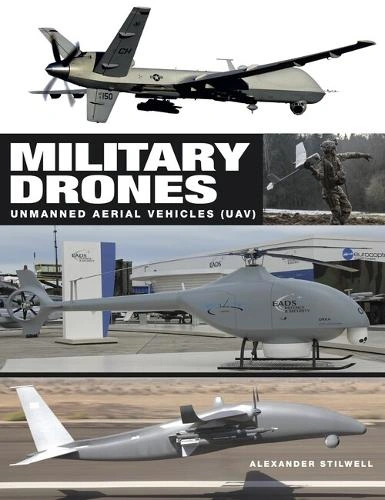
Military Drones is a compact, highly illustrated guide to unmanned aerial vehicles used in modern warfare, showing how drones have moved from supporting roles in surveillance and reconnaissance to central tools for observation, target acquisition, and strike missions.
Military Drones Alexander Stilwell gives readers a clear introduction to a rapidly developing field of military technology, organizing key UAVs by nationality and presenting them through photographs, artworks, captions, and technical detail that make the subject easier to explore.
The book examines the growing role of unmanned aircraft systems in contemporary conflict. Over recent decades, drones have become part of the modern battle space not only as eyes in the sky, but also as platforms used to gather data, monitor terrain, support troops, identify targets, and in some cases deliver weapons. The plot of this nonfiction volume is the story of technological change: aircraft without onboard pilots becoming increasingly important to armies around the world.
Arranged by nationality, the guide helps readers compare different approaches to unmanned aviation. This structure makes it possible to see how countries develop drones for different missions, from small systems carried by ground forces to long-endurance aircraft designed for high-altitude surveillance. Instead of presenting the subject as a single timeline, the book builds a broader picture of design, purpose, and battlefield function across nations.
Among the systems discussed are well-known and specialized UAVs, including the MQ-1 Predator, associated with intelligence gathering and armed operations; the Black Hornet Nano, a micro UAV small enough for local situational awareness by troops; the Chinese Scorpion tri-copter, suited to stationary observation and strike roles in built-up areas; and the EADS Talarion, designed as a long-endurance unmanned aircraft for high-altitude surveillance.
In the middle of the reading experience, Military Drones book becomes especially useful as a reference tool. Each entry is supported by visual material and concise information, allowing the reader to understand what a drone looks like, what role it performs, and how it fits into the wider development of unmanned military aviation.
The book includes more than 100 photographs and artworks, giving the subject a strong visual dimension. For readers who find technical topics easier to grasp through images, the format provides a practical way to recognize shapes, configurations, sensor placements, airframes, and mission profiles without becoming overwhelmed by specialist language.
Published by Amber Books, the volume is designed as an accessible guide rather than a dense engineering manual. Its value lies in bringing together a wide selection of unmanned systems and showing how varied the drone category has become, from palm-sized battlefield tools to larger aircraft built for endurance, surveillance, and strike capability.
The atmosphere is factual, visual, and contemporary. The book does not create drama through fictional characters, but through the real transformation of military practice. Its style is direct and organized, helping the audience move from one system to another while gradually understanding how drones have changed the pace, distance, and visibility of modern conflict.
The main themes include technological innovation, remote warfare, battlefield awareness, precision, endurance, and the changing relationship between human operators and machines. The book also highlights an important conflict within modern military thinking: how to use unmanned systems for greater intelligence and operational reach while recognizing that each technology has limits, vulnerabilities, and strategic consequences.
The “characters” of the volume are the drones themselves. Each aircraft reflects a particular need: a commander may require persistent surveillance, a patrol may need immediate local awareness, or a military force may seek a platform capable of locating and striking targets. This gives the book a clear comparative style, where design features are connected to mission demands.
The visual presentation supports quick understanding. Photographs and artworks help create an atmosphere of technical clarity, while captions and specifications provide the facts needed to distinguish one UAV from another. The result is a reference-style reading experience that works well for browsing, study, or focused comparison.
Because unmanned aerial systems continue to shape modern conflict, the book’s subject feels especially relevant. It offers readers a grounded way to understand why drones matter, how they differ, and what kinds of roles they perform in today’s military environment.
Who this book is for
This guide is suited to readers interested in modern military technology, aviation, defense studies, and the evolution of unmanned systems. It is accessible enough for newcomers, while still offering enough specific examples to interest readers who already follow military aircraft and battlefield equipment.
The audience includes students, military history enthusiasts, model makers, technology readers, and anyone who wants a clearer overview of UAVs without having to begin with highly specialized technical publications. It is also useful for readers who prefer illustrated reference books with concise explanations and structured entries.
Why you should read it
Military Drones is a strong choice for anyone asking why read a guide to unmanned aerial vehicles today. It offers a clear, illustrated, and informative path into one of the most important areas of contemporary military technology, helping readers understand the machines, missions, and ideas that define the drone age.