Відгуки і рецензії читачів
Поки немає відгуків


Modern Classics: East of Eden is a monumental American novel about family, inheritance, rivalry, love, and the moral choices that shape a life. Set mainly in California’s fertile Salinas Valley, John Steinbeck’s epic follows the intertwined destinies of the Trask and Hamilton families across generations, turning domestic conflict into a vast drama of good and evil, freedom and guilt, tenderness and destruction. With biblical echoes of Adam and Eve, Cain and Abel, the novel asks a question that remains urgent: are we doomed to repeat the sins before us, or can we choose another path?
Modern Classics: East of Eden John Steinbeck offers readers one of Steinbeck’s most ambitious works, first published in 1952 and often associated with the author’s own view of his deepest artistic achievement. This Modern Classics edition presents a novel of enormous emotional range: intimate enough to follow wounded fathers, jealous brothers, difficult sons, and unforgettable women, yet broad enough to feel like a mythic history of a valley, a nation, and the human heart.
The story begins with place, and the Salinas Valley is more than background. Its light, soil, seasons, farms, roads, and families form the moral landscape of the novel. Steinbeck gives California a living presence, showing a world where prosperity and violence, beauty and loneliness, hope and bitterness can grow side by side. The setting becomes a kind of Eden, but one already marked by loss.
At the center are two families whose lives become fatally connected. The Hamiltons, warm, struggling, inventive, and rooted in the valley, offer one vision of family endurance. The Trasks bring a darker inheritance: rivalry between brothers, damaged fatherhood, buried resentment, and the repeating pattern of love withheld or misdirected. Through them, Steinbeck turns a family saga into a meditation on how pain travels from one generation to the next.
Adam Trask arrives in California carrying scars from his earlier life and a longing for peace. His brother Charles, his father Cyrus, and the troubled history of their family establish one of the novel’s key patterns: brothers who compete for love and recognition. Later, that pattern returns through Adam’s sons, Cal and Aron, whose lives mirror and challenge the old story of Cain and Abel.
In the middle of the narrative, Modern Classics: East of Eden book becomes a profound exploration of choice. The novel does not simply present human beings as good or evil by nature. Instead, it studies desire, jealousy, shame, kindness, cruelty, and the terrifying freedom to act differently. The word timshel, central to the book’s moral vision, opens the possibility that a person may choose whether to master sin rather than surrender to it.
Some of Steinbeck’s most memorable characters emerge from this conflict. Cathy Ames is one of the novel’s most disturbing figures, a character whose coldness and manipulation challenge everyone who comes near her. Lee, the Trask family servant and one of the book’s wisest presences, brings intellectual depth, compassion, and moral clarity. Samuel Hamilton offers warmth, humor, and practical humanity, while Cal’s struggle for his father’s love gives the later chapters their aching emotional power.
The atmosphere is sweeping, earthy, and mythic. Steinbeck moves between farms, brothels, family kitchens, military memories, business schemes, childhood rivalries, and quiet philosophical conversations. The novel can be brutal, tender, comic, tragic, and luminous, often within the same section. Its world feels large because it holds both the ordinary routines of daily life and the ancient patterns of human conflict.
The major themes include identity, free will, inherited guilt, brotherhood, parental love, moral responsibility, and the hunger to be chosen. The plot returns again and again to the question of whether love can heal damage or whether its absence creates new forms of violence. The biblical structure gives the story grandeur, but the emotional force comes from recognizable human needs: to be seen, forgiven, understood, and loved.
The style is rich, direct, and deeply visual. Steinbeck writes with the eye of a storyteller who knows the land and the heart of a moral philosopher who wants to understand why people harm one another. His sentences often move from plain realism to symbolic weight, making small family moments feel connected to ancient stories. The result is a novel that is both accessible and immense.
What lingers after reading is the book’s faith in moral possibility. The story contains cruelty, betrayal, and despair, yet it refuses to say that human beings are trapped forever by blood or history. East of Eden matters because it insists that choice remains real, even when the past is heavy, even when love has failed, and even when a person believes he has already been judged.
This novel is for readers who enjoy large-scale literary fiction, family sagas, American classics, and stories that combine intimate character drama with universal themes. It will appeal to an audience drawn to moral conflict, complex families, symbolic storytelling, and novels that reward slow, thoughtful reading.
One reason to read this novel is the depth of its family drama. Steinbeck understands how love can become tangled with competition, how silence can wound as deeply as anger, and how children may spend their lives trying to answer questions their parents never meant to leave behind. That emotional truth gives the book lasting strength.
Another reason is the novel’s scale. It moves across families, landscapes, decades, and moral questions without losing sight of individual pain. The Trasks and Hamiltons feel rooted in a particular time and place, yet their struggles speak to readers far beyond the Salinas Valley.
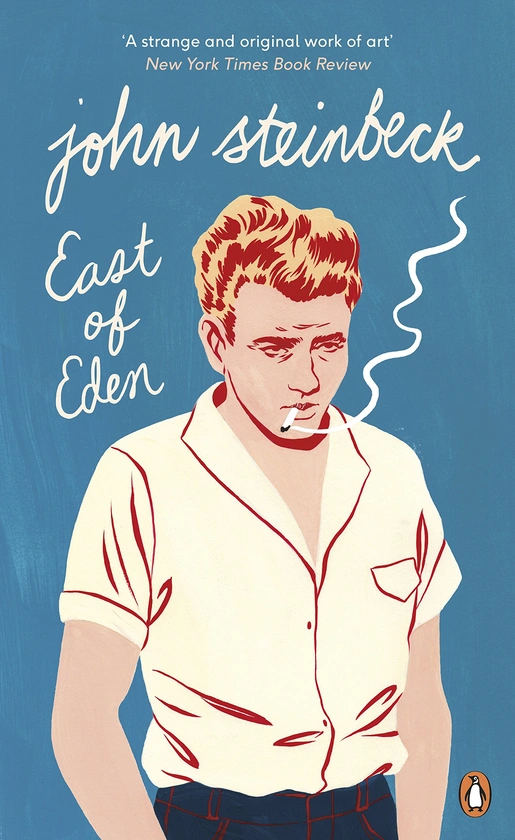
The Modern Classics edition also makes the novel a fitting choice for readers discovering Steinbeck through a beautifully presented contemporary format. With its new cover by Bijou Karman, it brings a landmark of American literature into a form that suits both personal reading and a thoughtfully chosen gift.
Modern Classics: East of Eden is a powerful choice for anyone who wants a novel of beauty, darkness, wisdom, and unforgettable human conflict. It invites you into California’s Salinas Valley, where two families replay ancient stories of love and rivalry, and where the hardest truth may also be the most liberating: the past speaks, but it does not have to command.