Відгуки і рецензії читачів
Поки немає відгуків


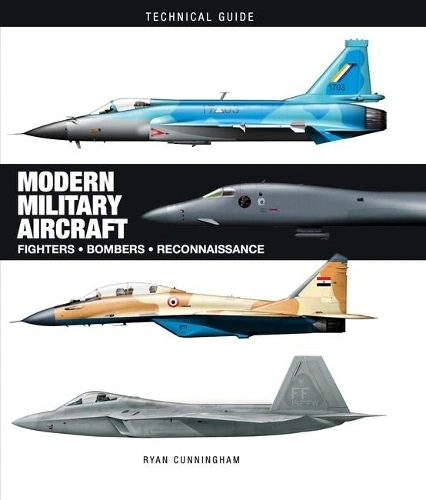
Modern Military Aircraft: Technical Guide is an illustrated survey of today’s military aircraft, created for readers who want clear visual detail, technical specifications, and a structured overview of the machines used by air forces in recent conflicts.
Modern Military Aircraft: Technical Guide Ryan Cunningham offers a practical path into modern aviation, combining detailed artworks, aircraft markings, captions, and specifications to explain how fighters, bombers, reconnaissance aircraft, carrier aircraft, ground attack types, and unmanned drones fit into contemporary air power.
The book examines major aircraft types deployed by the world’s air forces, with attention to aircraft seen in conflicts in the Balkans, the Caucasus, Iraq, Afghanistan, Syria, and other modern theatres. Its subject is not a fictional plot, but the real development of military aviation: how design, mission role, weapons, sensors, and operational experience shape the aircraft that appear in the skies above modern battlefields.
Organized alphabetically by manufacturer, the guide helps readers move through the material in a clear and usable order. This structure is helpful because modern aviation is complex: different countries produce aircraft for different needs, and each type may serve as a fighter, strike aircraft, bomber, reconnaissance machine, carrier aircraft, or drone. The book makes those categories easier to understand through a repeated, easy-to-follow format.
Among the aircraft included are well-known types such as the F-22 Raptor, Dassault Mirage 2000, MiG-29, Su-33, F-15E Strike Eagle, Sukhoi Su-27, and Eurofighter Typhoon. These examples show the wide range of modern air power, from agile combat aircraft and carrier-based machines to larger systems designed for strike, surveillance, or specialized missions.
In the middle of the volume, Modern Military Aircraft: Technical Guide book becomes especially valuable for comparison. Profile artworks, three-view illustrations, and cutaway artworks of famous aircraft allow the reader to study shapes, structures, markings, and technical features more closely than a short text-only overview could provide.
The entries combine visual presentation with specifications and explanatory captions, making the book useful for modellers, aviation enthusiasts, students, and readers who want a reliable overview without beginning with highly specialized manuals. With more than 110 artworks, it emphasizes both identification and understanding, showing how external form connects with mission purpose.
Ryan Cunningham’s approach is compact and informative. The book focuses on aircraft currently associated with modern air forces and recent operational history, giving the audience a grounded sense of what these machines do, how they differ, and why their design matters in real-world military contexts.
The atmosphere is technical, visual, and precise. The book feels like a guided walk through a contemporary aircraft inventory, where each page introduces another machine with its own role, appearance, capabilities, and engineering logic. The style is direct and descriptive, built for clarity rather than dramatic exaggeration.
The main themes include air superiority, strike capability, reconnaissance, carrier operations, unmanned flight, engineering compromise, and the relationship between aircraft design and military need. The central conflict behind the subject is the constant pressure to adapt: aircraft must answer new air defenses, new sensors, new weapons, and new forms of coordinated warfare.
The “characters” of the guide are the aircraft themselves. A multirole fighter represents flexibility; a high-level bomber suggests range and payload; a carrier aircraft reflects the demands of operating at sea; a drone shows how remote operation and surveillance have changed the modern battlefield. Each type carries its own story of design choices and tactical purpose.
The visual style supports readers who learn by comparing details. Profile art helps with markings and silhouette, three-view illustrations reveal proportions, and cutaway artwork gives selected aircraft an added technical dimension. Together, these elements create an atmosphere of close observation and practical discovery.
Because the book gathers many roles in one volume, it avoids a narrow view of air power. It shows that modern military aviation depends not only on fast fighters, but also on aircraft that observe, strike, support, command, and operate from land bases or carriers as part of a wider system.
Who this book is for
This guide is suited to modellers, aviation enthusiasts, military history readers, students, and anyone interested in the aircraft used by modern air forces. It works well for readers who want a compact, visual explanation of aircraft types, markings, specifications, and operational roles.
It will also appeal to an audience interested in recent conflicts, aircraft recognition, engineering features, and the practical differences between fighters, bombers, carrier aircraft, reconnaissance types, and drones. The book is accessible for newcomers while still offering enough detail to reward more experienced readers.
Why you should read it
Modern Military Aircraft: Technical Guide is a strong choice for anyone asking why read an illustrated guide to contemporary air power. It offers facts, atmosphere, visual style, and practical organization in one volume, helping readers understand the aircraft that shape modern military aviation and the technology behind their roles.