Відгуки і рецензії читачів
Поки немає відгуків


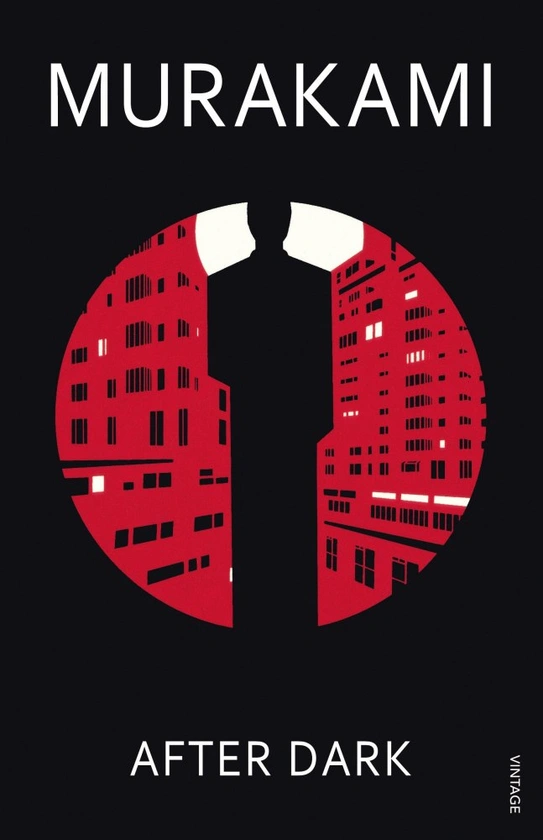
Murakami After Dark is a hypnotic, nocturnal novel about loneliness, hidden violence, and the strange transformations that happen in a city between midnight and dawn. Haruki Murakami follows Mari Asai, a young woman reading alone in an almost empty all-night diner after missing the last train, and her sister Eri, a beautiful model locked in a sleep so deep it feels less like rest than disappearance. As Tokyo moves through the small hours, ordinary places begin to feel uncanny, and the night reveals connections that daylight might never allow.
Murakami After Dark Haruki Murakami offers readers a compact but atmospheric work from one of Japan’s most internationally recognized contemporary writers. First published in Japanese in 2004 and translated into English by Jay Rubin, the novel unfolds over a single Tokyo night, blending realism, dream logic, jazz-like rhythm, and psychological unease. Its promise is subtle and unsettling: after dark, the city does not sleep; it watches, listens, and exposes what people keep hidden.
The story opens near midnight with Mari sitting alone in a diner, reading, drinking coffee, and trying to remain apart from the city around her. Her solitude is interrupted by Takahashi, a young trombone player who recognizes her through her older sister, Eri. Their conversation is casual at first, but it begins to draw Mari into a chain of encounters that will carry her deeper into Tokyo’s night world.
Mari’s Chinese-language skills soon become important when a woman from the Alphaville love hotel asks for help. A young Chinese woman has been beaten by a client, and Mari is needed to translate. This incident pulls the novel away from quiet isolation and into a darker urban reality of exploitation, fear, and people living at the edges of ordinary respectability. The plot grows through these crossings: strangers meet because the night forces them into one another’s stories.
Meanwhile, Eri lies at home in a strange, prolonged sleep that has lasted for months. Her condition is too still, too complete, too removed from normal life. In her room, the television flickers even though it is unplugged, and a mysterious presence seems to connect her sleeping body to another space. Eri’s storyline gives the novel its surreal pulse, suggesting that withdrawal from the world may be as dangerous and mysterious as wandering through it.
In the middle of the novel, Murakami After Dark book becomes more than a sequence of late-night encounters. It becomes a meditation on visibility and isolation. Mari, Eri, Takahashi, the injured woman, the hotel staff, and the violent businessman all exist in separate compartments of the city, yet the night briefly reveals the hidden threads between them. The conflict is not solved through conventional action; it is felt through proximity, unease, and the question of whether people can truly reach one another.
The characters are shaped by distance. Mari feels separated from her glamorous sister and from the version of life expected of her. Eri has almost vanished into sleep. Takahashi moves between music, law, and the uncertainty of becoming an adult. Kaoru and the women at the hotel bring toughness, care, and practical solidarity into a world where vulnerability can be exploited. Each figure adds another tone to the novel’s quiet, unsettling composition.
The atmosphere is cool, cinematic, and dreamlike. Tokyo after midnight becomes a landscape of diners, convenience, hotels, rehearsal spaces, empty streets, screens, fluorescent light, and suspended time. Murakami makes the familiar feel slightly displaced, as if reality has thinned and something behind it is beginning to show. The novel’s sense of suspense comes less from a traditional mystery than from the feeling that the night itself is observing everyone.
The major themes include alienation, sleep, identity, violence, sisterhood, hidden connection, and the fragile border between reality and dream. The story asks what it means to be awake in a world where many people move through life half-disconnected from themselves. It also explores how the city contains both danger and unexpected care, brutality and small acts of rescue.
The style is spare, precise, and atmospheric, with a structure that often feels almost cinematic. The narrative sometimes seems to hover above the characters like a camera, watching rooms, streets, and screens with calm attention. This distance makes the emotional moments more powerful, because intimacy appears briefly, almost accidentally, before the night carries each person onward.
What lingers after reading is the sense of a city caught between states: sleep and waking, danger and safety, solitude and contact, ordinary life and the surreal. Murakami After Dark does not explain every image or close every door. Instead, it leaves the reader with the feeling of having spent a few hours inside a hidden frequency of the world, where the deepest truths arrive quietly and vanish with morning light.
This novel is for readers who enjoy literary fiction with surreal elements, urban atmosphere, psychological ambiguity, and quiet tension. It will appeal to an audience drawn to late-night settings, fragmented lives, mysterious symbols, and stories where mood matters as much as plot.
One reason to read this novel is its atmosphere. Few books capture the feeling of being awake while a city seems to belong to someone else: the exhausted, the restless, the wounded, the secretive, and the lost. The night setting gives the story a distinctive spell, making every meeting feel temporary and significant.
Another reason is the contrast between Mari and Eri. One sister stays awake in public spaces, forced into contact with strangers; the other sleeps in private, sealed away from the world. Their mirrored states give the novel emotional depth and turn the plot into a quiet investigation of disconnection within family, identity, and modern life.
The novel also stands out because of its restraint. It does not explain the surreal elements too neatly, and it does not turn every encounter into a dramatic climax. Instead, it trusts atmosphere, implication, and small human gestures. That subtlety makes the story especially rewarding for readers who enjoy ambiguity.
Murakami After Dark is a compelling choice for readers who want a mysterious, elegant, and unsettling journey through the hours most people sleep through. It invites you into a Tokyo of diners, music, love hotels, sleeping beauties, damaged strangers, and flickering screens, where dawn may arrive, but not everything seen in the night can be explained away.