Відгуки і рецензії читачів
Поки немає відгуків


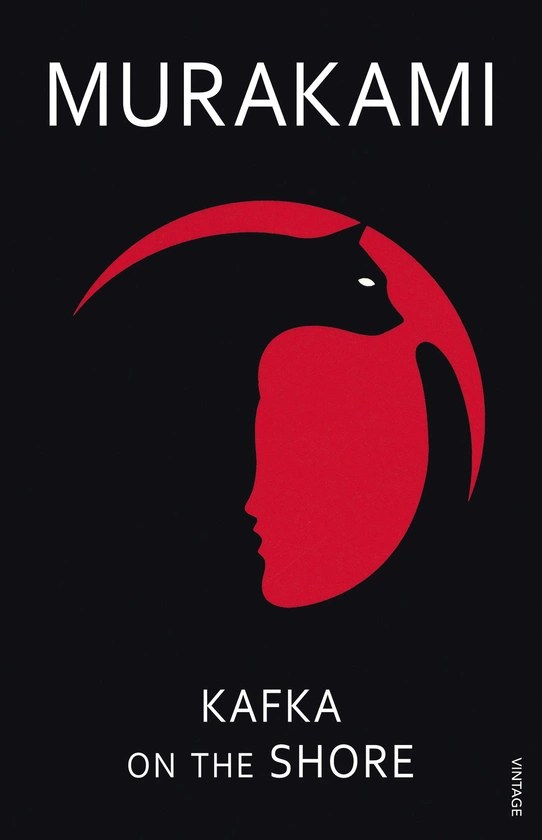
Murakami Kafka on the Shore is a dreamlike, unsettling, and deeply absorbing novel about fate, memory, violence, and the hidden passages between the conscious and unconscious mind. Kafka Tamura runs away from home at fifteen, driven by a dark prophecy and the need to escape his father’s shadow. At the same time, the elderly Nakata, a gentle man marked by a mysterious childhood incident, leaves his familiar life behind after his gift for finding lost cats pulls him toward a destiny he cannot fully understand. Their separate journeys move through libraries, forests, talking cats, falling fish, ghosts, music, and riddles that refuse ordinary explanation.
Murakami Kafka on the Shore Haruki Murakami offers readers one of Haruki Murakami’s most acclaimed novels, first published in Japanese in 2002 and later translated into English by Philip Gabriel. The book intertwines two parallel quests: one belonging to a teenage runaway searching for freedom, identity, and the truth of his family, the other to an aging man whose simplified life conceals a strange connection to forces beyond reason. Its promise is haunting and magnetic: every answer leads deeper into mystery, and every journey outward is also a descent inward.
Kafka Tamura leaves Tokyo on his fifteenth birthday with a backpack, a new name, and the voice of an inner companion called Crow urging him to become stronger. His father’s prophecy hangs over him like a curse, and his mother and sister, who disappeared when he was young, remain painful blanks in his memory. Kafka’s escape takes him to Shikoku, where he finds temporary refuge in the Komura Memorial Library, a place of books, silence, and secrets.
At the library, Kafka meets Oshima, an intelligent and perceptive assistant who becomes a guide of sorts, and Miss Saeki, a beautiful, distant woman surrounded by sorrow and memory. The library is not simply shelter; it becomes the emotional and symbolic center of his search. There Kafka reads, hides, dreams, and begins to sense that the past is not behind him but waiting in another form.
Nakata’s story begins with a strange wartime incident that left him unable to read or write but somehow able to speak with cats. He lives quietly, helped by official support and small jobs finding missing animals, until a violent encounter pushes him onto the road. Unlike Kafka, Nakata does not analyze his fate. He follows signs, instincts, and inexplicable necessity, accompanied for part of the journey by Hoshino, a truck driver whose life is transformed by the old man’s calm strangeness.
In the middle of the novel, Murakami Kafka on the Shore book becomes more than a tale of parallel adventures. It becomes a labyrinth of symbolic connections: a murder whose victim and killer are uncertain, supernatural figures wearing familiar names, a forest where time seems unstable, a song that holds memory, and a stone that may open or close a passage between worlds. The plot resists simple realism because the characters themselves are moving through inner landscapes as much as physical ones.
The central conflict is shaped by fate and choice. Kafka wants to escape the prophecy that defines him, but his flight may also be leading him toward it. Nakata wants little for himself, yet he becomes necessary to events larger than his understanding. Hoshino, Oshima, Miss Saeki, Sakura, and other characters each reflect a different way of living with loss, identity, desire, or uncertainty. Together, their stories create a novel where reality and dream continually trade places.
The atmosphere is mysterious, philosophical, and quietly charged with danger. Murakami builds a world where a library can feel like a sanctuary and a trap, a forest can hold the memory of war, cats can speak, and the night can release forces that daylight cannot contain. The familiar world remains recognizable, but it is always porous, always capable of admitting the impossible.
The major themes include fate, identity, memory, trauma, sexuality, violence, music, loneliness, and the subconscious. The novel asks whether people can escape the stories imposed on them by family, myth, and desire. It also explores the idea that the self may be divided, with one part living in ordinary time and another moving through dreams, symbols, and inherited wounds.
The style is elegant, hypnotic, and richly symbolic. Murakami combines the structure of a quest novel with magical realism, metaphysical mystery, and coming-of-age fiction. His prose often moves calmly through surreal events, making the strangest moments feel emotionally precise rather than merely bizarre. The alternating chapters create rhythm, suspense, and the sense that two distant melodies are gradually approaching the same key.
What lingers after reading is not a single solution, but a resonance. Murakami Kafka on the Shore invites interpretation without reducing itself to one meaning. Its riddles matter because they feel connected to the deepest questions of growing up: who am I, what have I inherited, what must I confront, and what kind of freedom is possible when the past lives inside me?
This novel is for readers who enjoy literary fiction with surreal elements, philosophical questions, and symbolic depth. It will appeal to an audience drawn to magical realism, psychological mystery, coming-of-age stories, Japanese contemporary literature, and novels where atmosphere and meaning unfold slowly rather than through easy explanations.
One reason to read this novel is the power of its two central journeys. Kafka’s search is intense, adolescent, and wounded, while Nakata’s path is gentle, strange, and quietly profound. Their contrast gives the book balance: one character strains to understand everything, while the other moves through mystery with trust.
Another reason is the novel’s unforgettable atmosphere. Murakami fills the story with images that remain in the mind: fish falling from the sky, conversations with cats, a hidden forest, a library full of silence, a song that seems to preserve an entire life, and figures who appear to belong to dreams as much as reality.
The book also stands out because it treats ambiguity as part of its meaning. Not every question is answered, and not every symbol is explained. Instead, the reader is invited to move through the novel the way its characters move through the world: alert, uncertain, and open to the possibility that truth may arrive in forms logic alone cannot recognize.
Murakami Kafka on the Shore is a mesmerizing choice for readers who want a novel of mystery, beauty, darkness, and philosophical depth. It invites you into a world where a runaway boy and an old man who talks to cats follow separate paths toward the same hidden center, and where the boundary between fate and freedom may be the deepest riddle of all.