Відгуки і рецензії читачів
Поки немає відгуків


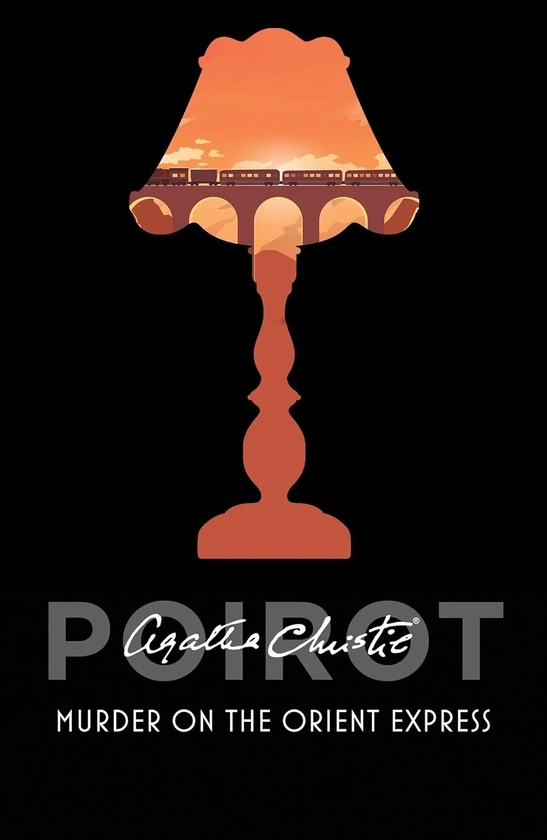
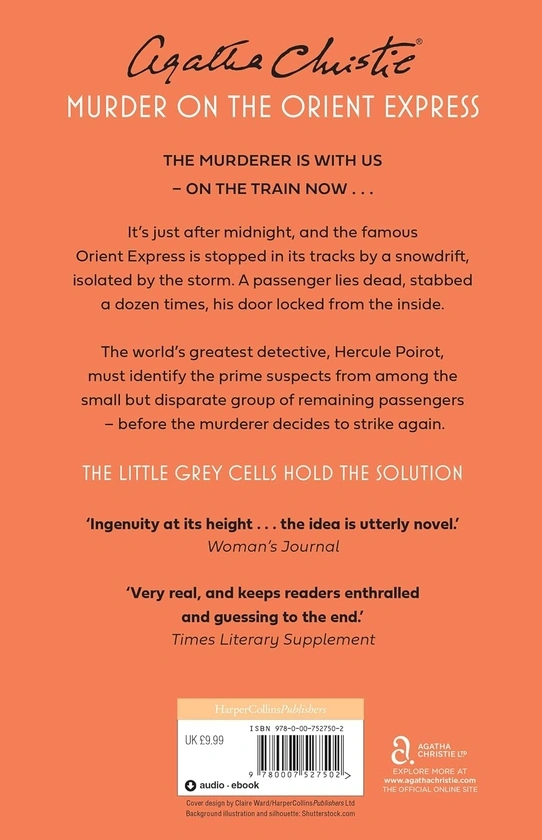
Murder on the Orient Express by Agatha Christie places Hercule Poirot aboard a train where luxury and international travel give way to isolation and suspicion. This English paperback presents one of his most closely contained investigations: a passenger has been killed, the train is stranded by snow, and the remaining travellers must account for themselves.
A journey that should connect distant cities is abruptly halted by a snowdrift. The interruption closes off the ordinary possibility of departure, turning the sleeping car into a limited world. When a passenger is found stabbed repeatedly in his compartment, the apparent security of the room becomes part of the problem. Poirot has to determine who could have acted and how.
The passengers form a varied group, with different nationalities, occupations and reasons for travelling. Statements, movements and personal belongings provide the material of the inquiry. Each interview offers useful information, but it also raises questions about memory, interpretation and deliberate concealment. The detective must decide whether an inconsistency identifies a culprit or belongs to a more complicated pattern.
The confined setting gives ordinary details unusual importance. A person passing in a corridor, a sound heard at night or an object found somewhere unexpected can alter the explanation. Christie uses these pieces to create an investigation that readers can follow while repeatedly changing their understanding of the evidence. The solution remains hidden in the relationships between facts rather than in a distant pursuit.
Poirot’s methods depend on careful listening and the willingness to test a plausible story against awkward particulars. The luxury train also offers a social miniature: people who would usually occupy separate circles must share a narrow space, and the assumptions attached to class, profession and nationality can influence how their words are received.
Beneath the mechanics of the crime lies a question about the relationship between legal judgment and moral judgment. That dimension is best discovered through the unfolding investigation, since describing it in advance would diminish the force of Christie’s design. The book rewards attention without requiring readers to treat its characters merely as interchangeable suspects in a diagram.
This paperback suits readers beginning Christie as well as those revisiting Poirot’s cases. The relatively compact setting makes it easy to keep the principal people and locations in mind, while the changing implications of their evidence sustain the tension. Its enduring appeal comes from the way an apparently manageable problem expands into a challenge to the detective’s reasoning and to the reader’s expectations about what a satisfying resolution should do.