Відгуки і рецензії читачів
Поки немає відгуків


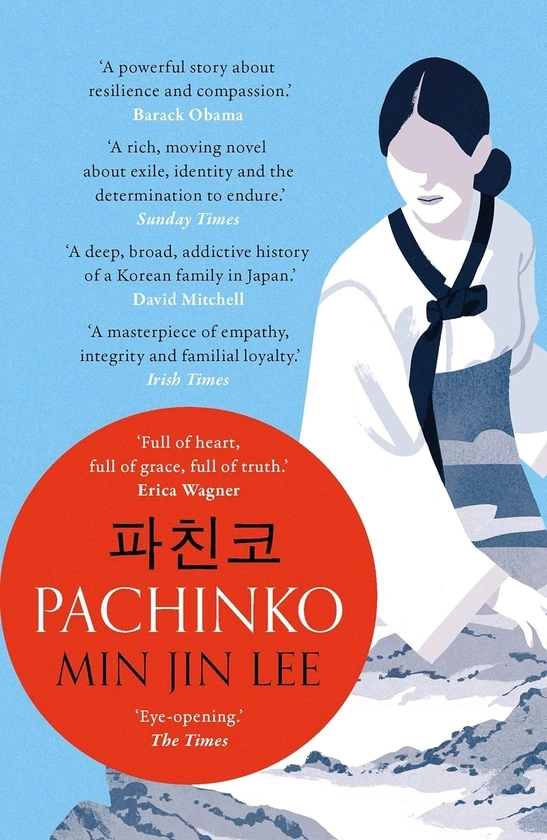
Pachinko is an expansive historical novel about one Korean family across four generations, beginning in a small fishing village and unfolding into a powerful story of survival, identity, love, exile, and belonging in twentieth-century Japan.
Pachinko Min Jin Lee gives readers an intimate yet epic portrait of Sunja and her descendants, showing how private choices made under pressure can echo through decades of hardship, migration, discrimination, ambition, and family loyalty.
The plot begins in Yeongdo, Korea, in 1911, where a humble family builds a life marked by poverty, dignity, and endurance. Sunja, their beloved daughter, grows up in a world where reputation matters deeply and survival depends on work, sacrifice, and the protection of family bonds. Her early life is shaped by tenderness, scarcity, and the quiet strength of people who own little but hold tightly to pride.
Sunja’s life changes when she becomes pregnant by a wealthy married man connected to the criminal underworld. The pregnancy threatens to ruin her and shame her family, leaving her future dangerously uncertain. A young Christian minister named Isak offers her a different path: marriage, respectability, and a new life in Japan. His offer saves her from immediate disgrace, but it also carries her into an unfamiliar country where she has no language, no security, and no clear place.
The central conflict grows from displacement and the struggle to belong. Sunja leaves Korea not because she is chasing adventure, but because necessity and circumstance force her forward. In Japan, she and her family face prejudice as Koreans living under social and historical pressures that shape every opportunity, relationship, and decision. The novel shows how discrimination can enter work, education, marriage, identity, and even the way children imagine their own futures.
In the middle of the narrative, Pachinko book becomes a multigenerational saga, following sons, spouses, grandchildren, and connected lives as they attempt to survive and rise within a society that often refuses to fully accept them. The title’s connection to pachinko parlors points toward chance, money, stigma, and the uneasy routes through which some characters seek stability when ordinary paths are blocked.
The characters are shaped by difficult choices rather than simple moral labels. Sunja’s endurance anchors the story, while figures such as Isak, Hansu, Noa, Mozasu, and later generations reveal different responses to love, shame, ambition, assimilation, and memory. Each life adds another layer to the family’s history, showing how the past remains present even when people try to escape it.
First published in 2017, Min Jin Lee’s novel was a finalist for the National Book Award for Fiction and became widely recognized for its portrayal of the Korean diaspora in Japan. Its strength lies in combining historical scope with close emotional attention, making national history visible through kitchens, classrooms, workplaces, churches, bedrooms, and family silences.
The atmosphere is intimate, patient, and deeply human, even as the scale of the story grows across countries and decades. The novel moves from coastal Korea to Japanese cities, from poverty to business, from domestic spaces to public prejudice, creating a world where history is never abstract. It is felt in hunger, language, names, documents, work, illness, and inheritance.
The main themes include family, exile, identity, colonial history, discrimination, sacrifice, faith, class, shame, ambition, and the meaning of home. The book asks how people preserve dignity when the world assigns them a lower place, and how love can both protect and burden the next generation.
The style is clear, compassionate, and sweeping without losing emotional precision. Min Jin Lee writes with a strong sense of character, allowing readers to understand why people make imperfect choices under unequal conditions. The prose does not rush judgment; it watches how pressure, hope, fear, and duty shape a life over time.
The novel’s structure gives the story its echoing power. A decision made in one generation may become a wound or opportunity in the next. Children inherit not only names and customs, but also silence, stigma, ambition, and the unresolved desires of those who came before them. This makes the plot feel both personal and historical.
For the audience, the book offers an emotional reading experience that is both heartbreaking and generous. It is not only a story of suffering; it is also a story of work, tenderness, food, business, education, faith, stubborn hope, and the will to continue when acceptance remains uncertain.
This novel is ideal for readers who enjoy historical fiction, family sagas, immigrant stories, and character-driven narratives that span many years. It suits an audience interested in Korea, Japan, diaspora experience, generational memory, and the intimate effects of large historical forces.
It will also appeal to readers who value emotionally rich storytelling with many interconnected characters. Those who are drawn to themes of survival, identity, moral compromise, and family duty will find the novel especially rewarding.
Pachinko is a compelling choice for readers asking why read a modern historical saga. It offers a moving portrait of a family forced to build a life across borders and generations, inviting readers to consider how love endures, how history wounds, and how ordinary people keep going even when the world refuses to make room for them.