Відгуки і рецензії читачів
Поки немає відгуків


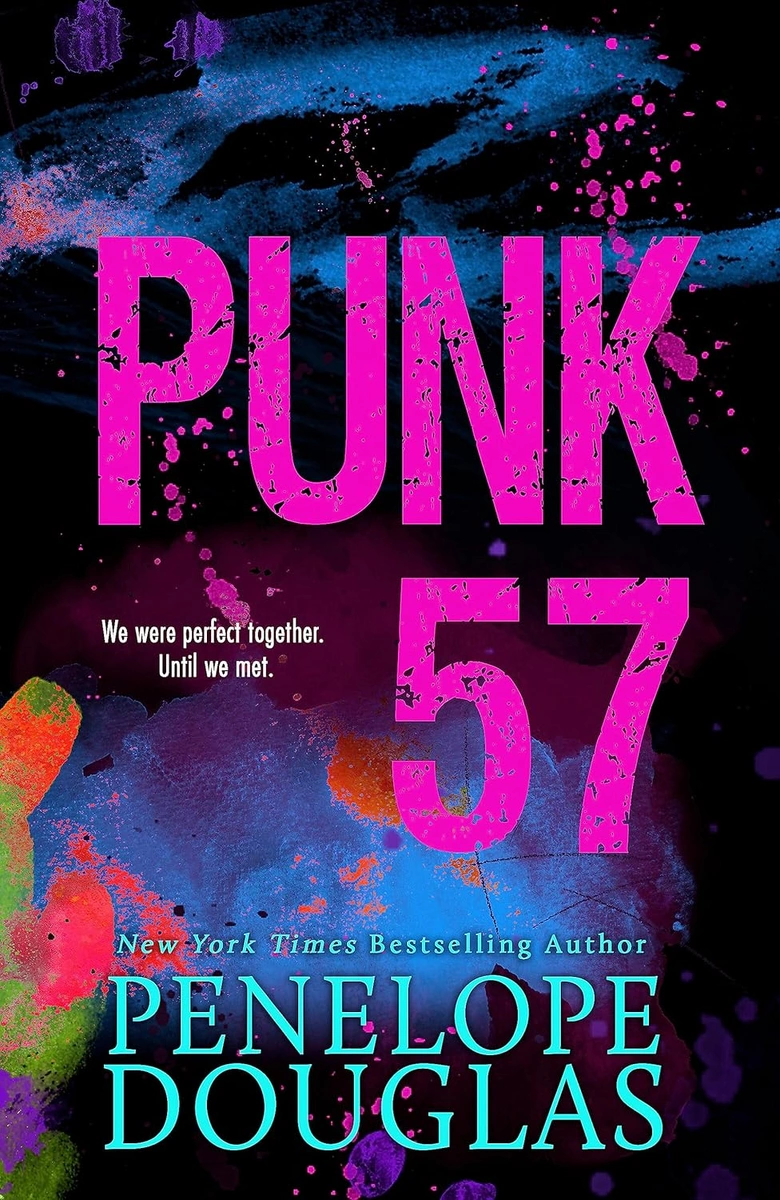
Punk 57 by Penelope Douglas is a standalone contemporary romance for adult readers.
Penelope Douglas builds a story of secrets, identity, bullying, desire, and self-deception around Misha and Ryen, two people who know each other’s private words better than they know each other’s public faces.
Penelope Douglas follows a friendship that starts with a school pen-pal mix-up and grows into seven years of letters, arguments, confessions, and emotional dependence. The novel offers a charged enemies-to-lovers plot, a sharp high-school atmosphere, and a style that turns longing, anger, music, reputation, and vulnerability into one volatile collision.
Misha and Ryen are paired as pen pals in fifth grade because of a mistaken assumption about their names. Once they realize the error, they do not walk away. Instead, they begin a long-distance friendship built on honesty, debate, humor, and the freedom of being known without being seen. They argue about music, food, phones, taste, and life, but the letters become something neither of them wants to lose.
For years, their rules keep the bond safe: no phone numbers, no social media, no photographs. That distance allows them to remain honest in ways they may not be in their everyday lives. Misha finds steadiness in Ryen’s words, while Ryen depends on him as the person who listens when the rest of her world feels false, empty, or too loud.
The plot turns when Misha discovers Ryen online and realizes he may be closer to her real life than either of them expected. Curiosity becomes temptation, and the need to meet her becomes impossible to resist. But the girl he finds is not the same person he knows from the letters. In public, Ryen performs a version of herself that shocks him, and his disappointment becomes tangled with anger, attraction, and the wish to expose what she hides.
The pen-pal arrangement makes recognition the central romantic problem. Misha believes he already knows Ryen, yet the distance that encouraged honesty also protected each of them from contradiction. Meeting makes their written intimacy newly uncertain: affection has to contend with behaviour, appearances and disappointment. The tension comes from that collision between the trusted correspondent and the person who exists among other people.
This paperback suits adult readers interested in attraction complicated by anger, school social pressures and questions of authenticity. The publisher identifies it as an eighteen-plus romance. Its appeal lies in emotionally difficult encounters and flawed choices, with the letters providing a shared past against which the present can be judged.