Відгуки і рецензії читачів
Поки немає відгуків


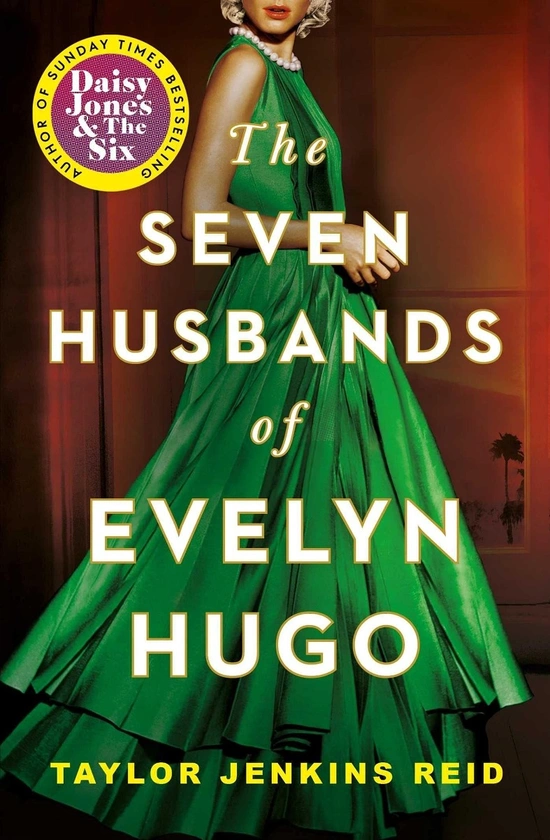
Seven Husbands of Evelyn Hugo is a glamorous, intimate, and sharply emotional novel about fame, ambition, forbidden love, and the price of turning a private life into a public legend. Evelyn Hugo, a reclusive Hollywood icon, is finally ready to reveal the truth behind her dazzling career and scandalous marriages. But when she chooses unknown journalist Monique Grant to write her story, the real mystery begins: why has Evelyn selected her, and what truth has been waiting for this exact moment?
Seven Husbands of Evelyn Hugo Taylor Jenkins Reid offers a layered journey through old Hollywood and the present-day life of a woman who is trying to understand why she has been pulled into Evelyn’s orbit. The novel combines celebrity, secrets, romance, and moral complexity, giving readers a story where every confession changes the shape of what came before. It is both a portrait of a star who built herself with ruthless precision and a quieter story about another woman learning how to claim her own voice.
Monique Grant is not at the height of her career when Evelyn Hugo requests her by name. Her marriage has ended, her professional path feels stalled, and she does not understand why one of the most famous women in the world would insist on speaking only to her. Still, the opportunity is impossible to ignore. Evelyn does not merely want an interview; she wants Monique to hear the full story and turn it into a biography.
Evelyn’s narrative begins with her rise from a young woman determined to escape limitation into a Hollywood star whose image becomes both armor and weapon. She understands early that beauty can open doors, but only intelligence, strategy, and nerve can keep them open. Her life in the film industry is filled with reinvention, calculated choices, and the constant pressure of being watched by a public hungry for scandal.
The seven husbands of Evelyn’s life are not simply romantic milestones. Each marriage reveals something about survival, ambition, protection, loneliness, desire, and performance. Some relationships help her climb, some wound her, some hide deeper truths, and some show how much a woman may have to sacrifice when the world believes it owns her image. Through them, the plot becomes a study of how love and power can be tangled together.
At the heart of the story is a great love Evelyn could never present honestly to the world that made her famous. This hidden emotional center gives the novel its strongest conflict: Evelyn wants success, freedom, and love, but the rules of her era demand compromise at every turn. Her choices are often bold, sometimes selfish, and always shaped by the tension between who she is and who Hollywood allows her to be.
In the middle of the novel, Seven Husbands of Evelyn Hugo book becomes more than a fictional biography of a movie star. It becomes a question of truth itself: who gets to tell a woman’s story, what must be hidden to survive, and what happens when the final version is no longer designed to please the public. As Evelyn’s past unfolds, Monique begins to realize that the story is not distant from her own life, and that Evelyn’s confession may carry consequences she never expected.
The atmosphere is rich with the glamour and cruelty of classic Hollywood. There are luxurious apartments, studio deals, public scandals, magazine headlines, premieres, marriages, betrayals, and carefully staged appearances. Yet beneath the shine is a colder reality: Evelyn’s world rewards beauty while punishing honesty, celebrates desire while controlling it, and turns personal pain into entertainment.
The major themes include fame, identity, ambition, sexuality, power, love, friendship, regret, and the cost of secrecy. The novel explores how a woman can become iconic while being denied the freedom to live openly. It also asks whether success is still victory when it requires silence, and whether love can remain true when it must be hidden behind acceptable stories.
The style is immersive, elegant, and highly readable, with the rhythm of a private confession. Evelyn’s voice is direct, controlled, and magnetic, while Monique’s perspective grounds the story in the present. This dual structure creates suspense because the reader is not only learning what happened in Evelyn’s past, but also waiting to understand why Monique has been chosen as the person to receive it.
What lingers after reading is the complexity of Evelyn herself. She is not written as a saint or a simple victim. She is strategic, passionate, wounded, brave, flawed, and unforgettable. Her choices may invite judgment, but the novel also invites understanding. That tension gives the story its emotional depth and makes the characters feel alive beyond the glamour of the setting.
This novel is for readers who enjoy character-driven historical fiction, literary romance, and stories about complicated women who refuse to be reduced to one role. It will appeal to an audience that likes old Hollywood atmosphere, hidden relationships, moral dilemmas, and plots built around revelations that arrive slowly and powerfully.
One reason to read this novel is Evelyn’s unforgettable voice. She tells her life with confidence and sharp honesty, refusing to soften herself for comfort. Her story moves through desire, calculation, heartbreak, loyalty, and loss, creating a portrait of a woman who understands exactly what she has gained and what she has paid for it.
Another reason is the relationship between Evelyn and Monique. Their conversations give the novel its frame, but they also become a quiet confrontation between generations, choices, and hidden pain. Monique’s own transformation matters because Evelyn’s story forces her to ask what she wants, what she deserves, and how much power there is in telling the truth without apology.
The novel also succeeds because it balances spectacle with intimacy. The marriages, career moves, and public scandals provide drama, but the emotional power comes from the private moments: the love that cannot be named, the compromises made in silence, and the memories Evelyn has carried long after the cameras stopped watching.
Seven Husbands of Evelyn Hugo is a compelling choice for readers who want a novel that feels glamorous, heartbreaking, and deeply human. It invites you behind the curtain of a legendary life, where every headline hides a wound, every marriage has a purpose, and the final confession may be the most important role Evelyn Hugo has ever chosen to play.