Відгуки і рецензії читачів
Поки немає відгуків


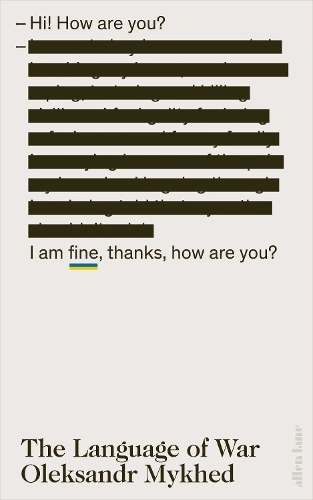
The Language of War is a searing nonfiction book about Russia’s full-scale invasion of Ukraine and the collapse of ordinary life into emergency, fear, duty, and witness. Oleksandr Mykhed begins from a world that once seemed stable: a quiet life near Kyiv with his wife, his dog, his parents nearby, and weekends filled with food, friends, and small domestic rituals. Then the invasion begins, and every familiar word becomes inadequate for a new reality of helicopters, gunpowder, basements, shattered homes, and the decision to resist.
The Language of War Oleksandr Mykhed offers readers an intimate and urgent account by a Ukrainian writer whose life was transformed by the war. The book brings together day-by-day chronicles, family experience, the voices of friends in exile, soldiers, witnesses, and survivors, creating a powerful testimony about how language changes when survival becomes the first grammar of daily life.
The story begins before the rupture, with the kind of normal life people often recognize only after it has been destroyed. Mykhed writes from the position of someone who had a home, plans, routines, tenderness, and a sense of future. That ordinary happiness matters because the invasion does not interrupt an abstract political landscape; it tears into kitchens, apartments, roads, bedrooms, family messages, and the private calendar of one life.
When Russian forces enter Ukraine, the narrator’s world changes overnight. The sounds of war replace the sounds of routine. A basement becomes a shelter. A familiar town becomes dangerous. Home is no longer only a place of memory, but also a site of damage, violation, and loss. The plot of this nonfiction narrative is not shaped like a distant military overview; it is built from days lived under pressure, where news, fear, anger, and grief arrive without pause.
The book also expands beyond one man’s experience. Family members, friends, displaced people, fighters, and witnesses contribute to a wider chorus of Ukrainian endurance. Their stories show war as something that happens simultaneously to bodies, language, landscapes, archives, culture, and memory. The invasion is not only a military assault; it is an attack on a way of living, speaking, remembering, and belonging.
In the middle of the narrative, The Language of War book becomes a study of how words fail and then must be remade. Yesterday’s vocabulary cannot fully describe occupation, shelling, evacuation, mass violence, broken homes, and the strange routines of wartime. Yet silence is impossible. The writer must search for a new language because naming what happened becomes part of resisting erasure.
The characters in this book are real people facing impossible conditions. Parents worry for children, friends scatter across borders, soldiers enter a life they may never have imagined, and civilians become witnesses to events no one should have to see. Mykhed’s own movement from civilian writer to someone living inside the machinery of war gives the narrative a raw moral force. The central conflict is not invented drama; it is the struggle to remain human while the world demands endurance beyond measure.
The atmosphere is urgent, fragmented, grieving, and fiercely alive. The book carries the sensation of a reality breaking faster than the mind can process it: messages, alarms, memories, ruins, testimony, rage, and love all press against one another. Its emotional world is not tidy. It is marked by shock, repetition, disbelief, and the need to keep speaking even when speech feels damaged.
The major themes include war, memory, home, language, grief, resistance, family, testimony, cultural survival, and the moral burden of witnessing. The book asks how people make sense of life when the categories of peace no longer work. It also asks what a writer can do in wartime: mourn, document, accuse, preserve names, carry voices, and search for form amid chaos.
The style is sharp, compressed, and emotionally direct. Rather than smoothing the experience into a conventional historical narrative, Mykhed allows urgency and fracture to remain visible. This gives the book its power. It does not try to make war feel orderly. It shows how war invades thought itself, changing what can be remembered, what can be forgiven, and what must be said aloud.
What lingers after reading is the painful gap between before and after. The Language of War shows that invasion destroys more than buildings. It alters the meaning of happiness, safety, friendship, literature, childhood, and home. Yet the book is not only about devastation. It is also about the stubborn survival of voice, community, humor, care, and the refusal to let violence have the final word.
This book is for readers who want to understand the human experience of Russia’s war against Ukraine beyond headlines and battlefield maps. It will appeal to an audience interested in contemporary history, Ukrainian literature, memoir, war writing, testimony, and works that explore how private life is transformed by public catastrophe.
One reason to read this book is its attention to language itself. Mykhed does not only describe war; he examines what war does to description. Words that once belonged to ordinary life become insufficient, and new words arrive carrying fear, ash, duty, and loss. That focus makes the book especially important as literature as well as testimony.
Another reason is the closeness of the narrative. The book does not allow the reader to keep war at a safe distance. It shows how invasion enters family life, friendships, habits, rooms, roads, and dreams. The result is a deeply personal account that also speaks for a wider national wound.
The book also stands out because it gathers many voices without losing its emotional center. The experience of one writer becomes a doorway into the experiences of many Ukrainians: those who flee, those who fight, those who wait, those who grieve, and those who insist that the truth of what happened must be carried forward.
The Language of War is a necessary and haunting choice for readers who want a book about Ukraine that is intimate, immediate, and morally clear. It invites you into a world where peace vanishes overnight, where old language breaks under the weight of violence, and where the act of writing becomes a way to remember, resist, and remain human.