Відгуки і рецензії читачів
Поки немає відгуків


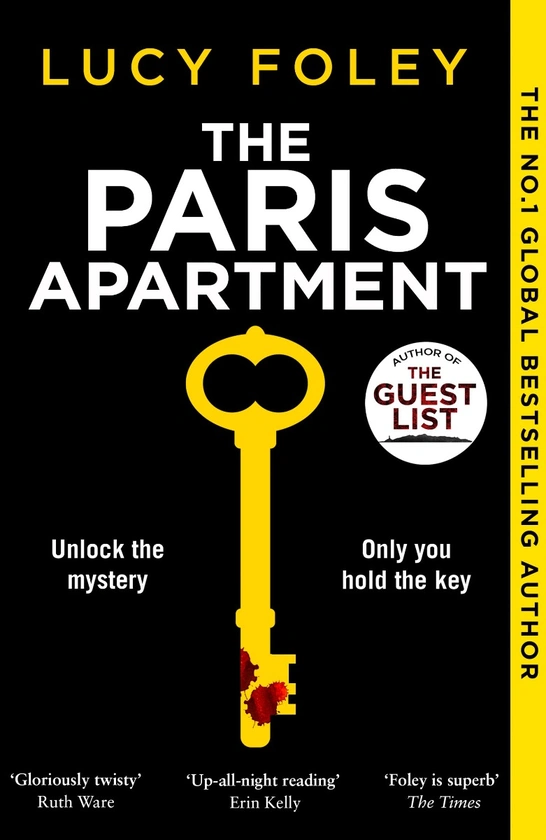
The Paris Apartment is a tense, stylish thriller set inside a beautiful old building in the backstreets of Paris, where every locked door seems to hide a secret. Jess arrives in the city hoping to stay with her half-brother Ben, but he has vanished before she can reach him. His apartment is waiting, the neighbours are watching, and the atmosphere of Parisian elegance quickly turns into something colder, darker, and far more dangerous.
The Paris Apartment Lucy Foley gives readers a modern locked-building mystery built around suspicion, privilege, and the unsettling feeling of being an outsider in a place where everyone else knows the rules. The novel follows Jess as she searches for Ben, questions the residents, and discovers that the apartment block is not simply a setting but a maze of hidden loyalties, old wounds, and carefully protected lies.
Jess comes to Paris needing a fresh start, but the welcome she expects from Ben never comes. He is missing, and the people around him seem strangely reluctant to help. The building itself is grand, elegant, and intimidating, with the kind of beauty that suggests wealth and history. Yet the more time Jess spends there, the more that beauty begins to feel like a polished surface covering something rotten.
The residents form a closed circle of suspicion. There is the lonely wife, the party animal, the person who watches from behind the curtain, the secret lover, the caretaker who sees more than she says, and Jess herself, the unwanted guest. Each character appears to know something about Ben, but no one seems eager to speak plainly. The plot grows from Jess’s determination to break through their silence before whatever happened to her brother is hidden forever.
Ben’s absence creates the central conflict of the novel. Jess is alone in a foreign city, with limited money, few allies, and no reason to trust the people who live behind the doors around her. As she digs into her brother’s life, she begins to understand that his work and his relationships may have brought him too close to something dangerous. Every answer leads to another locked space, another warning sign, and another person who may have a motive.
In the middle of the story, The Paris Apartment book becomes more than a missing-person mystery. It becomes a study of power inside a closed community, where wealth, family, desire, and fear can bind people together more tightly than friendship. The apartment block turns into a pressure chamber: the closer Jess gets to the truth, the more threatening the silence around her becomes.
The characters are shaped by secrets rather than simple labels. Jess is stubborn, resourceful, and vulnerable, driven by her need to find Ben even when the search puts her in danger. The residents are glamorous, damaged, evasive, or hostile, but none of them feels entirely safe. The tension comes from the uncertainty of who is lying, who is afraid, and who may be capable of murder.
The atmosphere is sleek, claustrophobic, and quietly menacing. Paris is not presented only as a romantic city of lights; here it becomes a place of narrow streets, shadowed courtyards, locked gates, and apartments where footsteps and whispers carry. The contrast between elegance and threat gives the novel its distinctive mood, making the building feel as alive and watchful as any character.
The main themes include secrecy, class, family power, isolation, survival, and the danger of appearances. The story explores how people protect privilege, how truth can be buried inside beautiful spaces, and how difficult it is for an outsider to challenge a world designed to keep her out. Jess’s position gives the thriller its emotional edge: she has little status, but she refuses to disappear quietly.
The style is fast, twisty, and built around multiple perspectives. Different voices reveal pieces of the mystery while withholding enough to keep suspicion moving from one resident to another. The pacing creates an up-all-night effect, with each chapter tightening the sense that Ben’s disappearance is connected to something larger than a private quarrel.
What lingers after reading is the feeling that every apartment contains a version of the truth, but no single person is willing to reveal it fully. The Paris Apartment works because it combines the pleasure of a classic closed-circle mystery with the unease of modern psychological suspense. The glamour of the setting makes the darkness sharper, and the mystery becomes more disturbing as the residents’ connections emerge.
This novel is for readers who enjoy atmospheric thrillers, suspicious neighbours, missing-person plots, and stories where setting is central to the suspense. It will appeal to an audience that likes locked-room tension, shifting viewpoints, secrets behind wealth, and mysteries that unfold through character conflict as much as through clues.
One reason to read this novel is its setting. The apartment building is not just a backdrop; it is the engine of the suspense. Its locked doors, private rooms, hidden histories, and watchful residents create a constant feeling that Jess is trespassing in a story someone else has already written and does not want her to change.
Another reason is Jess’s role as an outsider. She is not a detective with authority or resources, but her lack of power makes her persistence more compelling. She must rely on instinct, nerve, and the ability to read people who are determined to mislead her. That gives the mystery a strong human tension beyond the mechanics of the plot.
The novel also succeeds because it keeps suspicion alive across the cast. Each resident has a reason to hide something, and each perspective adds another layer of uncertainty. The reader is invited to question charm, vulnerability, hostility, and silence in equal measure, which makes the eventual truth feel rooted in character rather than coincidence.
The Paris Apartment is a gripping choice for readers who want a thriller filled with secrets, atmosphere, and elegant menace. It invites you behind the gates of a Paris building where beauty conceals danger, every resident has something to lose, and one missing man may be the key to exposing everything the walls have kept hidden.