Відгуки і рецензії читачів
Поки немає відгуків


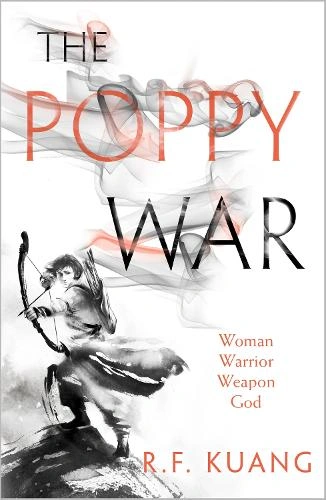
The Poppy War (Book 1) is a dark epic fantasy about power, war, ambition, and the terrifying cost of survival. Fang Runin, known as Rin, is a war orphan from Rooster Province who refuses the future chosen for her: servitude, exploitation, and an arranged marriage that would benefit her guardians. When she shocks the Empire by passing the Keju and earning a place at Sinegard, the most elite military academy in Nikan, her victory feels like freedom. But the school gates open not into safety, but into a world of prejudice, violence, magic, and choices that can destroy a soul.
The Poppy War (Book 1) R. F. Kuang offers a fierce and uncompromising beginning to a trilogy where fantasy is shaped by military history, colonial trauma, and the brutal psychology of conflict. The novel follows Rin from desperate student to dangerous wielder of shamanic power, asking how much a person can endure before survival turns into vengeance. Its promise is not comfort, but intensity: a story where gods answer, empires burn, and every victory leaves a scar.
Rin begins with almost nothing except hunger, anger, and determination. Her foster family wants to marry her off for profit, so she chooses the only escape available: study hard enough to pass the imperial examination that decides the future of talented students. Her success shocks officials, humiliates those who expected her to fail, and sends her to Sinegard, where status matters almost as much as skill.
At the academy, Rin discovers that being brilliant does not protect her from contempt. She is a poor, dark-skinned southern girl among students from powerful families, and her presence threatens people who believe privilege should decide who deserves greatness. The plot first moves through academic rivalry, discipline, combat training, and the painful work of proving herself in an institution built to exclude her.
Rin’s path changes when she learns she has an aptitude for shamanism, a dangerous and nearly mythical art that connects mortals to gods. With the help of a strange teacher and forbidden methods, she begins to understand that divine power is not a clean gift. The gods are alive, but they are not gentle, and calling on them means opening the mind to forces that can offer victory while demanding something monstrous in return.
In the middle of the novel, The Poppy War (Book 1) book becomes far more than a school fantasy. The threat of the Federation of Mugen turns political tension into full war, and Rin is pulled into a conflict that exposes the cruelty of empires and the limits of youthful ambition. The world expands from classrooms and tournaments to battlefields, massacres, command structures, and moral decisions that cannot be undone.
The characters around Rin sharpen the story’s emotional conflict. Kitay offers intelligence, loyalty, and moral clarity; Nezha becomes a rival shaped by class and pride; Altan represents charisma, pain, and the dangerous allure of power; Jiang opens a door to knowledge that may never be safely closed. Rin’s relationships are tense because each one reflects a different possible version of herself: scholar, soldier, survivor, weapon, or destroyer.
The atmosphere is intense, violent, and increasingly grim. The novel begins with the pressure of examinations and social exclusion, then shifts into military fantasy with a darker and more devastating scale. Nikan feels like a country built on old wounds, uneasy peace, and the memory of wars that have never truly ended. As the story deepens, the mood becomes harsher, more urgent, and more morally unstable.
The major themes include class, racism, imperialism, addiction, trauma, revenge, military obedience, and the seduction of absolute power. The book asks what happens when a person with nothing is given a weapon large enough to change history. It also explores how systems create violence long before any single character makes a terrible choice, and how the desire to protect one’s people can become indistinguishable from the desire to annihilate an enemy.
The style is fast, sharp, and emotionally ruthless. The early chapters carry the energy of a competitive academy story, but the narrative deliberately breaks that structure as war arrives. The prose keeps close to Rin’s hunger for control, her anger at humiliation, and her growing willingness to pay any price for strength. This makes the reading experience gripping, but also uncomfortable in the best sense: the novel refuses to make power feel harmless.
What lingers after reading is the transformation at the heart of the story. The Poppy War (Book 1) does not present heroism as pure or magic as wondrous escape. It shows how war changes language, friendship, faith, and identity. Rin’s journey is compelling because it is also frightening: every step upward brings her closer to becoming the kind of force she once only feared.
This novel is for readers who enjoy dark fantasy, military strategy, morally complex heroines, and stories where magic is tied to history, religion, and violence. It will appeal to an audience that wants fantasy with political weight, emotional brutality, and characters who make decisions under extreme pressure rather than within simple categories of good and evil.
One reason to read this novel is Rin herself. She is brilliant, furious, resilient, and deeply flawed. Her determination makes her admirable, but her anger makes her dangerous, and the novel never lets the reader forget either side. Watching her rise is thrilling because it is also unsettling; she earns power, but power begins to reshape what she is willing to become.
Another reason is the world-building. Nikan’s military schools, regional divisions, shamanic traditions, imperial politics, and history of invasion create a setting that feels both expansive and pressured by the past. Magic is not decorative here. It is religious, psychological, bodily, and strategic, making every supernatural moment carry consequences beyond spectacle.
The book also stands out because it refuses easy emotional rewards. Friendship, ambition, and victory all come with costs. The story challenges the reader to think about what war does to the people who fight it, the people who command it, and the people who justify it after the fact. That makes the novel powerful not only as fantasy, but as a study of how violence is learned and unleashed.
The Poppy War (Book 1) is a gripping choice for readers who want a fantasy that is bold, brutal, and impossible to dismiss. It invites you into a world where a girl’s escape from powerlessness becomes a descent into divine fire, and where the question is not only whether Rin can win, but what will remain of her when she does.