Відгуки і рецензії читачів
Поки немає відгуків


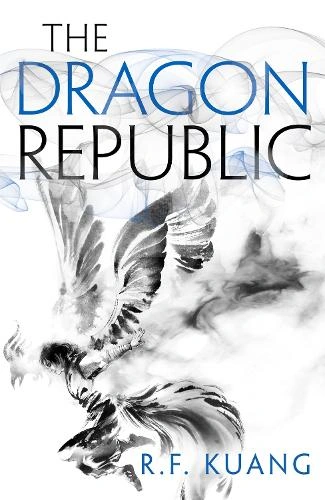
The Dragon Republic by R. F. Kuang is the second novel in the Poppy War trilogy. This English paperback follows Rin after the catastrophic decisions of the first book, when survival offers little relief from guilt and the war turns towards new political aims. Her destructive power remains immense, but commanding it does not mean controlling the people who want to use her.
Rin is on the run, burdened by what she has done and driven by a desire for revenge against the Empress. The conflict that consumed her earlier life has left her without a simple path forward. Anger provides direction, but it also makes her vulnerable to anyone capable of offering an enemy and a purpose.
An alliance with the Dragon Warlord draws her into a campaign to overthrow the existing regime. His vision of a different political order appears to offer more than private vengeance. Yet an alliance requires Rin to work within plans she does not fully control, among people whose interests may diverge sharply from her own. The ability to destroy does not automatically translate into authority over the settlement that follows.
The Phoenix continues to make her relationship with power dangerous. Military usefulness, personal agency and the cost of drawing on a god become inseparable problems. Rin must confront the possibility that those who praise her strength may value it chiefly as a resource. The struggle is therefore fought inside her own choices as well as between armies and rival rulers.
The sequel widens the first novel’s movement from education into war by examining coalition, command and political legitimacy. A promise of reform must be assessed through the people expected to carry it out. Rin’s experience gives her reasons to distrust authority, but distrust alone cannot provide an alternative. She has to act in a world where refusing every compromise can also carry a devastating cost.
Kuang keeps the emotional consequences of violence close to the strategic narrative. Trauma affects judgment and relationships; previous victories cannot simply be counted without considering what made them possible. The novel’s darkness comes from the collision between necessary action and the damage that action can create, particularly when someone’s identity has become inseparable from warfare.
This paperback is for readers continuing after The Poppy War, rather than a starting point for the trilogy. It suits an audience interested in military fantasy, political manipulation and protagonists whose abilities create as many vulnerabilities as advantages. The central tension is whether Rin can help shape a future without surrendering herself to another person’s definition of what she is for.