Відгуки і рецензії читачів
Поки немає відгуків


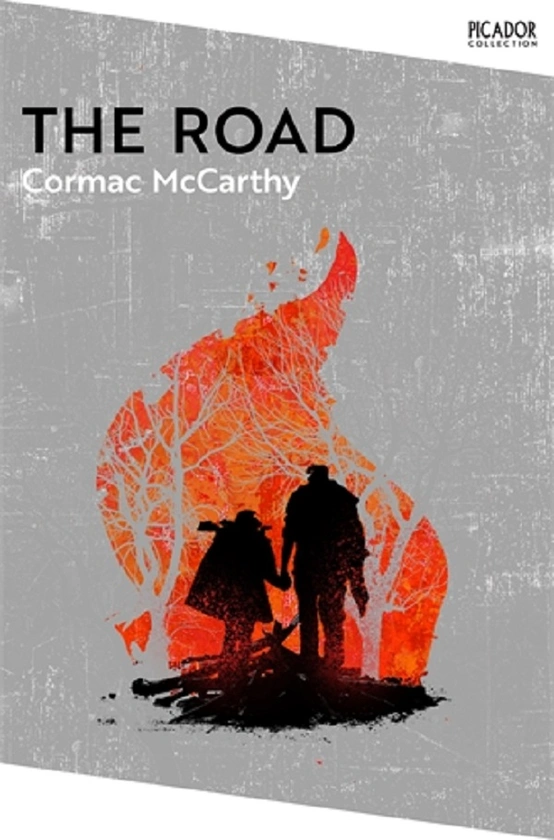
The Road by Cormac McCarthy follows a father and his young son across a devastated America. Beneath a darkened sky, they make their way toward the coast without knowing what may await them there. The landscape is burned and ash moves on the wind; people encountered along the way may be dangerous. Their possessions offer little protection, and the need to continue walking becomes the most immediate condition of life.
The novel places a remarkably close relationship inside a world from which familiar structures have disappeared. The father wants to keep the boy alive, but survival alone cannot answer every question they face. What should be preserved when almost everything has been lost? How can tenderness continue when fear is a necessary response? McCarthy’s setting gives those questions physical urgency, keeping the danger around the pair inseparable from the bond between them.
Protecting a child gives each decision both practical and moral weight. The journey requires vigilance, yet constant danger can narrow a person’s capacity to recognize anything beyond threat. Readers can follow the tension between defending a life and preserving the qualities that make that life meaningful. The boy’s presence ensures that the future remains a question even in a landscape that seems to have removed the usual grounds for hope.
The coast offers direction without a reassuring promise. This makes the road more than a route toward a known destination: it is the space in which the father and son continue to act, speak and care for one another under extreme uncertainty. The stripped landscape encourages close attention to those small human exchanges. A gesture of concern can acquire unusual force because the world around it provides so little support for ordinary comfort or continuity.
This English Picador paperback includes an introduction by novelist John Banville. It suits readers of post-apocalyptic fiction, literary journeys and emotionally concentrated stories about family responsibility. The devastation is severe, but the novel’s power also comes from its attention to what can still exist within it. The relationship at the centre gives the desolation an intimate scale: a ruined country is encountered through the effort to keep one person safe.
Buy this book if you want a demanding novel in which the largest questions are carried by a small travelling family. McCarthy connects survival with the difficulty of remaining humane, leaving the reader to consider what a parent can pass on when institutions and material security have fallen away. The journey’s uncertainty gives every act of care importance. The Road remains compelling because movement continues without a guarantee, and because the father and son’s bond makes the question of the next step feel both immediate and enduring.