Відгуки і рецензії читачів
Поки немає відгуків


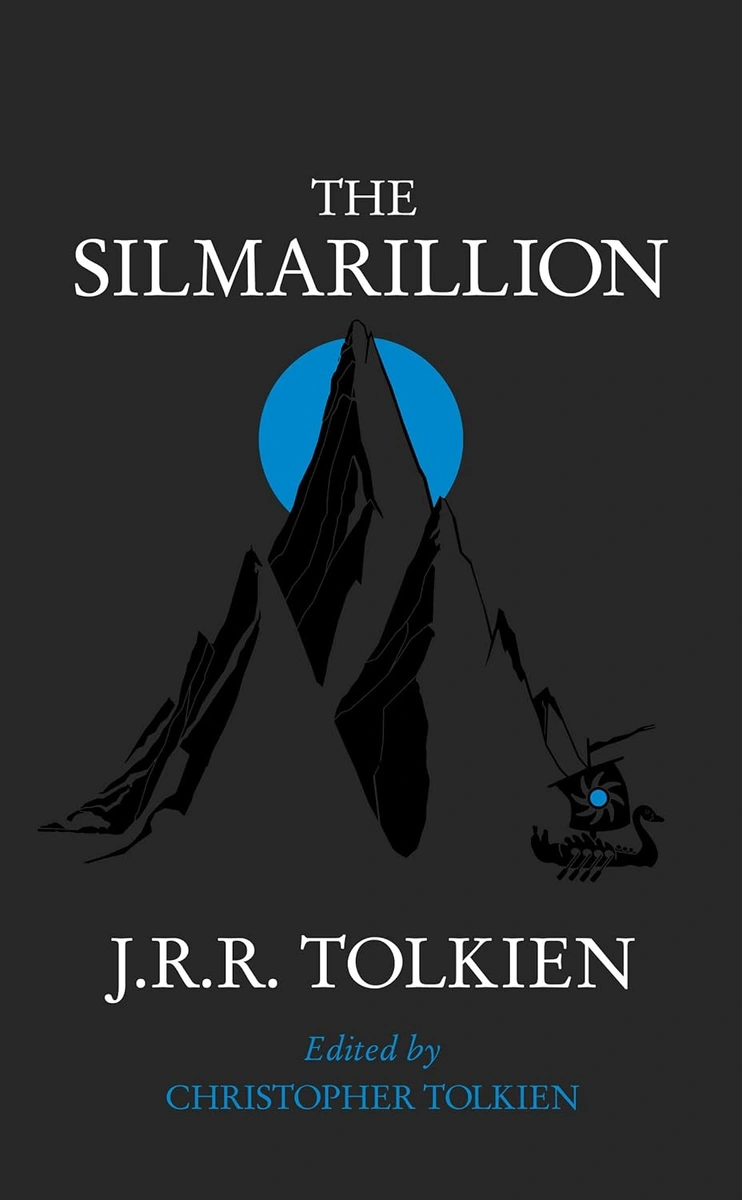
The Silmarillion is the mythic foundation of J. R. R. Tolkien’s world, a grand account of creation, rebellion, exile, love, war, and loss in the Elder Days of Middle-earth. J. R. R. Tolkien presents the ancient history behind The Lord of the Rings, where gods, Elves, Men, Dwarves, dark powers, and legendary jewels become part of a vast drama that reaches far beyond one quest or one age.
The Silmarillion J. R. R. Tolkien offers readers the deep legendarium of Middle-earth, published after Tolkien’s death in 1977 and edited by his son Christopher Tolkien. The book gathers several connected works, including the creation myth Ainulindalë, the account of the Valar in Valaquenta, the main history of the Silmarils, the downfall of Númenor, and the events leading toward the Rings of Power and the Third Age.
The plot begins before the world exists, with the Music of the Ainur and the shaping of creation through divine harmony and discord. From the beginning, beauty and rebellion are intertwined. Melkor, later known as Morgoth, seeks domination rather than participation, and his desire to possess and corrupt becomes the source of much of the sorrow that follows through the long ages of the world.
The central story concerns the Silmarils, three radiant jewels made by Fëanor, the greatest craftsman of the Elves. These jewels contain the pure light of the Two Trees of Valinor, and when Morgoth steals them, they become the cause of oaths, exile, betrayal, warfare, and tragedy. The High Elves pursue them into Middle-earth, but the quest to recover beauty from darkness gradually reveals how pride can become almost as destructive as evil itself.
The book introduces some of Tolkien’s most powerful legendary characters: Fëanor, whose genius is matched by ruinous pride; Beren and Lúthien, whose love crosses boundaries of mortality and immortality; Túrin Turambar, whose life is shadowed by doom; Eärendil, whose voyage becomes a turning point in the fate of Elves and Men; and Galadriel and Elrond, who belong to this older history before they appear in later tales.
In the middle of the narrative, The Silmarillion book becomes more than background material for Middle-earth. It becomes a vast tragedy about desire, memory, and the cost of trying to reclaim what has been lost. Kingdoms rise in beauty and fall in fire. Oaths meant to preserve honor become chains. The struggle against Morgoth requires courage, but it also exposes weakness, rivalry, and the long consequences of pride.
The later sections widen the scope beyond the First Age. Akallabêth tells of the rise and downfall of Númenor, the great island kingdom of Men, whose glory is undone by fear of death and hunger for immortality. The final section connects the ancient past to the forging of the Rings of Power, the return of Sauron, and the world that readers later encounter in The Lord of the Rings.
The atmosphere is elevated, tragic, ancient, and luminous. The book reads less like a conventional novel and more like a collection of myths, chronicles, and heroic lays. Its style is formal and compressed, giving the sense of an immense history remembered from a great distance, where individual stories shine briefly against the vast movement of ages.
The main themes include creation, free will, pride, corruption, exile, mortality, love, sacrifice, beauty, memory, and the struggle between domination and stewardship. Tolkien’s moral imagination is central: evil is not merely ugliness or violence, but the desire to possess, control, and bend creation away from its intended harmony.
The style can be demanding because it contains many names, lineages, realms, and events, but that density is also part of its power. The book gives Middle-earth depth, showing that the later stories stand on buried histories of grief, heroism, and loss. For readers who love the atmosphere of ancient legend, the language creates a sense of scale rarely matched in fantasy.
The conflict beneath the style is the conflict between beauty and possessiveness. The Silmarils are beautiful, but the desire to own them unleashes suffering. Kingdoms are noble, but pride makes them fragile. Heroes are brave, but not always wise. This moral complexity gives the book its lasting force and makes its legends feel both remote and deeply human.
Who this book is for. This work is ideal for readers who want to understand the deeper mythology behind The Hobbit and The Lord of the Rings. It will appeal to an audience interested in epic fantasy, mythic storytelling, invented languages, ancient histories, divine powers, tragic heroes, and the foundations of Middle-earth.
It is also a strong choice for readers who enjoy dense world-building and stories that operate on the scale of myth rather than modern realism. Those who want a fast adventure may need patience, but readers willing to enter its rhythms will discover the source of many names, songs, memories, and sorrows that echo through Tolkien’s later works.
Why you should read it. The Silmarillion stands out because it transforms Middle-earth from a setting into a mythology. It explains the ancient grief behind Elven songs, the long shadow of the first Dark Lord, the origins of later conflicts, and the immense history that gives Tolkien’s world its feeling of age and memory.
Another reason to read it is the beauty of its tragic structure. The book contains love stories, wars, betrayals, heroic last stands, doomed oaths, divine interventions, and moments of grace. It shows that victory in Tolkien’s world is rarely easy and that even noble causes can be wounded by pride, possessiveness, and despair.
For readers seeking the roots of Middle-earth, this book offers a profound and unforgettable journey into the First Age and beyond. Enter the Elder Days, follow the light of the Silmarils through glory and ruin, and discover the ancient sorrow and beauty that stand behind Tolkien’s most famous tales.