Відгуки і рецензії читачів
Поки немає відгуків


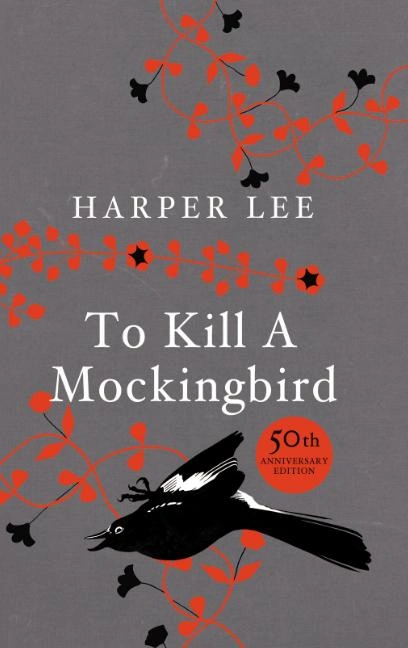
To Kill a Mockingbird. 50th Anniversary Edition is a landmark American novel about childhood, conscience, racial injustice, and the difficult courage required to stand for what is right when a whole town looks away. Harper Lee sets the story in the Deep South of the 1930s, where Scout Finch watches innocence collide with prejudice through the trial that changes her understanding of people forever.
To Kill a Mockingbird. 50th Anniversary Edition Harper Lee presents a classic story of family, morality, fear, and empathy through the eyes of Scout and her brother Jem. This anniversary edition returns readers to Maycomb, Alabama, where Atticus Finch defends a Black man falsely accused in a racially divided community, and where the lessons of childhood become inseparable from the harsh realities of adult hypocrisy.
The novel follows Scout Finch, a curious and spirited child growing up with her older brother Jem and their widowed father, Atticus Finch. Their small town appears ordinary at first, filled with neighbors, school lessons, summer games, family stories, and local legends. Yet beneath its familiar routines lies a social order shaped by class, race, gossip, fear, and old assumptions that few people are willing to question.
Atticus, a lawyer respected for his calm intelligence and moral steadiness, is appointed to defend Tom Robinson, a Black man accused of attacking a white girl. The case exposes the deep prejudice of Maycomb and places the Finch family under public pressure. Scout and Jem do not fully understand the legal and social forces at work at first, but they feel the hostility around them and begin to see how injustice can hide behind manners, tradition, and respectability.
The plot develops through Scout’s growing awareness. Childhood adventures with Jem and Dill, their fascination with the mysterious Boo Radley, and their attempts to understand the adult world all run alongside the increasingly serious trial. This combination gives the story its unique emotional power: innocence is not abandoned all at once, but slowly tested by cruelty, courage, and disappointment.
In the middle of the narrative, To Kill a Mockingbird. 50th Anniversary Edition book becomes a story about moral vision. The title’s image of the mockingbird points toward vulnerable people who do no harm yet suffer because of others’ fear or prejudice. Tom Robinson and Boo Radley are different figures in the plot, but both reveal how dangerous it can be when a community judges before it truly sees.
The central conflict is not only whether Atticus can win in court. It is whether truth can survive in a place where many people have already chosen what they want to believe. Atticus’s defense of Tom becomes a test of public conscience, while Scout and Jem’s reactions show the cost of discovering that justice and law do not always move together.
The characters remain memorable because they are filtered through Scout’s sharp, honest, and often funny perspective. Atticus offers quiet strength rather than easy heroics. Jem struggles with anger and disillusionment. Scout learns through confusion, conflict, and compassion. Around them, Maycomb becomes a full social world where kindness, cowardice, dignity, ignorance, and courage exist side by side.
The atmosphere is warm, observant, and deeply Southern, yet shadowed by injustice. Harper Lee captures porches, dusty roads, schoolrooms, courtrooms, summer heat, family conversations, and neighborhood rituals with vivid clarity. The familiar texture of childhood makes the darker turns of the story feel even more painful and real.
The major themes include racism, class, moral courage, empathy, childhood, justice, innocence, family, and social hypocrisy. The novel asks readers to consider how people learn prejudice, how communities protect unfair systems, and why compassion requires more than polite feeling. It also shows that courage may look quiet: a lawyer standing before a hostile courtroom, a child trying to understand, or a lonely neighbor choosing kindness.
Harper Lee’s style is clear, humane, and rich with humor. The narration balances Scout’s youthful directness with the deeper understanding of an adult looking back. This layered voice allows the novel to be accessible and emotionally complex at once, turning ordinary scenes into moments of moral discovery.
The book’s emotional power comes from the contrast between innocence and knowledge. Scout’s world begins with games, rumors, and family rules, but it expands into a larger awareness of suffering and responsibility. The story does not pretend that one good person can easily fix a broken society, yet it insists that individual conscience still matters.
For the audience, the lasting force of the novel lies in its ability to make social injustice personal without reducing it to a lesson. The style invites readers to care about the characters first, then to recognize the larger system pressing on their lives. That combination of intimacy and moral scale is why the novel continues to be read across generations.
Who this book is for
This edition is ideal for readers who enjoy classic literature, coming-of-age stories, courtroom drama, and novels with strong moral themes. It will appeal to anyone interested in American history, Southern settings, family relationships, and stories that examine justice through the eyes of a child learning how complicated adults can be.
It is also a strong choice for readers discovering the novel for the first time or returning to it with a more mature perspective. The book’s audience includes students, teachers, collectors, and readers who value fiction that combines unforgettable characters with questions about conscience, community, and human dignity.
Why read it
The novel is worth reading because it remains emotionally direct, morally challenging, and beautifully constructed. It gives readers a courtroom story, a childhood story, and a portrait of a town divided by prejudice, while also offering one of literature’s most enduring examples of quiet integrity in Atticus Finch.
To Kill a Mockingbird. 50th Anniversary Edition is a compelling choice for readers who want a classic that speaks with tenderness and force. It invites you into Scout Finch’s world, where childhood curiosity meets injustice, and where the simple instruction not to harm the innocent becomes one of literature’s most unforgettable calls to compassion.