Відгуки і рецензії читачів
Поки немає відгуків


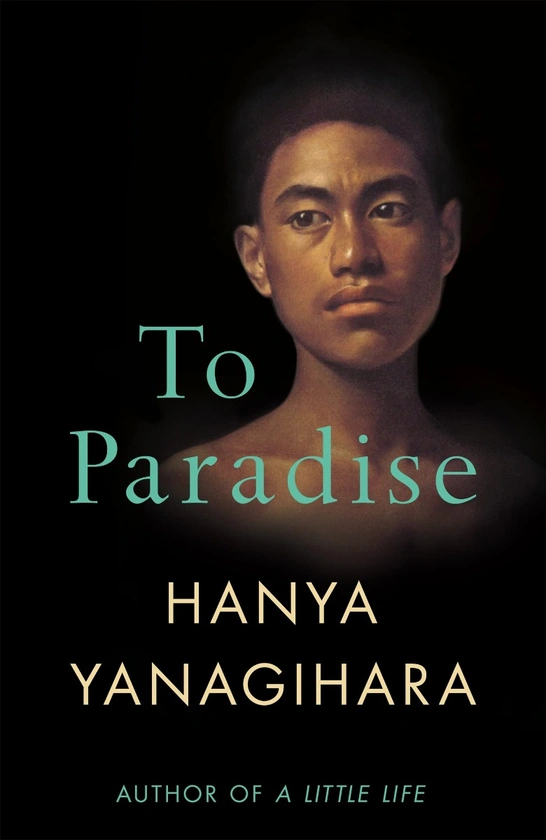
To Paradise is an ambitious literary novel about love, family, illness, power, and the fragile dream of a perfect society. Spanning three centuries and three alternate versions of America, the book moves from an imagined 1893 New York to a 1993 Manhattan marked by the AIDS epidemic, and then to a 2093 world shaped by pandemics and authoritarian rule. Across these different lives and futures, the central hook remains painfully human: people long to protect those they love, yet protection can become control, silence, sacrifice, or loss.
To Paradise Hanya Yanagihara offers readers a vast, emotionally intense work from the author of A Little Life, built as a triptych of linked stories rather than a single linear plot. The novel returns to names, places, patterns, and themes across time, creating echoes between lovers, families, citizens, and nations. Its promise is not a simple vision of paradise, but a deep exploration of why human beings keep searching for one, even when every imagined refuge carries its own danger.
The first section takes place in an alternate 1893 America, where New York belongs to the Free States, a society that appears to allow people greater freedom in love and domestic life. At the center is a fragile young man from a distinguished family, expected to accept a secure and respectable match. Yet he is drawn to a music teacher without wealth or status, and his private longing clashes with the expectations of inheritance, class, and family protection.
The second section shifts to 1993 Manhattan, during the AIDS crisis. A young Hawaiian man lives with an older, wealthy partner while concealing parts of his past, including painful truths about his childhood and his father. This part of the novel changes the emotional register, placing intimacy against the background of illness, memory, shame, and the unequal power that can exist even inside love. The plot becomes a study of what people hide to remain wanted, safe, or unchallenged.
The third section moves into 2093, a future shaped by waves of disease, political control, and social fear. A scientist’s granddaughter, damaged by loss and by the system surrounding her, tries to understand her life without the protection of the man who once guided it. Her husband’s mysterious disappearances draw her into questions about loyalty, surveillance, truth, and the cost of obedience in a society that claims restriction is necessary for survival.
In the middle of the novel, To Paradise book becomes more than a set of alternate histories. It becomes a meditation on recurring human patterns: the desire to belong, the fear of illness, the pressure of family, the inequality between the protected and the exposed, and the way nations tell stories about safety while deciding who must pay for it. The same emotional notes return in different keys, making the three parts speak to one another across time.
The characters are not connected by a conventional family saga, but by echoes: repeated names, similar houses, familiar forms of longing, and recurring conflicts between freedom and security. A townhouse near Washington Square becomes one of the novel’s symbolic centers, a place where private lives and national dreams overlap. Through these mirrored structures, the book asks whether paradise is a destination, an illusion, or a word people use when they are most afraid.
The atmosphere is elegant, mournful, and expansive. Each section creates a different America, yet all feel haunted by the same emotional weather: loneliness, desire, illness, privilege, secrecy, and dread. The novel’s alternate histories are not decorative inventions. They allow familiar questions about nationhood, family, public health, race, sexuality, and control to appear from unfamiliar angles.
The major themes include love, fear, shame, illness, social hierarchy, inheritance, utopia, state power, and the limits of care. The novel explores how the wish to protect can become morally complicated, whether it comes from a parent, a lover, a government, or a revolutionary movement. Again and again, people are asked to trade freedom for safety, truth for belonging, or emotional honesty for survival.
The style is formal, immersive, and deeply psychological, with long emotional arcs and carefully built parallels. Rather than offering quick revelations, the narrative accumulates pressure through detail, atmosphere, and repetition. The structure asks the reader to notice patterns between centuries: who is allowed to choose, who is watched, who is believed, who is sacrificed, and who is told that suffering is necessary for the greater good.
What lingers after reading is the novel’s refusal to define paradise as a simple place of peace. To Paradise suggests that every society imagines itself as an answer to suffering, yet no system can remove fear, need, grief, or the human hunger to be loved without condition. Its emotional force comes from showing that the desire for safety can be tender, but also dangerous when it becomes absolute.
This novel is for readers who enjoy large-scale literary fiction, alternate history, speculative elements, and emotionally demanding stories about human connection. It will appeal to an audience drawn to ambitious structures, interlinked narratives, social critique, and fiction that examines private love alongside public catastrophe.
One reason to read this novel is its extraordinary structure. The three sections do not simply repeat one another; they deepen one another. A choice in one century casts light on a fear in another, and a relationship in one world helps the reader understand the cost of power in a different one. This design gives the book a symphonic quality, with themes returning in altered and more troubling forms.
Another reason is the emotional seriousness with which the novel treats care. Parents, lovers, partners, friends, scientists, and governments all claim, in different ways, to protect. The book’s most painful insight is that love can be sincere and still fail, and that protection can become its own kind of harm when it denies another person freedom or truth.
The novel also stands out because it links the private and political without reducing either. A romance, a family secret, a medical policy, a national border, a quarantine, and a household rule can all become part of the same question: who gets to decide what kind of life is worth preserving? That gives the story both intellectual force and emotional weight.
To Paradise is a powerful choice for readers ready for a layered, haunting, and deeply humane novel about the impossible dream of a perfect world. It invites you into three Americas where love seeks shelter from fear, history keeps changing shape, and the search for paradise reveals, again and again, what people are most afraid to lose.