Відгуки і рецензії читачів
Поки немає відгуків


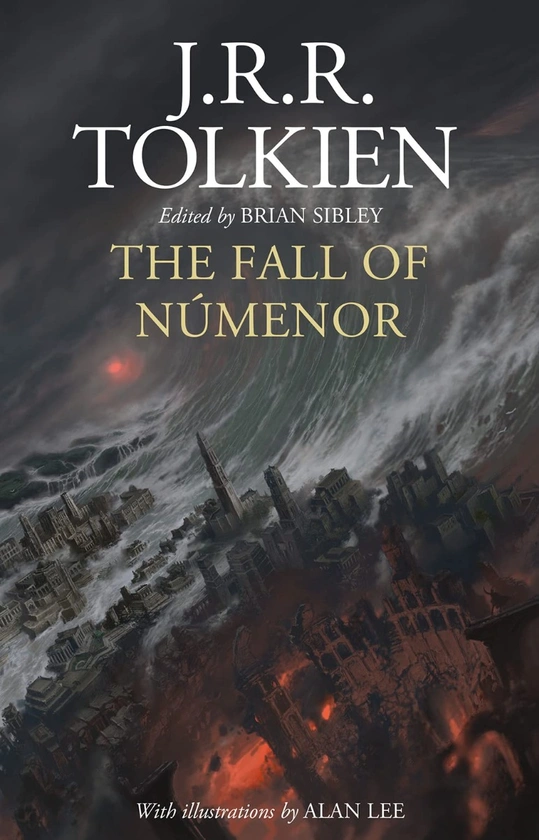
The Fall of Númenor gathers J. R. R. Tolkien’s writings about the Second Age of Middle-earth into a chronological volume edited by Brian Sibley and illustrated by Alan Lee. This English hardback connects the island kingdom’s rise and destruction with the forging of the Rings of Power, Sauron’s growing influence and the events leading to the Last Alliance.
Númenor is granted to the people whose ancestors aided the Elves and Valar against Morgoth. Its inhabitants enjoy long lives and develop a powerful seafaring civilisation, but they remain mortal. The contrast between their remarkable gifts and the limits they cannot escape becomes central to the kingdom’s history. Gratitude gives way to fear, envy and an increasingly dangerous desire for control.
The volume also follows events in Middle-earth, where Sauron consolidates power and the Rings acquire their place in the struggle. The island and the mainland are connected through voyages, alliances and imperial ambitions. This wider perspective gives familiar names and artefacts a setting in centuries of decisions rather than treating them only as background to Frodo’s later journey.
The fall itself belongs to a chain of consequences involving the rulers of Númenor, their relationship with the West and the resistance of those who preserve another loyalty. The survival of a remnant matters to the history that follows. The book therefore links destruction with continuation: a lost kingdom leaves people, memories and political inheritances that shape the end of the age.
Sibley arranges material from Tolkien’s published writings according to the timeline associated with the Second Age. Sources include The Silmarillion, Unfinished Tales, The History of Middle-earth and the appendices to The Lord of the Rings. The result is a collected chronicle assembled from existing texts, with editorial context helping readers move between their different origins.
Lee’s watercolour and pencil illustrations give visual form to a period often encountered in fragments elsewhere. The combination of chronology, commentary and artwork suits a reading experience concerned with connections. Events that once seemed separate can be considered together, particularly the relationship between fear of death, the pursuit of dominion and the use of promises to manipulate a powerful people.
This hardback suits readers who want a clearer route through Tolkien’s Second Age material. It is especially useful after the main novel has created curiosity about earlier kingdoms and the origin of its central conflict. Its value lies in bringing dispersed writings into an accessible sequence while preserving the sense that this history belongs to a much larger, carefully developed mythology.