Відгуки і рецензії читачів
Поки немає відгуків


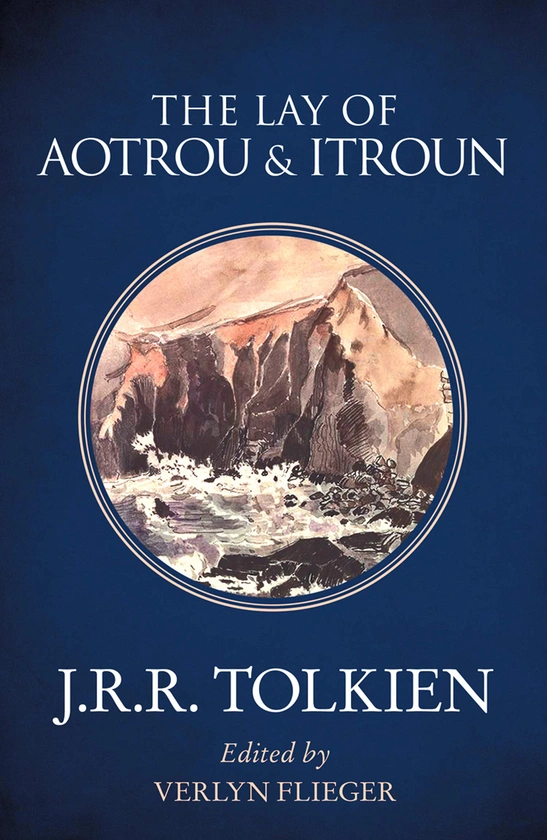
Tolkien The Lay of Aotrou and Itroun is a dark, lyrical work of narrative poetry rooted in Breton legend, chivalric romance, and the perilous border between human longing and supernatural power. A childless lord and lady, Aotrou and Itroun, live with the ache of an heirless marriage, until Aotrou seeks help from a corrigan, a dangerous fairy figure whose gift comes with a price. What begins as a desperate wish for children becomes a tragic test of vows, faith, honor, and mortality.
Tolkien The Lay of Aotrou and Itroun J. R. R. Tolkien offers readers a rare view of Tolkien beyond Middle-earth, while still revealing many of the imaginative concerns that shaped his wider mythic art. Written in 1930 and later published with related Corrigan poems and supporting material, this compact volume belongs beside his other engagements with real-world myth and legend. Its promise is stark and haunting: no bargain with enchantment is ever innocent, and no human desire is free from consequence.
The story is set in a chivalric Brittany of lords, ladies, forests, chapels, vows, and uncanny presences. Aotrou and Itroun are noble, married, and childless, and their sorrow is sharpened by the social and spiritual weight placed on lineage. Aotrou’s longing for heirs leads him beyond ordinary prayer and patience toward a magical solution, and that decision becomes the seed of the tragedy.
The corrigan offers a potion that brings the couple what they desire: Itroun bears twins, and the household’s emptiness is replaced by joy. Yet the gift has not been given freely. The fairy returns to claim her fee, and her demand forces Aotrou into an impossible conflict between the promise he has made, the marriage he must honor, and the life he hopes to keep. The plot turns on this moral trap, where supernatural assistance reveals itself as spiritual danger.
Aotrou’s dilemma gives the poem its emotional weight. To yield to the corrigan would betray his wife and his sacred bond; to refuse her may mean accepting death. The conflict is not merely external, because Tolkien frames the choice through ideas of honor, temptation, and Christian conscience. The hero’s tragedy lies in the fact that the act meant to secure family life has already placed that family under a shadow.
In the middle of the volume, Tolkien The Lay of Aotrou and Itroun book becomes more than a retelling of a folkloric bargain. It becomes a meditation on desire misdirected, on the limits of human control, and on the peril of seeking fulfillment through powers that do not share human moral order. The supernatural atmosphere is beautiful, but beauty here is not safety; it is part of the danger.
The included Corrigan poems deepen the sense of a world where enchantment is alluring and fatal. They help frame the central lay as part of Tolkien’s intense engagement with Celtic and especially Breton material. The characters are archetypal, yet not empty: Aotrou’s pride and fear, Itroun’s innocence and sorrow, and the corrigan’s seductive menace create a compact drama that feels ancient, ceremonial, and deeply sad.
The atmosphere is austere, archaic, and shadowed by doom. This is not the expansive adventure of The Lord of the Rings, but a concentrated poetic tale where every image feels weighted: the noble house without children, the hidden bargain, the returning fairy, the approach of judgment, and the grief that follows. The landscape suggests medieval romance, yet the emotional temperature is colder and more fatalistic.
The major themes include temptation, marriage, oath-breaking, supernatural peril, fertility, pride, faith, and the cost of trying to bend fate. Tolkien’s treatment of the corrigan is not whimsical; she embodies the perilous glamour of enchantment, offering exactly what is desired while demanding a payment that threatens the soul. The poem asks whether a good end can be gained through a corrupted means, and its answer is severe.
The style is formal, musical, and shaped by Tolkien’s lifelong love of older poetic traditions. The narrative has the cadence of a lay, carrying the reader through action, warning, and lament with a sense of ritual inevitability. Its language and structure reflect Tolkien’s scholarly intimacy with medieval literature, but the emotional impact is direct: longing leads to transgression, transgression to judgment, and judgment to loss.
What lingers after reading is the sense of a small tale opening onto large moral questions. Tolkien The Lay of Aotrou and Itroun is brief compared with Tolkien’s great legendarium, yet it contains a recognizably Tolkienian seriousness about vows, death, hidden powers, and the danger of pride. It shows the darker side of enchantment, where magic is not wonder alone but a test that exposes the heart.
This volume is for readers interested in Tolkien’s poetry, his non-Middle-earth writings, and his creative relationship with myth, folklore, and medieval forms. It will appeal to an audience that enjoys tragic legends, Celtic atmosphere, compact narrative poems, and stories where the supernatural is morally charged rather than decorative.
One reason to read this volume is the clarity of its tragic design. The story does not rely on elaborate world-building or long adventure. Instead, it concentrates on one fateful choice and follows its consequences with the inevitability of old legend. That focus gives the poem a sharp emotional force.
Another reason is its place in Tolkien’s broader body of work. Although it is not a Middle-earth story, it reveals his fascination with inherited myth, moral testing, language, and the ancient power of song-like narrative. Readers who know his larger works will recognize familiar concerns in a different, more condensed form.
The volume also stands out because it treats fairy power with seriousness. The corrigan is not a charming helper, but a being whose beauty and danger are inseparable. Her presence turns the tale into a warning about desire, bargain, and consequence, making the poem feel both folkloric and spiritually severe.
Tolkien The Lay of Aotrou and Itroun is a compelling choice for readers who want a haunting, compact encounter with Tolkien’s mythic imagination. It invites you into a world of Breton shadow, chivalric sorrow, and fatal enchantment, where one lord’s attempt to secure happiness opens the door to a grief no magic can undo.