Відгуки і рецензії читачів
Поки немає відгуків


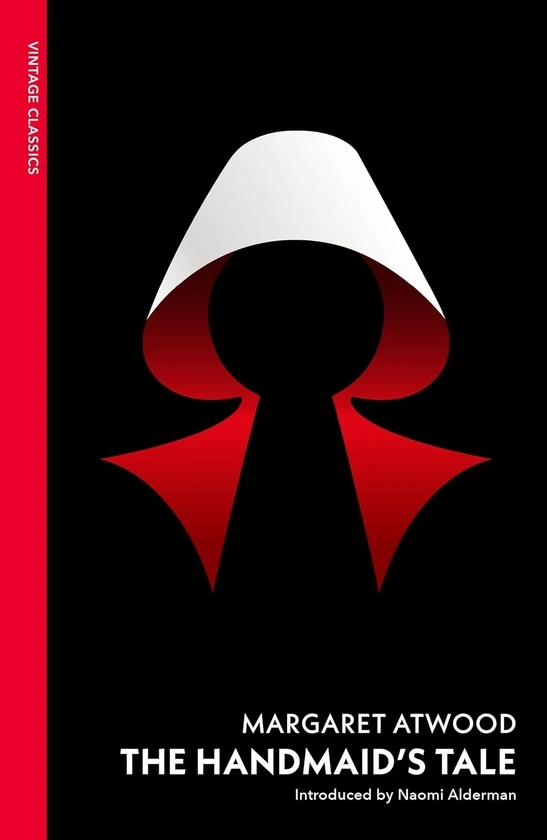
Vintage Classics: The Handmaid's Tale is a haunting dystopian novel about power, gender, memory, and the terrifying speed with which ordinary life can be dismantled. Margaret Atwood imagines the Republic of Gilead, a religious totalitarian state built on surveillance, ritualized violence, and the control of women’s bodies. At the center is Offred, a Handmaid assigned to the household of Commander Fred Waterford, forced into reproductive servitude while secretly clinging to memories of the life, love, child, and freedom taken from her.
Vintage Classics: The Handmaid's Tale Margaret Atwood offers readers one of the defining works of modern dystopian fiction, first published in 1985 and later adapted for screen. This Vintage Classics edition presents Atwood’s chilling vision of a future America transformed into Gilead, where language, religion, law, and fear are used to erase individual identity. The novel’s promise is stark and unforgettable: even under the most controlled system, memory and desire remain forms of resistance.
Offred lives in a society where her name is no longer fully her own. Her assigned identity means “of Fred,” reducing her to the Commander whose household controls her body. She wears the red clothing of a Handmaid, moves through public spaces under strict rules, and is watched by institutions designed to make rebellion feel impossible. Her official function is to bear a child in a world marked by infertility and fear.
The plot unfolds through Offred’s present life in Gilead and her memories of the time before. She remembers her husband Luke, her daughter, her friend Moira, her mother, her work, her bank account, and the ordinary freedoms that disappeared step by step. These flashbacks give the novel its emotional force because they show that tyranny did not begin as a distant nightmare. It entered through policy, fear, crisis, and people learning to obey.
Inside the Commander’s house, power is arranged through hierarchy and ritual. The Commander holds authority, Serena Joy carries bitterness and status, and the Marthas maintain domestic order. Offred must navigate this world with caution, reading every gesture for danger. A glance, a whispered phrase, a forbidden meeting, or a small object can become a risk. Survival depends on silence, memory, and the ability to understand what cannot be said aloud.
In the middle of the novel, Vintage Classics: The Handmaid's Tale book becomes more than a warning about dictatorship. It becomes a study of inner resistance. Offred cannot openly fight the regime, but she preserves a private self through memory, language, desire, and storytelling. Her narrative becomes a form of survival, proof that the state has not fully succeeded in turning her into a function.
The central conflict is both political and deeply personal. Gilead wants obedience, reproduction, and erasure. Offred wants to remain human. Between those forces stand fear, hope, temptation, loneliness, and the dangerous possibility of connection with two men whose choices may affect her future. The suspense is not only about escape, but about whether a person can keep an inner life intact when every outer freedom has been stripped away.
The atmosphere is controlled, oppressive, and quietly terrifying. Atwood does not build horror through constant spectacle, but through daily rituals: prescribed clothing, restricted movement, public punishments, household ceremonies, and the removal of names, books, money, and choice. The result is a world that feels frightening because its cruelty is organized, legal, and polite on the surface.
The major themes include bodily autonomy, authoritarianism, gender, language, memory, religion, complicity, resistance, and the fragility of rights. The novel asks how societies justify oppression, how language can disguise violence, and how quickly people may adapt when survival requires obedience. It also shows that hope can be fragile, ambiguous, and still necessary.
The style is precise, intimate, and psychologically powerful. Offred’s voice is observant, ironic, fearful, sensual, and fragmented by trauma. She tells her story from inside uncertainty, often questioning what she remembers and what she dares to believe. This makes the novel feel personal rather than abstract: Gilead is a system, but the story is anchored in one woman’s mind and body.
What lingers after reading is the novel’s warning that freedom can vanish in recognizable stages. Vintage Classics: The Handmaid's Tale remains powerful because it does not present tyranny as something entirely alien. It shows how fear, crisis, ideology, and convenience can make the unthinkable gradually acceptable, especially when people believe loss of freedom will happen only to someone else.
This novel is for readers who enjoy dystopian fiction, feminist classics, political literature, psychological suspense, and books that provoke discussion long after the final page. It will appeal to an audience interested in power, resistance, women’s rights, authoritarian systems, and literary fiction with a sharp social conscience.
One reason to read this novel is Offred’s voice. She is not a traditional hero with easy power, but a woman thinking, remembering, desiring, fearing, and observing from inside a system built to silence her. Her narration makes resistance feel intimate, fragile, and human.
Another reason is Atwood’s world-building. Gilead is terrifying because its rules are detailed, symbolic, and socially enforced. Clothing, names, ceremonies, greetings, and household roles all serve the same purpose: to make domination feel permanent. That precision gives the novel its enduring atmosphere.
The book also stands out because it turns memory into defiance. Offred’s recollections of ordinary life become politically charged because Gilead depends on erasing the past. To remember love, work, friendship, reading, money, and motherhood is to preserve evidence that another life was real.
Vintage Classics: The Handmaid's Tale is a powerful choice for readers who want a beautifully written and deeply unsettling novel about oppression, identity, and the will to endure. It invites you into Gilead through Offred’s eyes, where every word matters, every freedom has a history, and the act of telling a story becomes a way to remain alive.