Відгуки і рецензії читачів
Поки немає відгуків


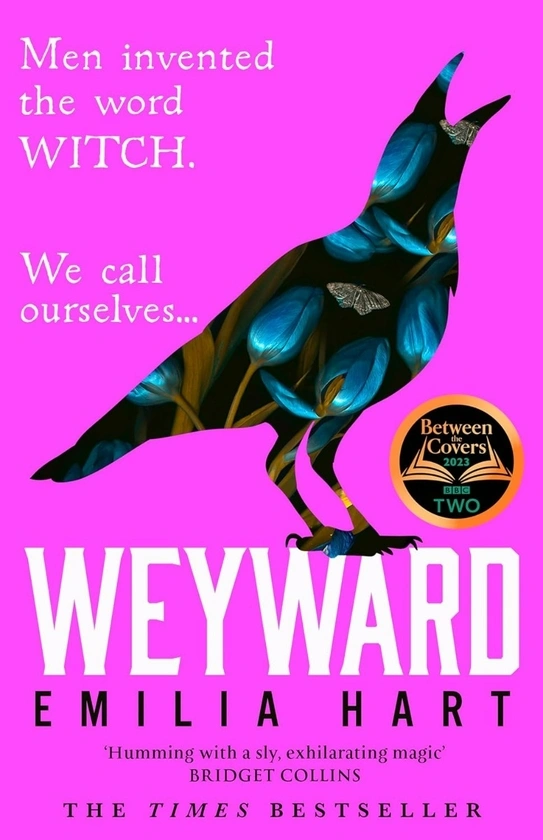
Weyward is a spellbinding historical novel about three women separated by centuries but connected by blood, nature, and the refusal to be caged. In 1619, Altha stands trial for witchcraft after a local man dies under suspicious circumstances. In 1942, Violet grows up in a restrictive household, rebelling against the narrow role her father has chosen for her. In the present day, Kate flees a traumatic relationship and seeks refuge in a cottage inherited from her great-aunt, only to discover that the house carries secrets of its own.
Weyward Emilia Hart offers a layered story of female resilience, family inheritance, and hidden power rooted in the natural world. The novel moves between three timelines, allowing the lives of Altha, Violet, and Kate to echo one another across five centuries. Its promise is both intimate and fierce: women who have been silenced, controlled, or hunted may still find strength in the wild places the world has tried to take from them.
Altha’s story begins in a time when knowledge of herbs, animals, and the body can be twisted into an accusation. She is on trial for witchcraft, implicated in the death of a man, and surrounded by a society ready to turn fear into punishment. Her plot carries the danger of the seventeenth century, when a woman’s independence or skill could be treated as evidence against her.
Violet’s life in 1942 is shaped by confinement of a different kind. Her father’s idea of a proper young lady leaves little room for curiosity, freedom, or self-expression. She senses that there is more to her family history than she has been told, and her rebellion grows from the need to understand who she is beyond the rules imposed on her. Her world is not a courtroom, but it is still a cage.
Kate’s present-day story begins with escape. She leaves an abusive relationship and arrives at a Cumbrian cottage that once belonged to her great-aunt. The house seems at first like shelter, but it also becomes a place of discovery. As Kate searches its rooms, memories, and hidden traces, she begins to understand that the women before her faced their own forms of violence and control, and that the Weyward name carries more than family history.
In the middle of the novel, Weyward book becomes more than a three-part family saga. It becomes a story about patterns repeated across generations: men who seek to dominate, societies that fear female autonomy, and women who turn toward nature when human institutions fail them. The conflict is not only external. Each woman must decide whether she will accept the identity forced upon her or claim the one that has always lived beneath the surface.
The characters are linked by a deep affinity with the natural world. Birds, insects, plants, weather, and wild spaces are not decorative details; they form part of the novel’s emotional and symbolic language. Altha, Violet, and Kate each discover that the power others fear in them may also be the source of their survival. Their stories gradually intertwine, revealing a legacy of resistance that grows stronger each time it is nearly erased.
The atmosphere is earthy, gothic, and quietly magical. Cumbrian landscapes, old houses, hidden rooms, fields, woods, and creatures of the natural world create a setting where the boundary between realism and enchantment feels thin. The novel’s mood is often tense and painful, but it is also full of beauty, especially when the women find connection outside the systems that have harmed them.
The major themes include patriarchy, survival, inherited trauma, sisterhood across time, bodily autonomy, domestic abuse, witchcraft accusations, and the healing force of nature. The book explores how women are controlled differently in different centuries, yet also how the same hunger for freedom appears again and again. Its emotional conflict grows from the question of whether a woman can reclaim a life after others have tried to define, own, or punish her.
The style is lyrical, accessible, and atmospheric, with alternating perspectives that build suspense across the three timelines. Each strand of the story has its own pressure: Altha’s trial, Violet’s confinement, and Kate’s flight. The pacing allows the reader to see connections forming gradually, turning family history into mystery and personal recovery into something larger than one life.
What lingers after reading is the idea that wildness can be a form of memory. Weyward treats nature as witness, refuge, and inheritance. The women at its center are not powerful because they escape pain untouched; they are powerful because they recognize the forces that tried to break them and still choose to live beyond fear.
This novel is for readers who enjoy historical fiction with magical realism, feminist themes, family secrets, and interwoven timelines. It will appeal to an audience drawn to stories of women resisting control, reclaiming identity, and finding strength in inherited knowledge, old houses, and untamed landscapes.
One reason to read this novel is the way it connects three eras without making their struggles identical. Altha, Violet, and Kate face different dangers, but their experiences speak to one another through fear, inheritance, and resistance. This structure gives the story emotional depth and makes each timeline feel necessary to the whole.
Another reason is the novel’s relationship with nature. The wild world is not merely background; it is a language, a refuge, and a quiet form of power. Through birds, insects, plants, and landscapes, the story suggests that freedom may begin by listening to what society has trained women to ignore.
The book also stands out because it balances darkness with hope. It does not hide the harm done to its characters, but it refuses to let harm be the final word. Each woman must face fear, isolation, and betrayal, yet each also discovers a way to step beyond the cage built for her.
Weyward is a haunting and empowering choice for readers who want a novel of secrets, survival, and feminine strength across time. It invites you into a world where the past is never truly buried, where the cottage walls remember, and where Weyward women belong not to fear, but to the wild.